20 Bun and Updo Ideas for Back to School Mornings

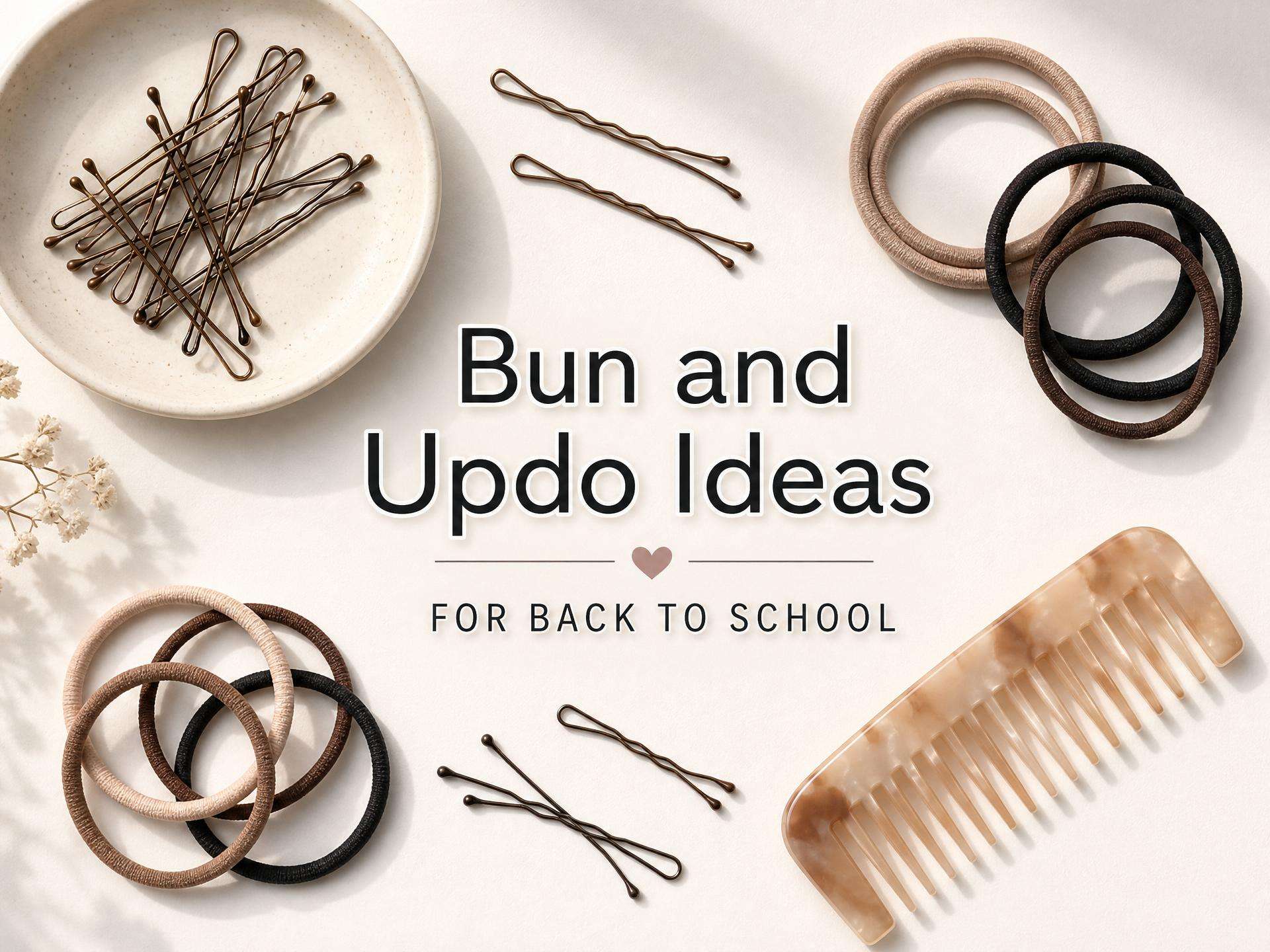
A bun solves more problems than almost any other hairstyle when it comes to school mornings. It keeps hair off the neck, holds up through PE class, and still manages to look finished without much effort.
This list focuses only on buns and updos, broken down into sleek, messy, space bun, and braided variations. Each one uses hair ties, bobby pins, or both, without requiring any heat styling.
What Bun Styles Work Best for School?
Low, secure buns tend to work best for a full school day since they stay in place through movement and don’t pull too tightly on the scalp. Sleek buns suit dress codes that favor a polished look, while messy or space buns work well for a more casual, everyday style.
Sleek Low Buns
A sleek low bun stays close to the classic, no-fuss look that works for almost any school setting. The finish depends more on smoothing the hair properly than on any complicated technique.
This category tends to suit students who want their hair fully controlled and out of the way for the entire day. A small amount of gel or edge control usually makes the biggest difference in how polished the final result looks.
Classic Ballerina Bun
This bun sits low at the nape of the neck, smoothed flat with no loose pieces. It’s one of the most formal-looking options on this list, closer to a dance recital style than an everyday one.
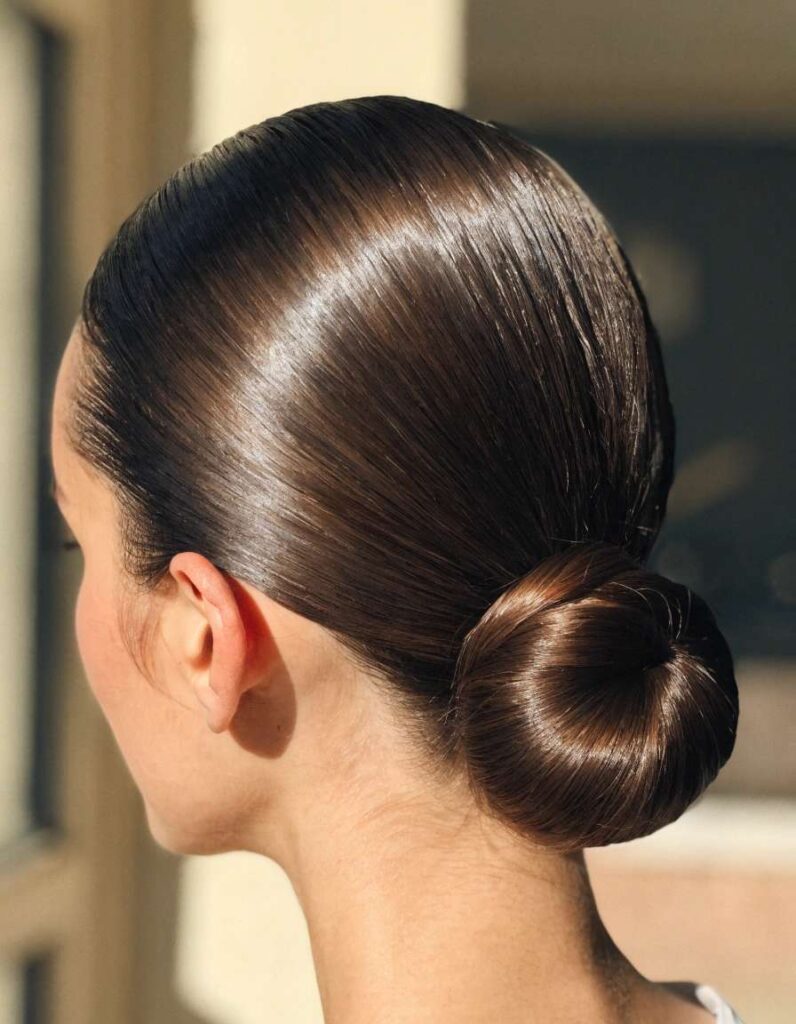
It works especially well for students with picture day or a presentation, where a polished look matters. A light-hold gel keeps flyaways controlled through the whole school day.
Sleek Mid Bun
Positioned slightly higher than a ballerina bun, this style sits at the middle of the back of the head rather than right at the nape. It offers a bit more visibility from the front while still looking tidy.
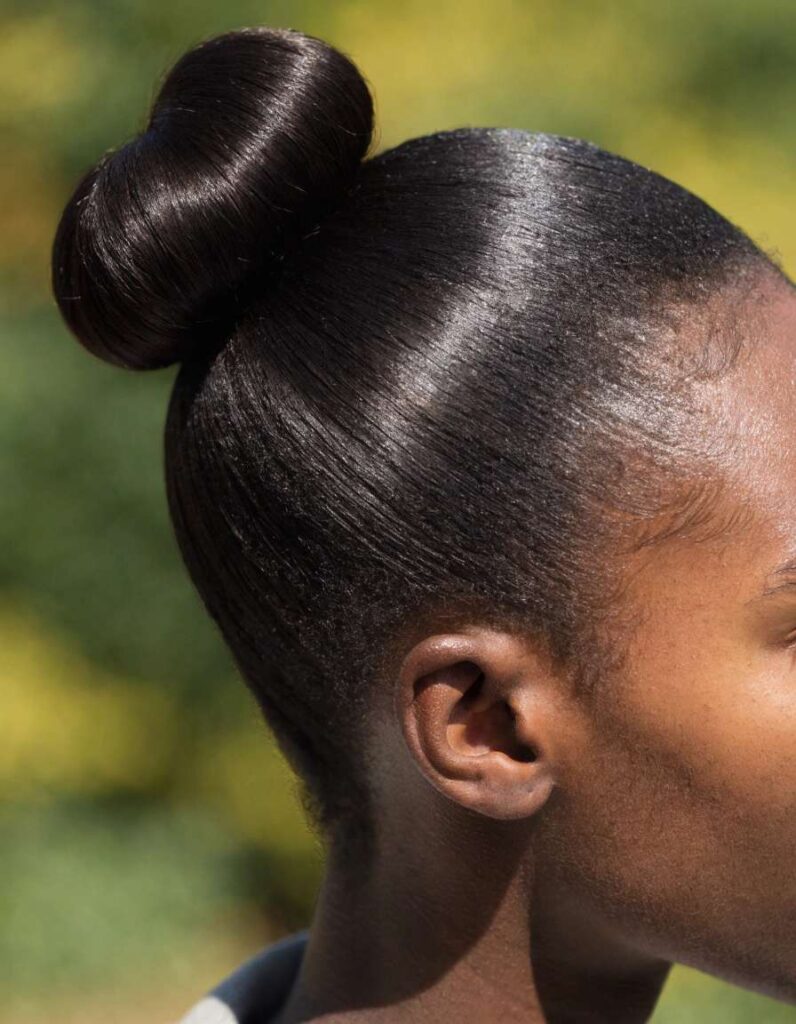
This version tends to suit round face shapes particularly well, since the height slightly elongates the face. It also stays comfortable against a backpack strap throughout the day.
Gelled Slick Bun
Using gel to smooth every section before securing the bun creates an extremely controlled, shine-forward finish. This style holds up especially well in humid weather when frizz is a concern.
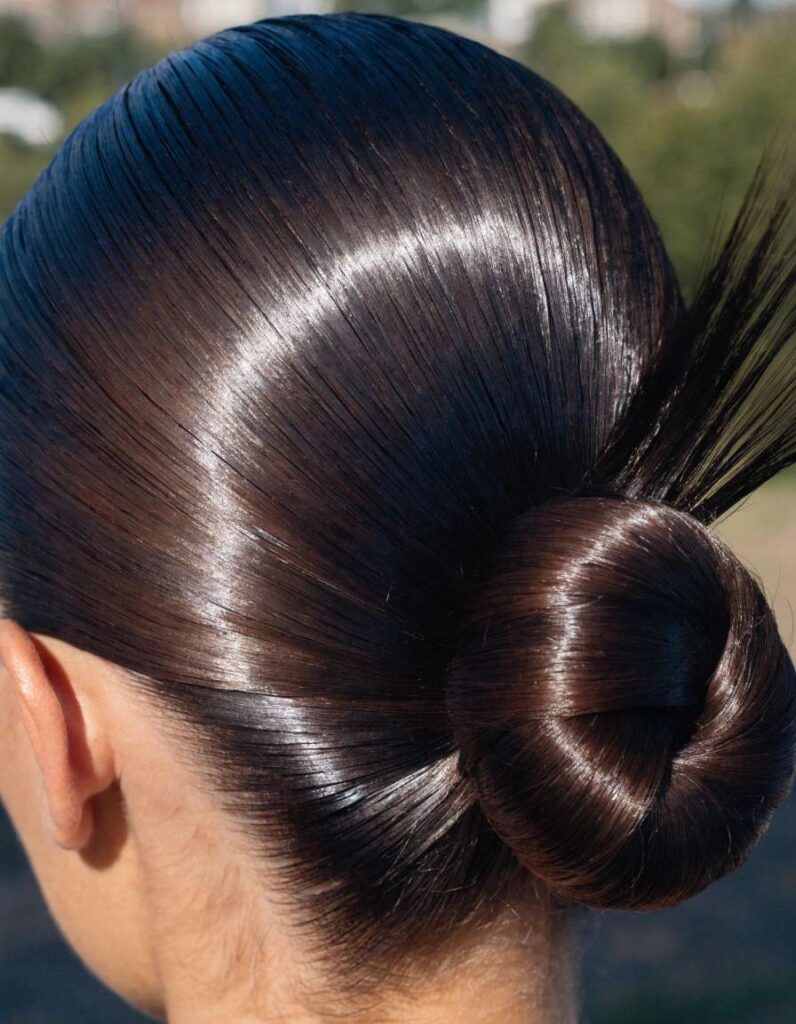
It works best on hair that’s already fairly straight, since gel struggles to fully smooth heavy natural texture. A silk scrunchie at the base helps prevent breakage from the tighter hold.
Center-Part Low Bun
A clean center part paired with a low bun gives the whole style a symmetrical, put-together look. This version works well for students who already part their hair down the middle daily.
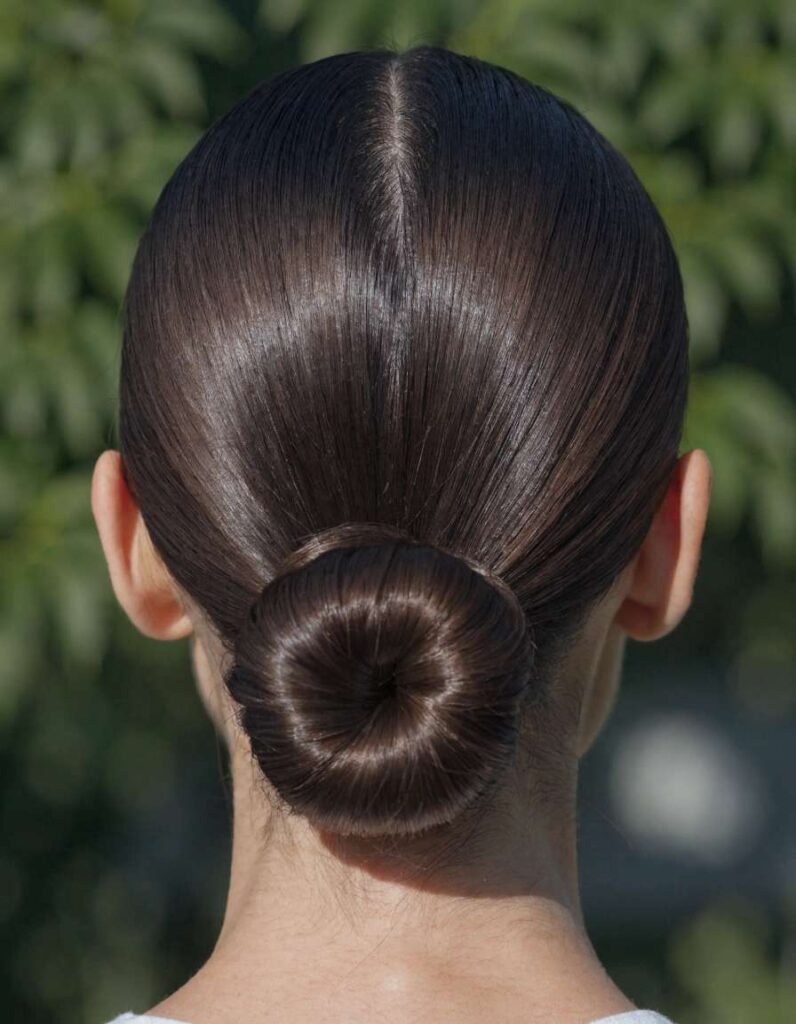
The symmetry makes this style easy to recreate the same way every morning without much thought. It also pairs naturally with minimal makeup or a simple uniform look.
Side-Part Low Bun
Shifting the part to one side changes the whole feel of a low bun, making it look slightly softer than a centered version. This style suits students whose hair naturally falls to one side.
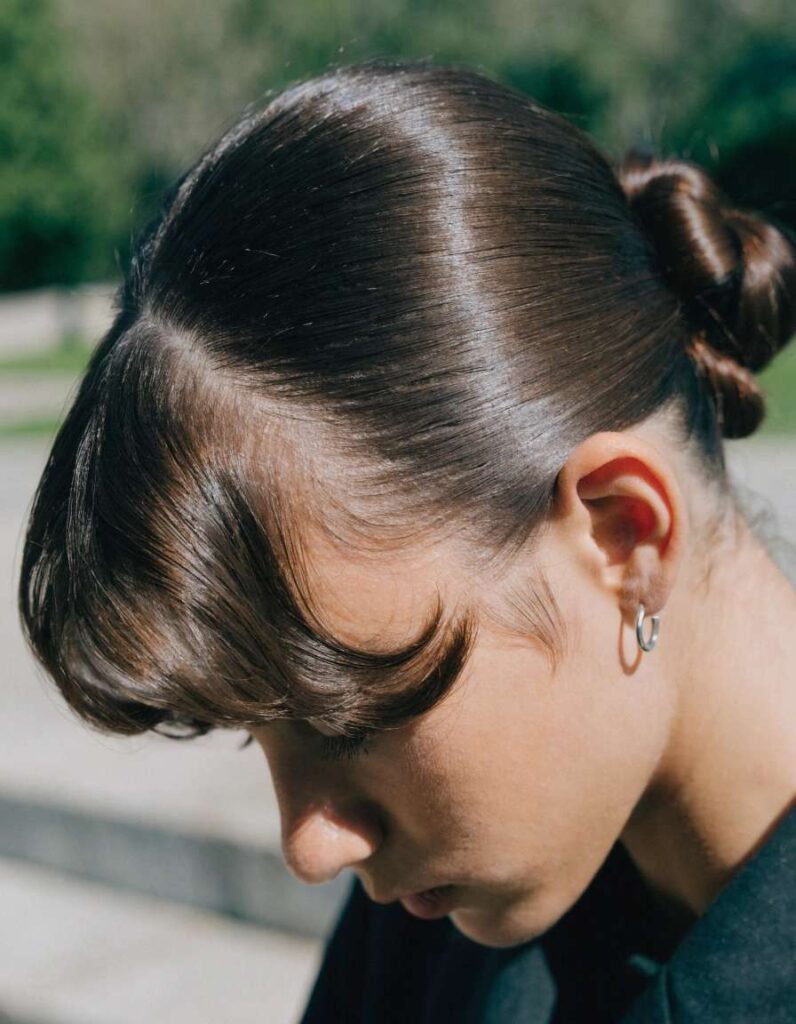
It also tends to be more flattering for asymmetrical face shapes than a strict center part. The side part adds a small amount of visual interest without requiring extra styling time.
Messy/Textured Buns
Messy buns work with hair’s natural texture instead of against it, which makes them faster and more forgiving than sleek styles. A bit of unevenness is part of the look rather than something to fix.
This category tends to work best on second or third-day hair, where some natural oil actually helps the bun hold its shape. These styles also tend to last longer through a full school day than freshly washed, slippery hair would.
Messy Top Knot
Piled high on top of the head with pieces left loose around the crown, this bun looks deliberately undone. It works especially well paired with a casual, everyday school outfit.
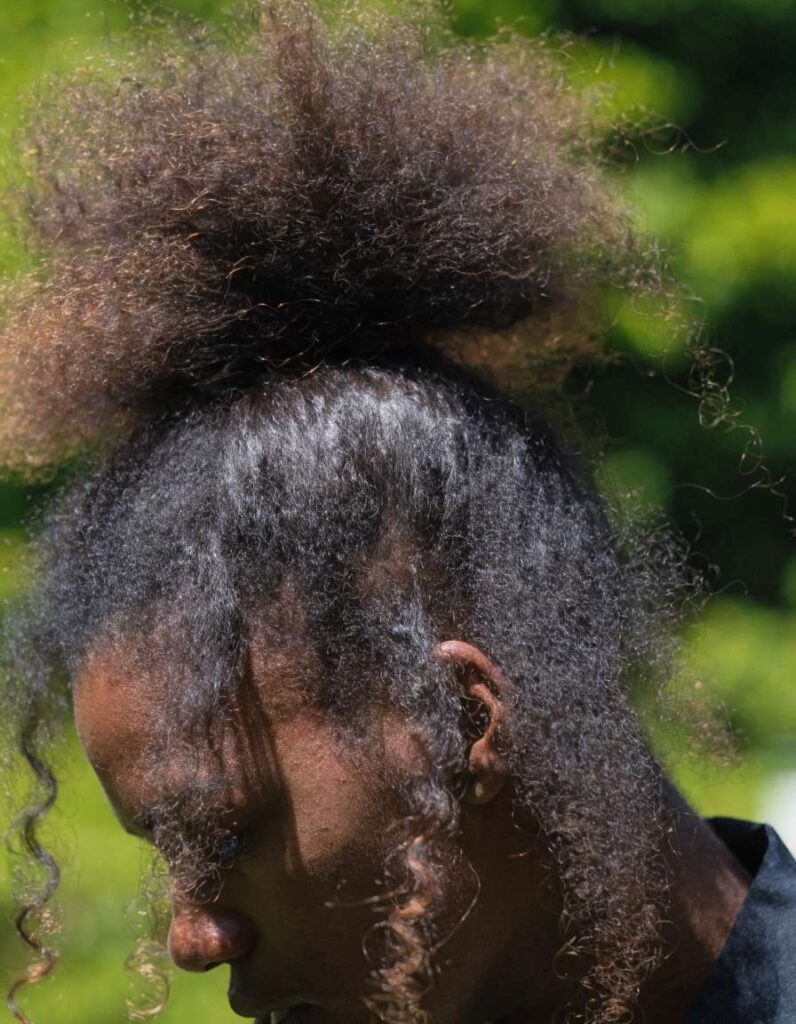
The height keeps hair fully off the neck, which matters during warmer months. A few face-framing pieces pulled out soften the overall look without much extra effort.
Textured Donut Bun
Using a foam donut or sock bun tool, this style creates a fuller, rounder shape than a hand-tied bun. It works particularly well for students with thinner hair who want more visible volume.
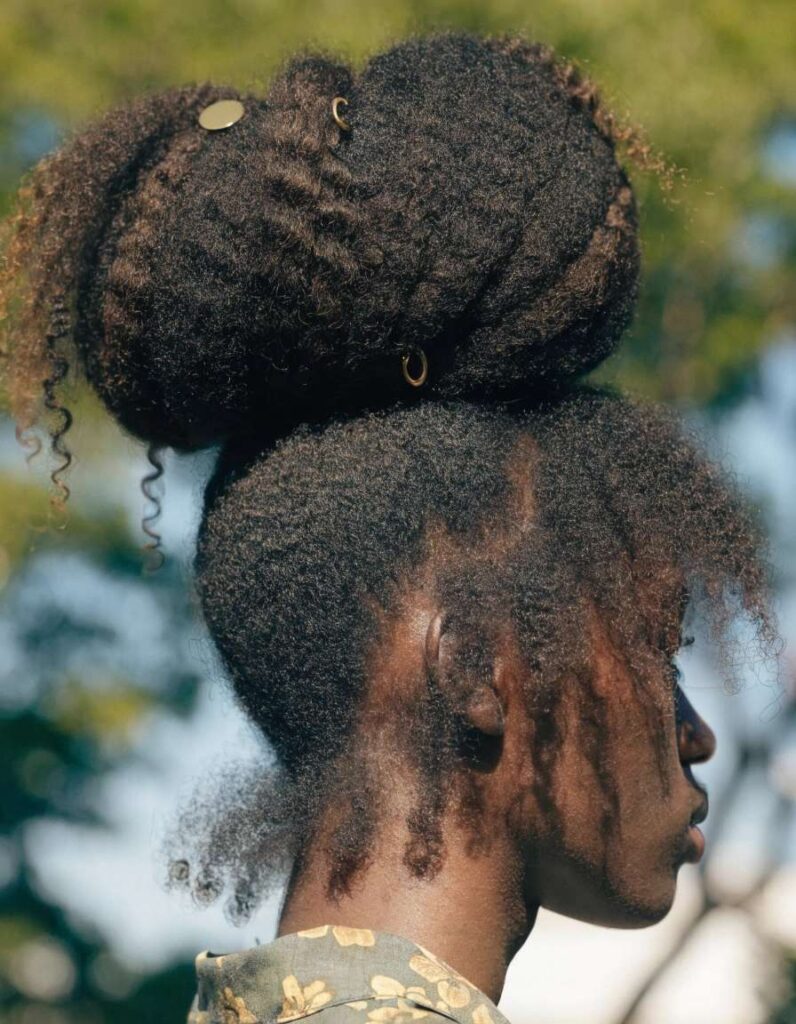
The tool does most of the shaping work, which keeps the actual styling time short. Wrapping hair loosely around the donut rather than tightly gives it a more textured, natural finish.
Undone Knot Bun
This style uses a single loose knot instead of a fully wrapped bun, leaving the ends slightly loose rather than tucked. It looks less structured than a traditional bun while still keeping hair contained.
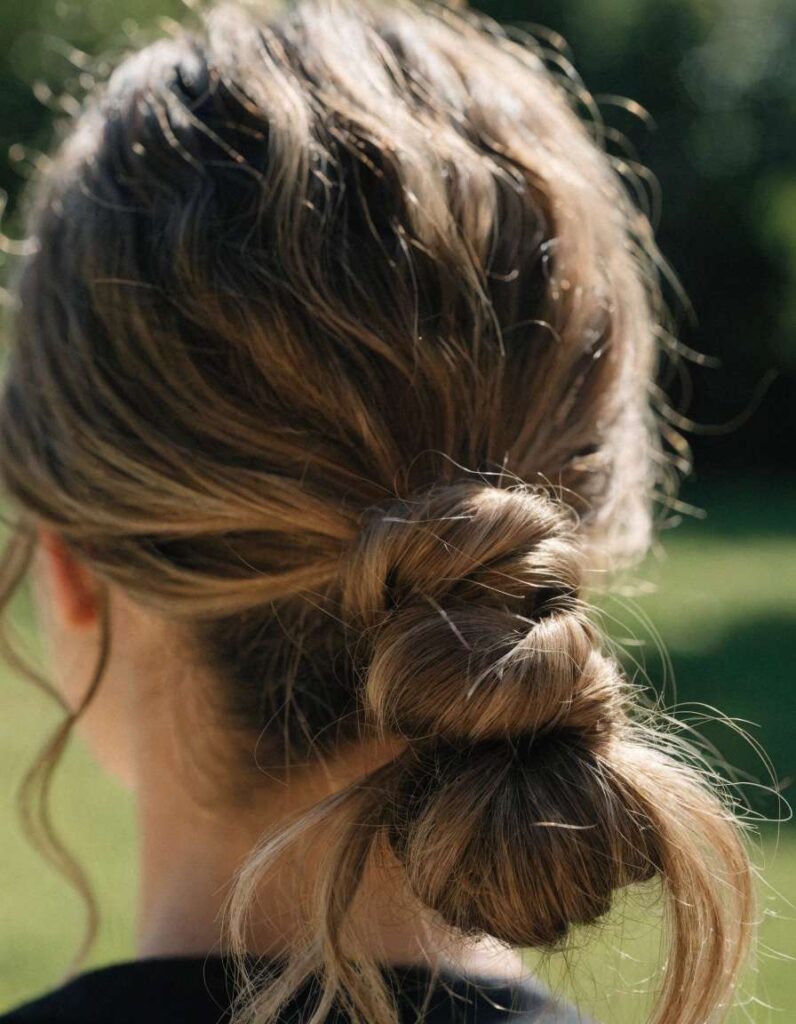
It works especially well for students who find tightly wrapped buns uncomfortable against the scalp. The relaxed shape also photographs well for a casual, everyday look.
Tousled Bun with Face-Framing Pieces
Pulling a few pieces loose around the face after securing the bun softens the whole style and adds movement. This small addition changes a plain bun into something that looks more intentional.
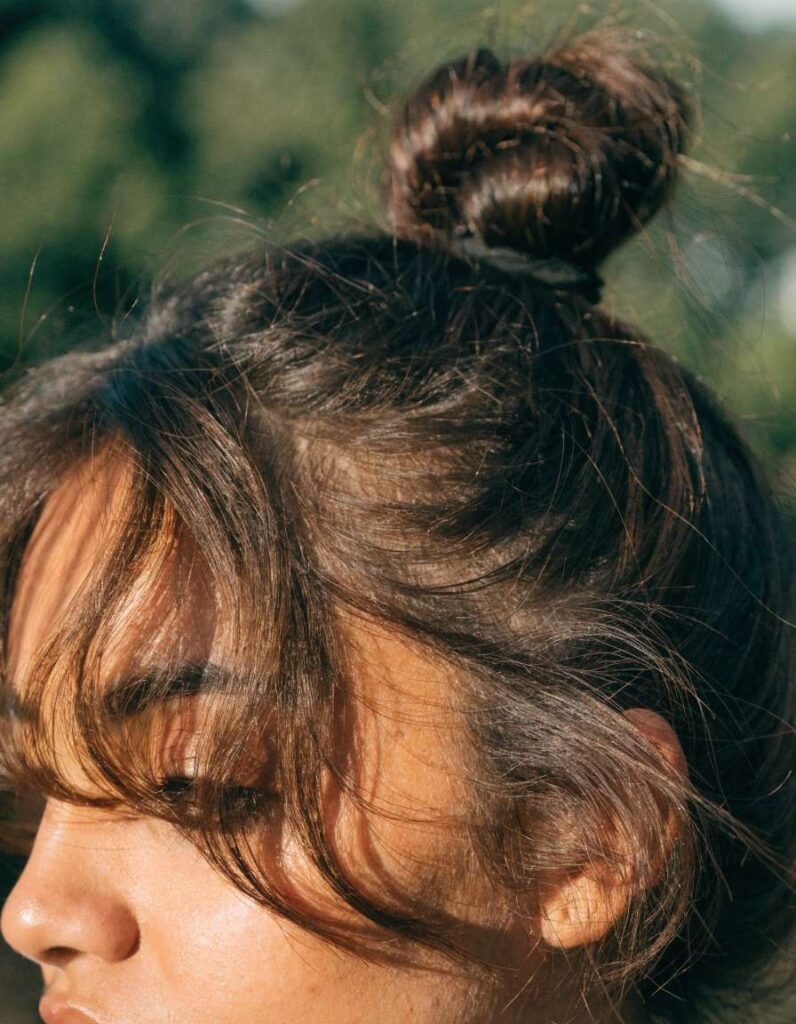
This version tends to suit students who want a bun that still shows some personality. It also works well for those transitioning from a fully-down hairstyle into something more practical for class.
Chunky Messy Bun
Using thicker sections rather than fine strands, this bun looks intentionally oversized and casual. It works especially well on thick or coarse hair types that hold volume naturally.
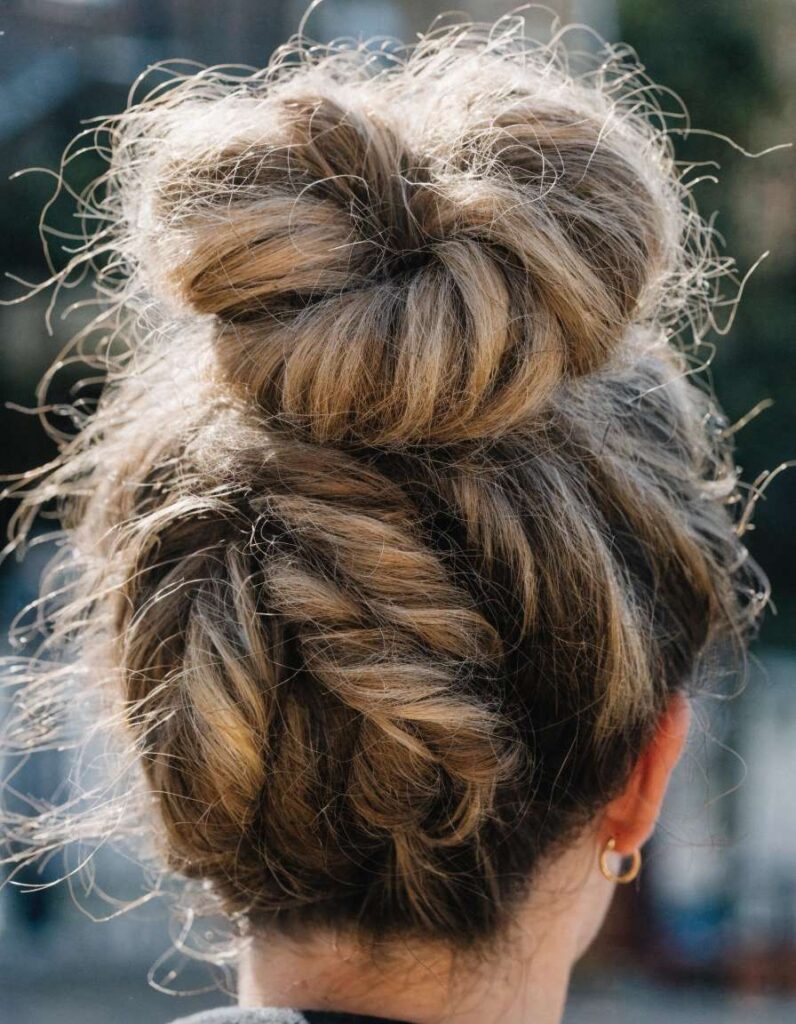
The chunkier shape also tends to hide any unevenness in sectioning, making it one of the more forgiving styles for a rushed morning. It photographs well from nearly every angle.
Space Buns
Space buns split hair into two sections rather than one, giving the style a slightly more playful feel than a single bun. They tend to suit younger students especially well, though the style works across most ages.
This category requires a bit more sectioning time than a single bun but still finishes in a couple of minutes. Even sections on both sides tend to make the biggest difference in how balanced the final look appears.
Twisted Space Buns
Twisting each section once before wrapping it into a bun adds texture and helps the style hold longer. This version works especially well on hair that doesn’t naturally hold a smooth shape.
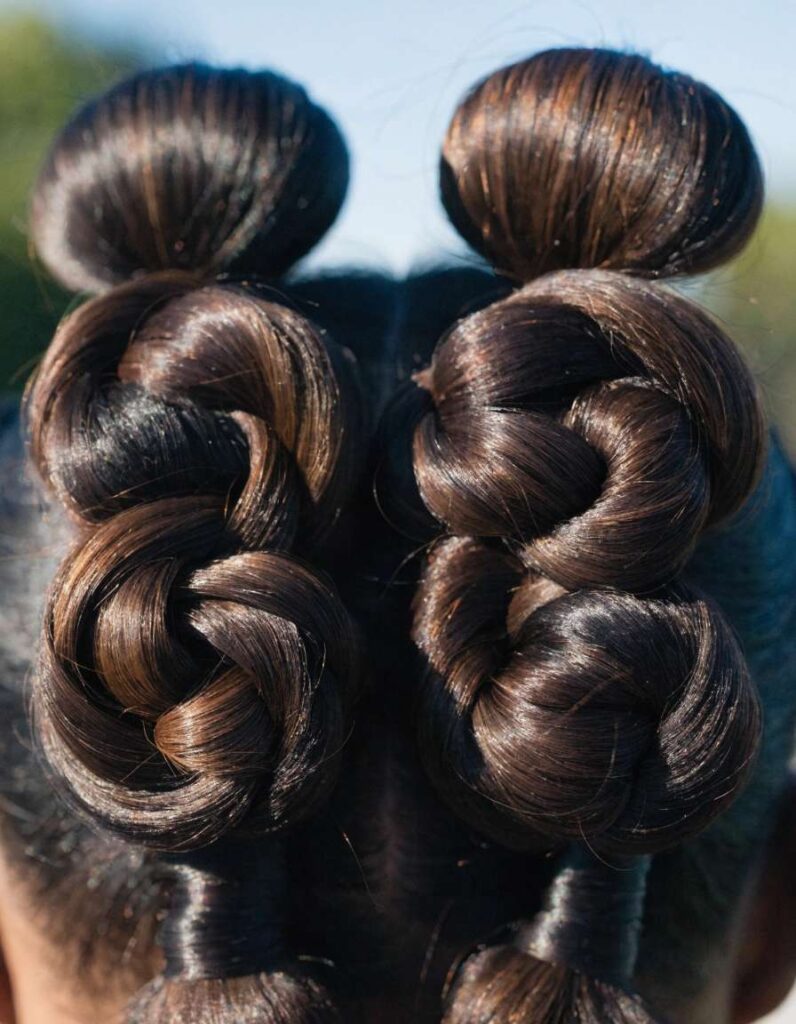
The twist also gives each bun a slightly more defined edge compared to a plain wrapped version. It works well for both straight and wavy hair types.
Braided Space Buns
Braiding each section before securing it into a bun creates a more detailed, textured finish than a simple twist. This version takes slightly longer but holds up especially well through a full school day.
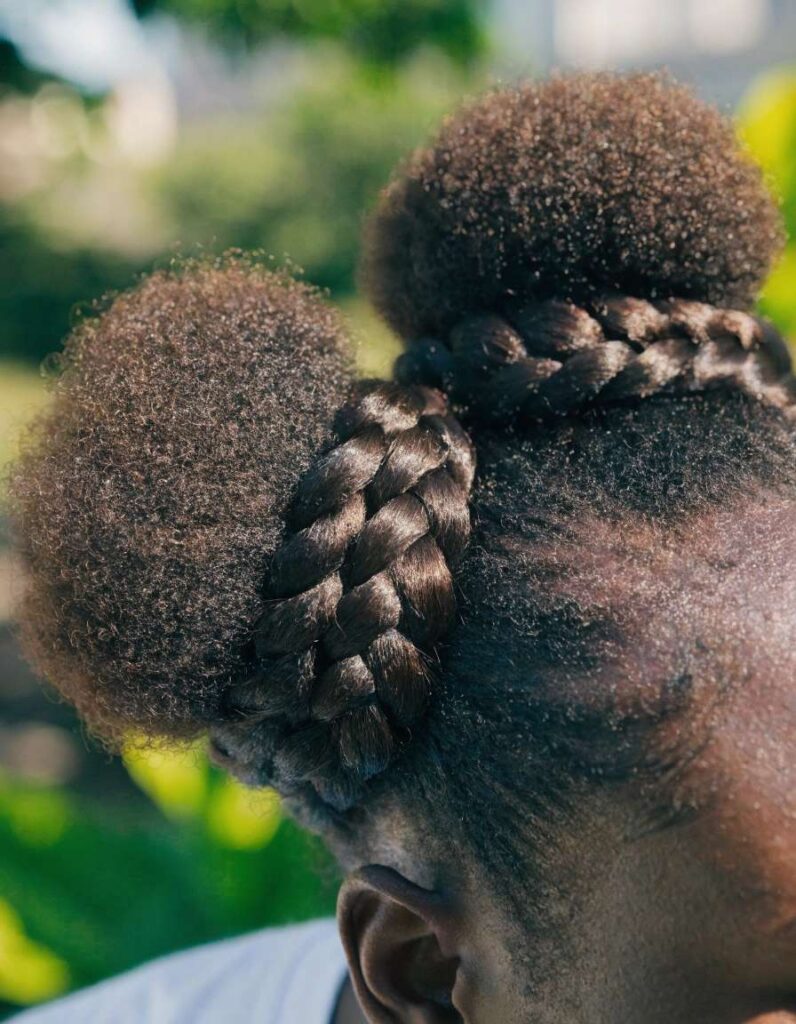
It works particularly well for thicker hair, where a plain bun might feel too heavy or bulky. The braided base also adds visual interest even before the bun is fully formed.
Half Space Buns
Using only the top sections of hair for the space buns and leaving the rest down combines two styles into one. This version suits students who want some hair up and some down.
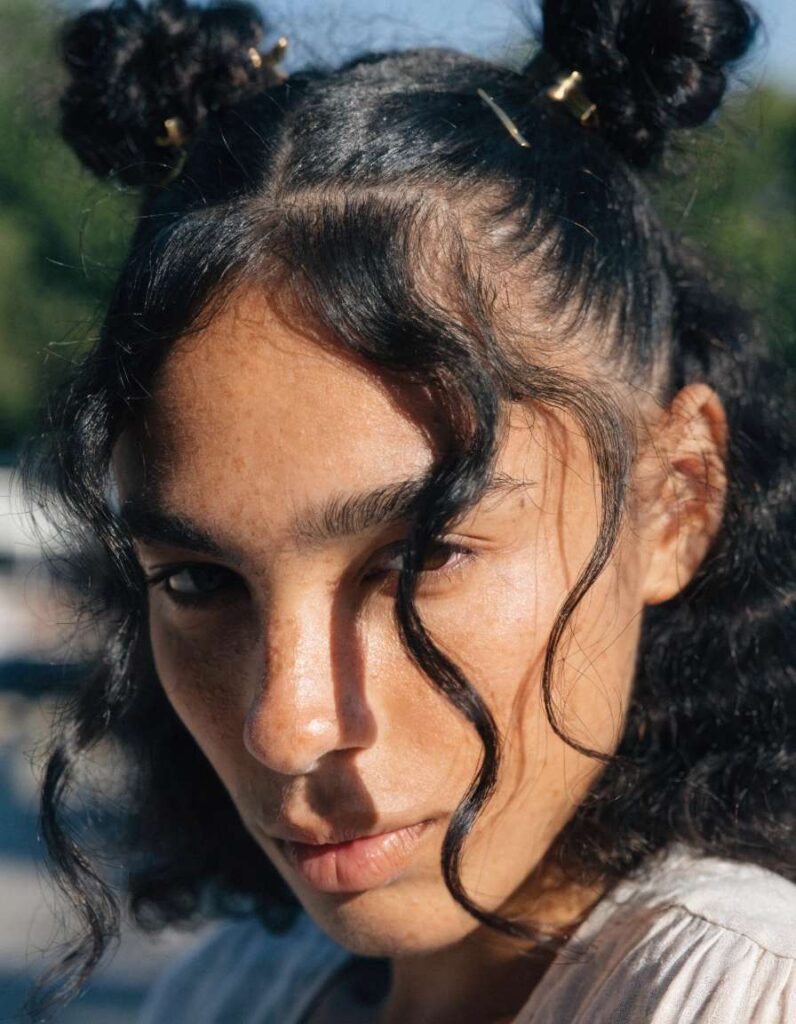
It works especially well for longer hair, where a full updo might feel unnecessary for a regular school day. The style also softens the overall look compared to two full buns.
Mini Space Bun Cluster
Instead of two large buns, this version uses four to six smaller buns spaced evenly across the head. It takes a bit longer to section but creates a distinctive, detailed look.
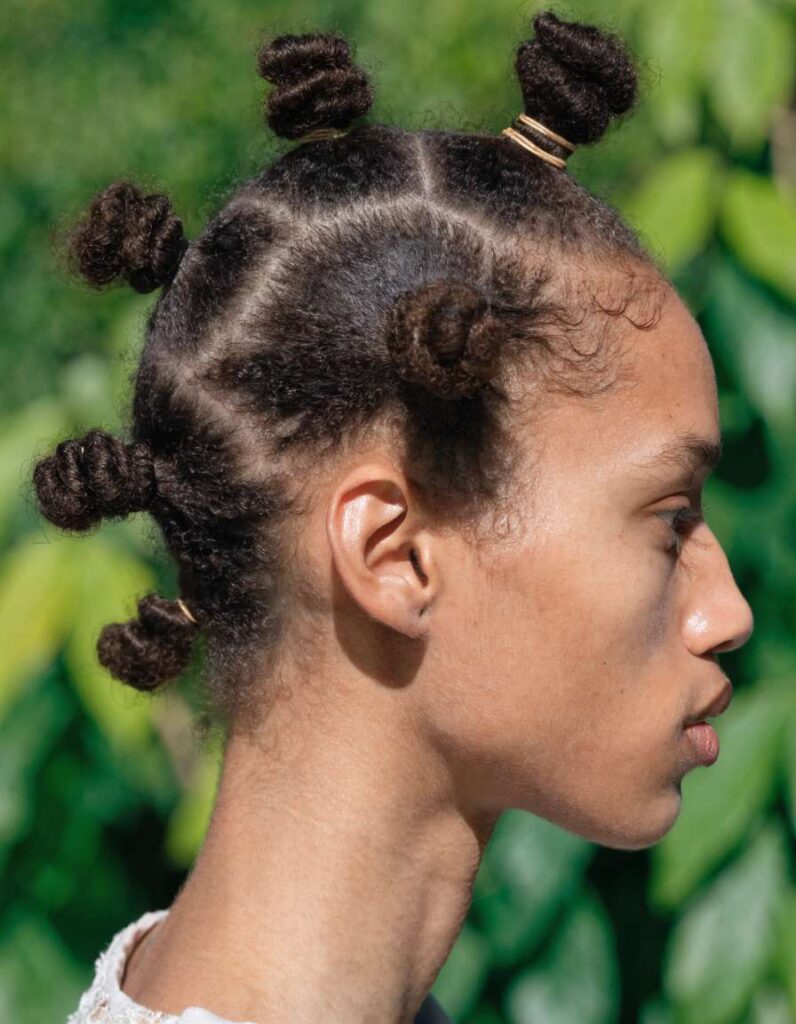
This style tends to work best on thicker or longer hair, where there’s enough length to fill multiple small buns. It holds up particularly well through active school days.
Low Space Buns
Positioning both buns lower, near the ears rather than high on the head, gives this style a softer, less playful feel. It suits students who like the space bun concept but want something more subdued.
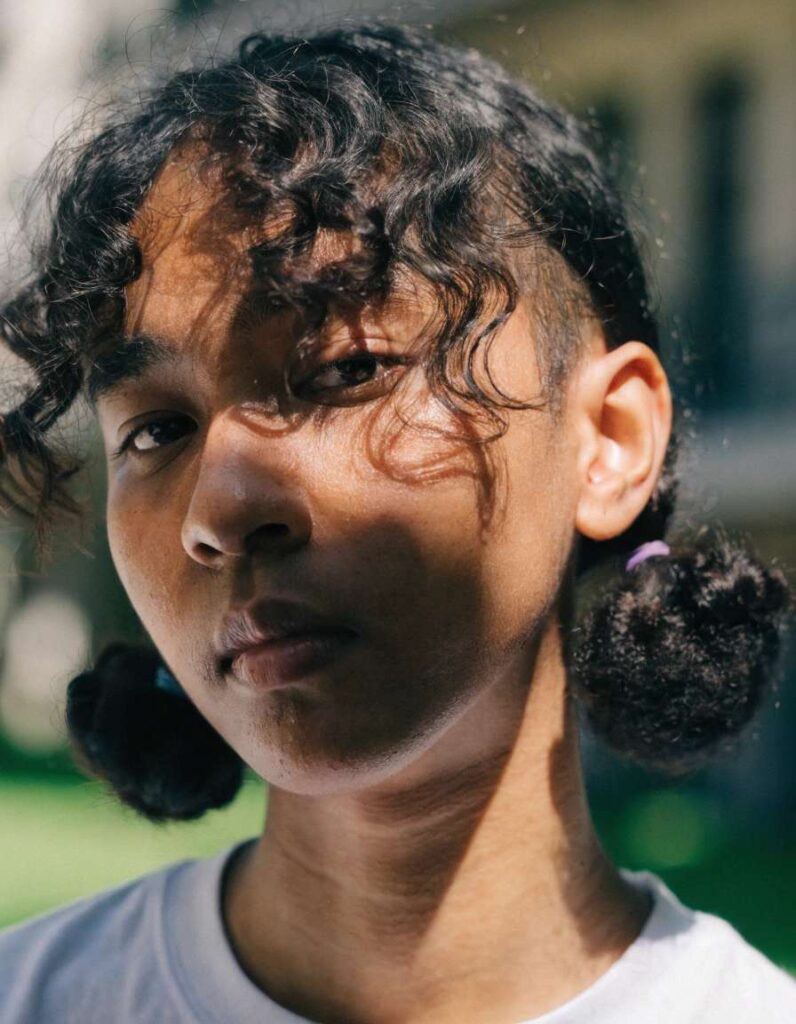
This version also tends to be more comfortable for a full day of sitting against a chair back. It works well paired with a simple, uniform-friendly outfit.
Braided Bun Combos
Combining a braid with a bun creates a more detailed updo without adding much extra time. The braid adds texture and holds the style in place better than a bun secured with just a hair tie.
This category works especially well for students who want their hair to look a bit more finished for picture days or presentations. Most of these styles still take under five minutes, even with the added braiding step.
Braid-Wrapped Bun
A single small braid wrapped around the base of a regular bun hides the hair tie and adds a decorative detail. This step takes only a few extra seconds but changes the entire look.
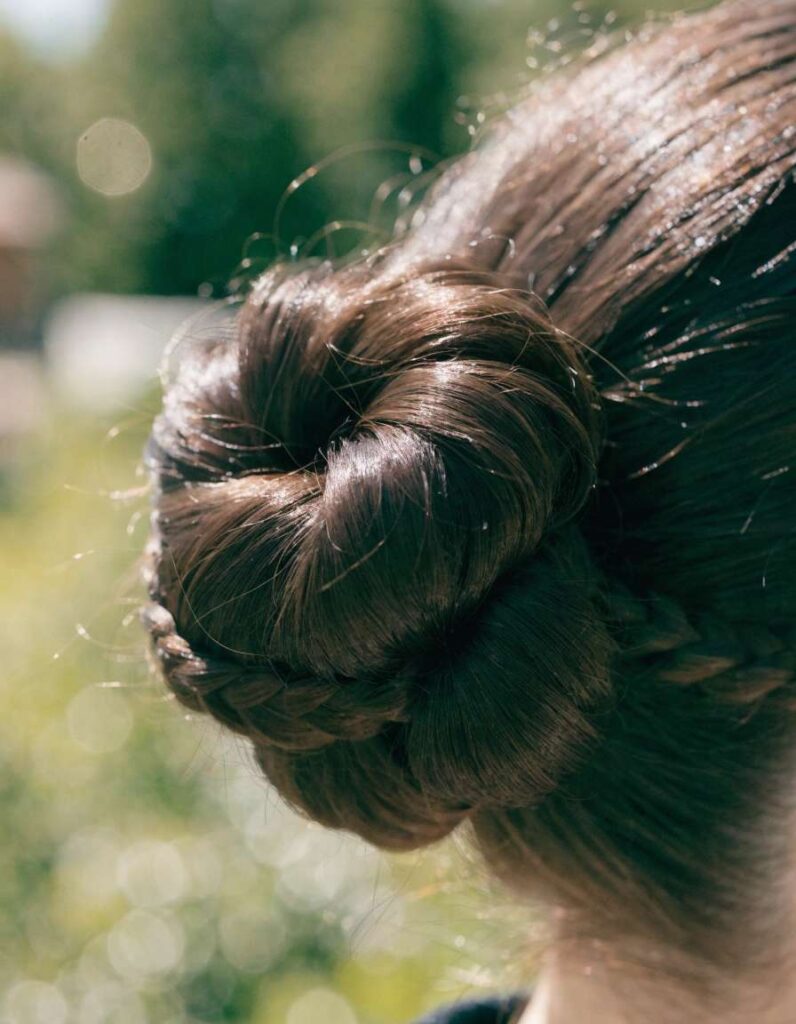
It works well for students who want a slightly more polished version of a basic bun. The braid also helps keep the bun secure through a full day of movement.
Dutch Braid into Bun
Starting with a Dutch braid from the crown and gathering the remaining length into a bun creates a style with more visible detail at the front. It works especially well for students who want a slightly more elevated everyday look.
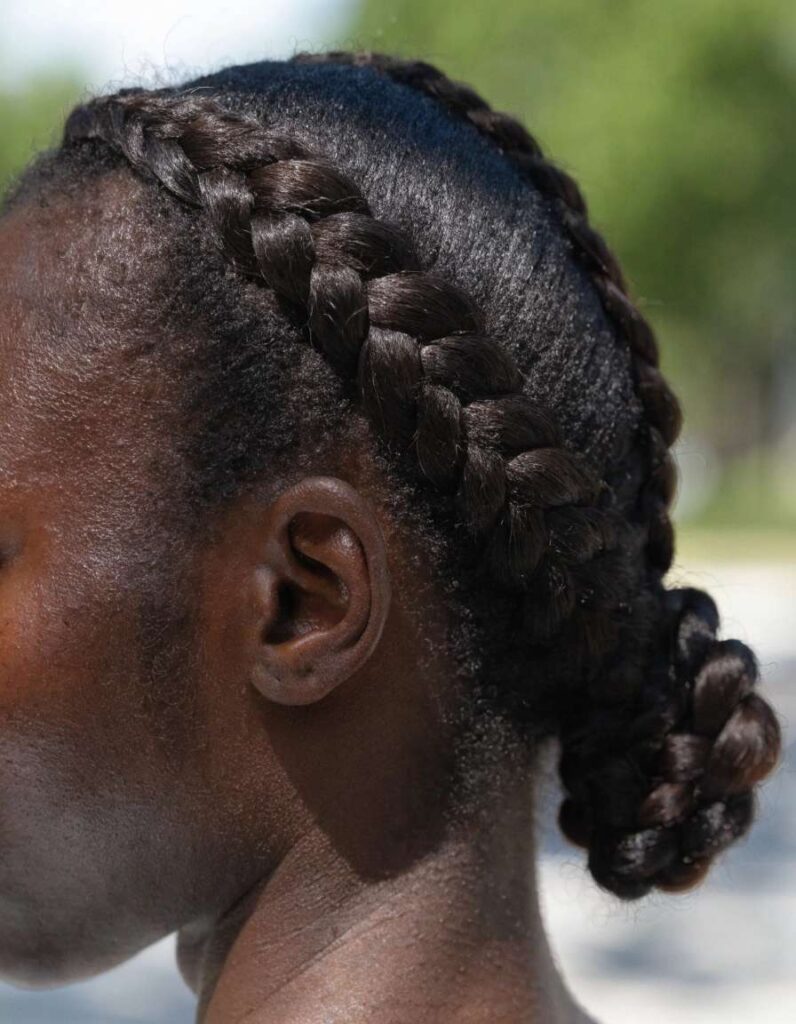
This combination holds up particularly well through PE class since the braid keeps hair secure at the roots. It also tends to last longer without loosening than a plain bun alone.
Fishtail Braid Bun
A fishtail braid gathered into a bun at the nape adds a delicate, textured detail without much added time. This version suits students who already know how to fishtail braid.
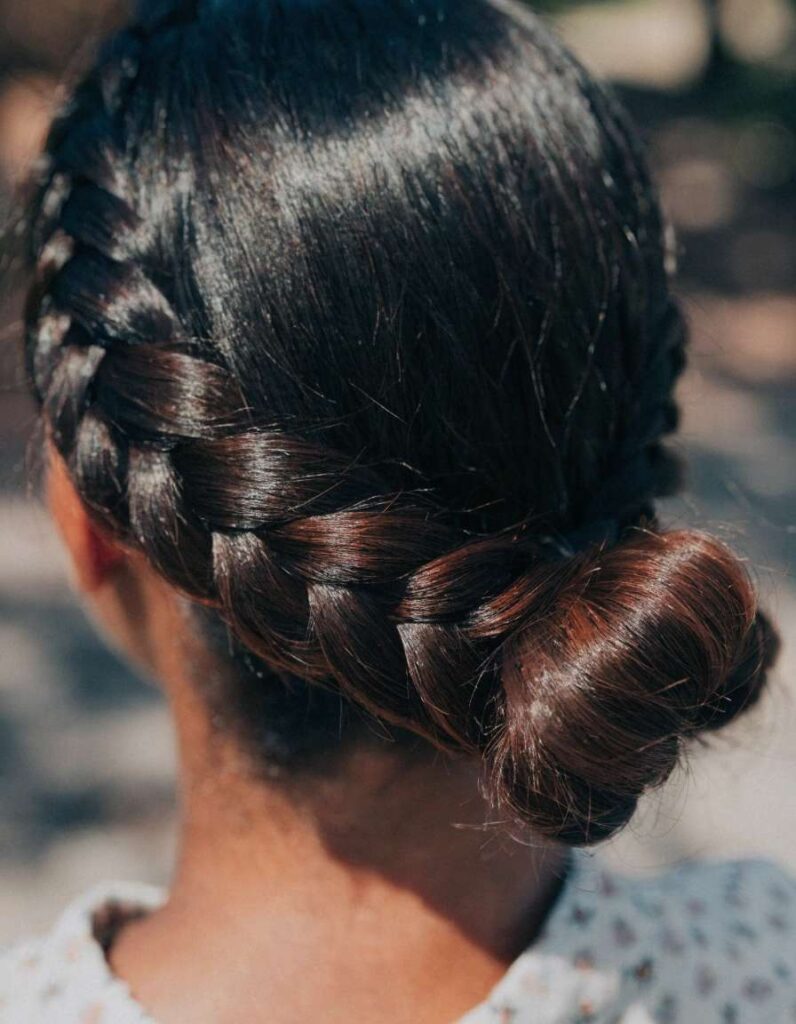
The finer braid pattern gives this style a slightly more intricate appearance than a standard three-strand braid. It works especially well for special school events or photo days.
Crown Braid Bun
A braid that wraps around the head like a crown before joining into a bun at the back creates one of the more detailed looks on this list. It still takes under five minutes with a bit of practice.
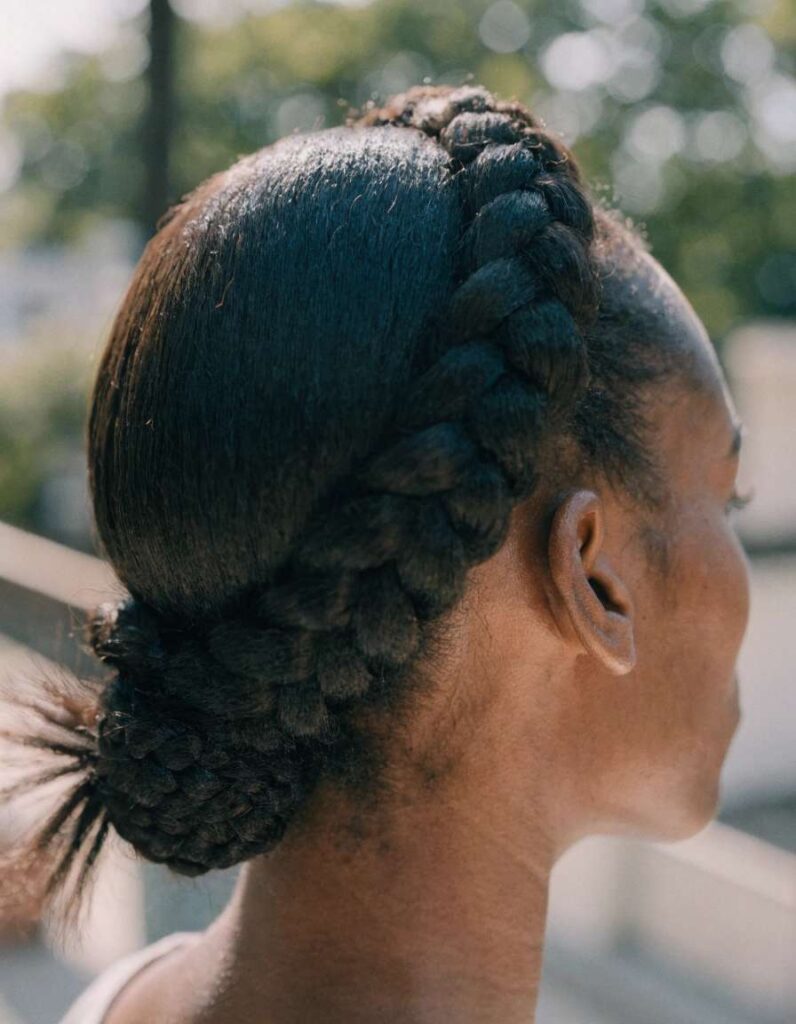
This style works particularly well for students who want their hair fully secured for an active school day. It also holds up well without touch-ups since the braid distributes tension evenly.
Double Braid into Low Bun
Two braids from either side of the head, joined together into a single low bun, create a symmetrical and secure updo. This version works especially well for thicker hair that needs extra control.
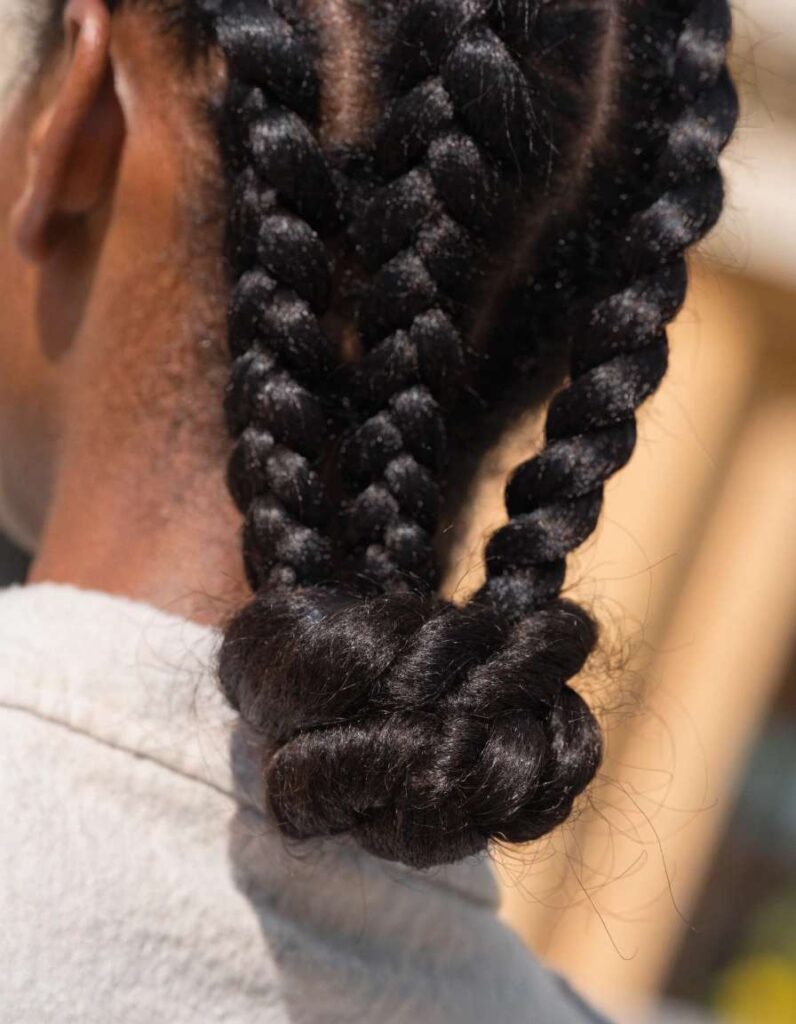
The double braid base also tends to hold the bun in place longer than a single gathered section. It’s a good option for students with early morning sports practice before school.
Frequently Asked Questions
What bun style lasts the longest through a school day?
A low, tightly secured bun with a braided base tends to hold the longest, since the braid distributes tension more evenly than a bun tied with just a hair tie.
Are space buns appropriate for all ages?
Space buns work for students of most ages, though the style tends to be more common among younger students and can be adjusted lower and looser for an older, more subdued look.
Do messy buns work on straight hair?
Yes, though straight hair may need a bit of texturizing spray or a light wave first, since messy buns typically rely on natural texture to hold their shape.
How do I keep a bun from loosening during PE class?
Using bobby pins around the base of the bun in addition to a hair tie, along with a braided base if possible, helps the style stay secure through physical activity.
Can these buns be done on medium-length hair?
Most of these styles work on medium-length hair, though very short buns like the mini space bun cluster may need extra hair for a fuller finish.
Final Thoughts
Buns and updos remain one of the most practical hairstyle categories for school mornings, covering everything from sleek and formal to playful and textured. Whether the day calls for a polished low bun or a set of space buns, each style holds up well without demanding much time.
Pick a few options from this list to rotate through the week, then save this post to your Pinterest board for the next school morning.