25 Living Room Inspo Ideas To Try This Year

*By Edden Moringa*
Your living room is the hardest-working room in the house. It hosts movie marathons, morning coffee, deep conversations, and the occasional afternoon nap you swore would only be ten minutes. It deserves more than builder-grade beige and a sofa pushed against the wall.
The good news? You don’t need a full renovation to fall back in love with your living room. Most of these ideas are weekend-friendly, renter-conscious, and built around small changes that make a big visual impact. Whether your style is calm and minimal or bold and collected, there’s something here with your name on it.
So grab your favorite drink, scroll through all 25 ideas, and save the ones that make your heart do a little happy dance. Your dream living room is closer than you think.
1. Layer Neutrals Like a Designer
A neutral living room is never boring when you layer it right. The secret is mixing shades — warm whites, creamy beiges, soft taupes, and a whisper of gray — instead of matching everything perfectly. Then add texture on texture: a nubby bouclé chair next to a smooth leather ottoman, linen curtains beside a chunky knit throw.
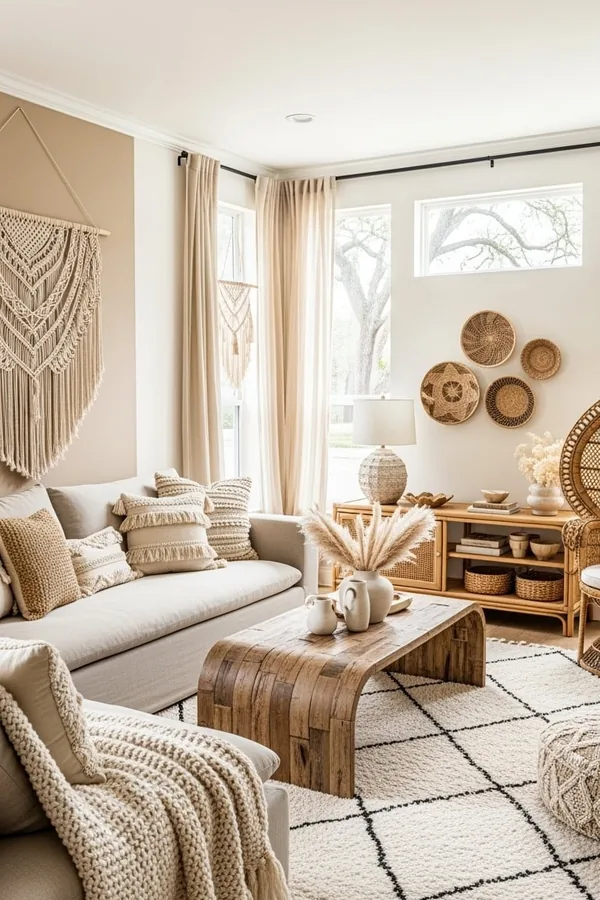
Start with your biggest surfaces (rug, sofa, curtains) in your lightest tone, then deepen the palette as you move to smaller pieces like pillows and decor. The rule of thumb: at least three different textures in every sightline. A flat-weave rug underfoot, a velvet pillow at your back, and a woven basket in the corner will make a beige room feel rich and intentional instead of washed out.
2. Build a Gallery Wall That Tells Your Story
Gallery walls are still going strong, but the stiff grid of identical frames feels dated. This year’s take is more personal and eclectic — a mix of frame sizes, art styles, and even a small mirror or wall hanging tucked in for dimension. Think of it as your life on a wall rather than a museum display.
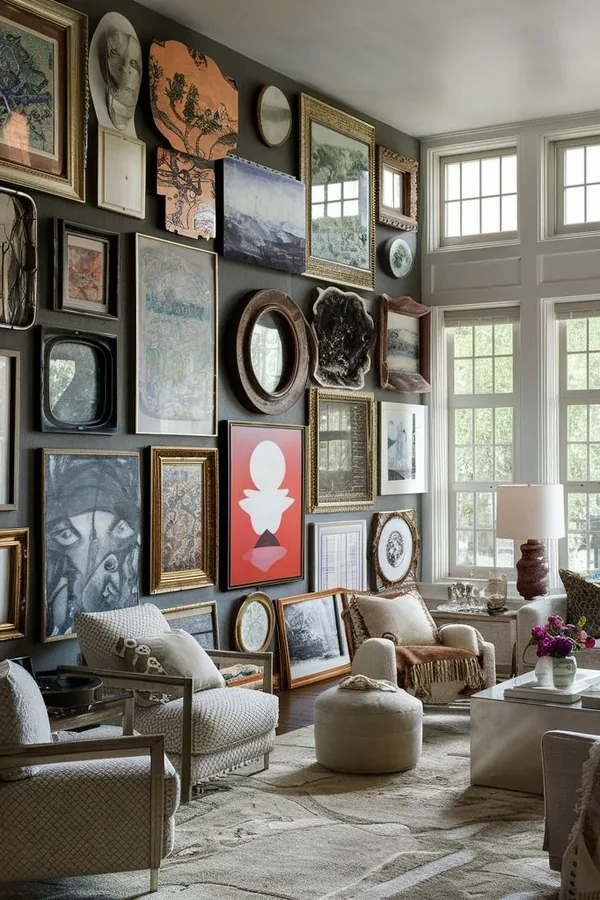
Lay your arrangement on the floor first and photograph it before a single nail goes in — you’ll spot balance problems instantly. Start with your largest piece slightly off-center, then build outward, keeping 2 to 3 inches between frames. Include at least one personal photo or memento so it feels like yours, not a showroom. And don’t be afraid to let the gallery evolve; the best ones grow over time. gallery wall ideas
3. Go Bold With a Moody Accent Wall
One dark, dramatic wall can transform a forgettable living room into a space with real personality. Deep navy, forest green, charcoal, or even a rich chocolate brown adds depth and makes everything in front of it — your sofa, your art, your plants — pop like a gallery exhibit.
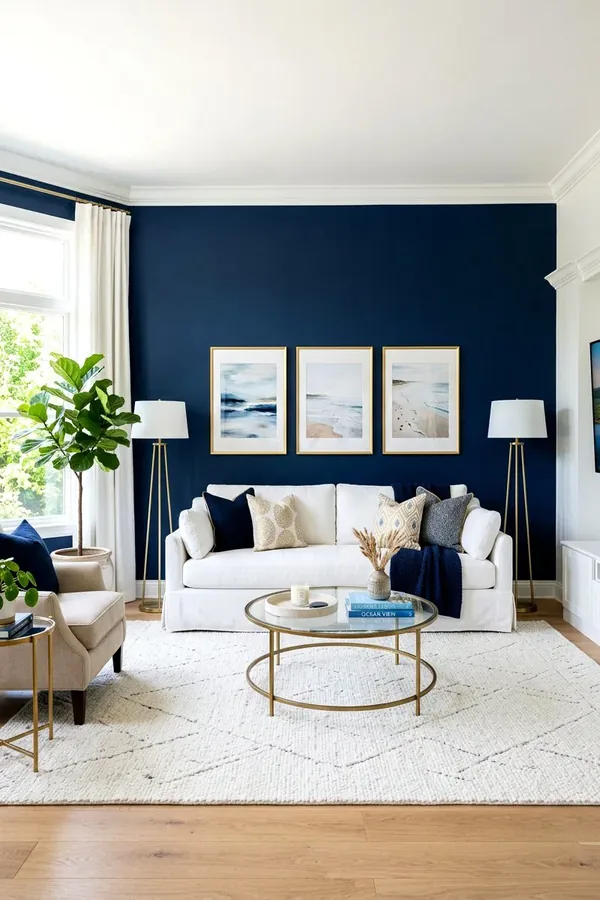
Pick the wall your eye lands on first when you enter — usually the one behind the sofa or the fireplace wall. Paint it in a matte or eggshell finish to keep it sophisticated rather than shiny. Then repeat the accent color in small doses around the room: a pillow, a vase, a piece of art. That echo is what makes a bold wall feel designed instead of random.
4. Soften the Room With Curved Furniture
After years of sharp angles and boxy sectionals, curves are having a major moment. A curved sofa, a round coffee table, or even an arched floor lamp instantly makes a living room feel softer, more inviting, and a little more high-end. Curves also improve flow — no sharp corners to bump into or awkward gaps behind furniture.
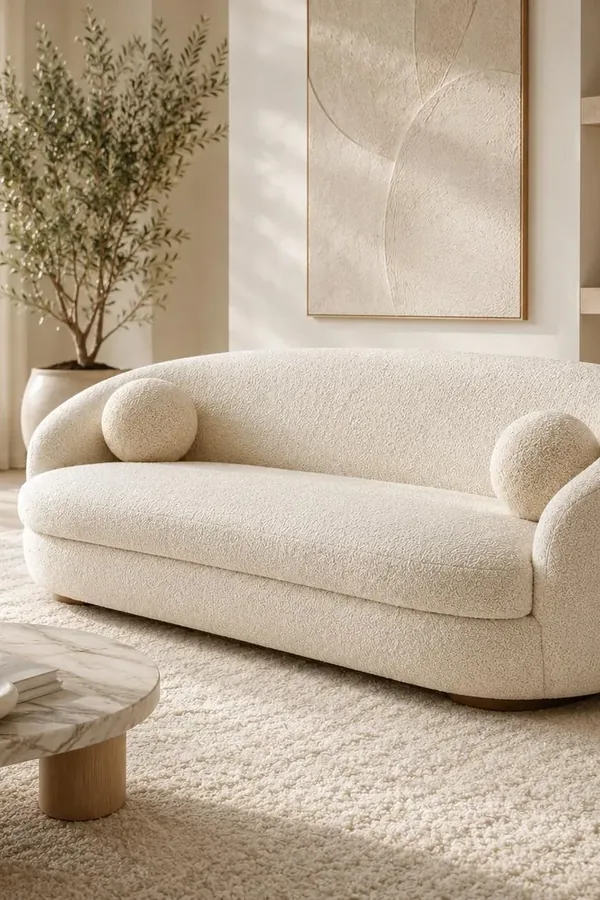
You don’t need to replace your sofa to join in. A round ottoman, curved-back accent chairs, or a circular jute rug all bring the same softening effect for a fraction of the cost. If you do invest in one curved hero piece, keep the rest of the room’s lines fairly simple so the curve becomes the star. Bouclé fabric and curved silhouettes are a match made in heaven — cozy to the eye and to the touch.
5. Layer Rugs for Instant Coziness
Layering rugs is the designer trick that makes a room look collected and lived-in overnight. Start with a large, flat natural-fiber rug — jute or sisal — as your base, then float a smaller, softer rug (vintage-style, shag, or patterned wool) on top at a slight angle. The contrast in texture and scale adds instant depth.
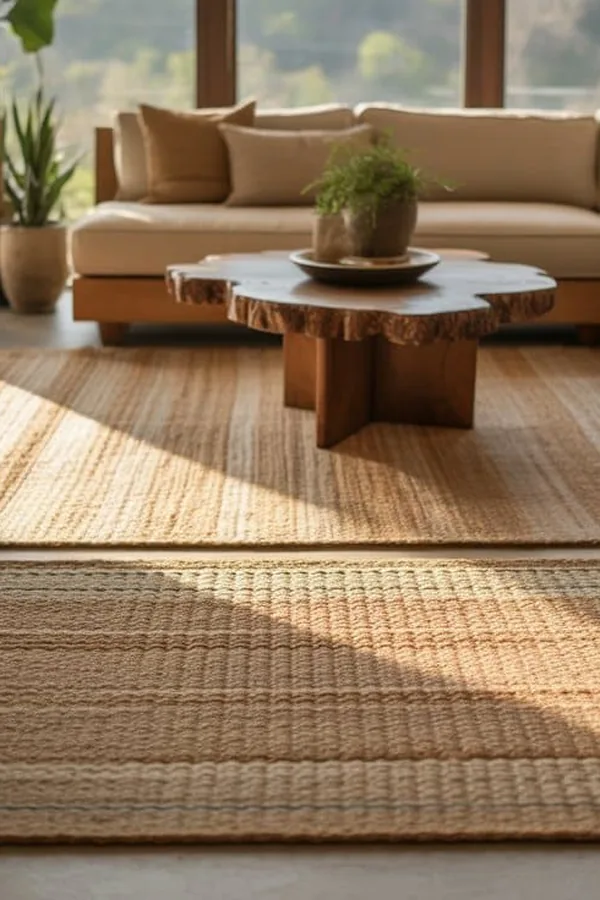
Size matters more than pattern here. Your base rug should be big enough that the front legs of your sofa and chairs sit on it — too-small rugs are the number one living room mistake. The top layer can be bolder since it covers less ground; this is a great way to try a pattern you’re nervous about committing to. Bonus: layered rugs are a renter’s best friend for hiding less-than-lovely flooring.
6. Style Your Fireplace Mantel Season by Season
The mantel is your living room’s natural focal point, so give it the styling it deserves. The winning formula is simple: something tall on one side (a vase with branches, a leaning art print), something low and layered in the middle (stacked books, a small plant), and a cluster of candles or objects on the other side for asymmetry.
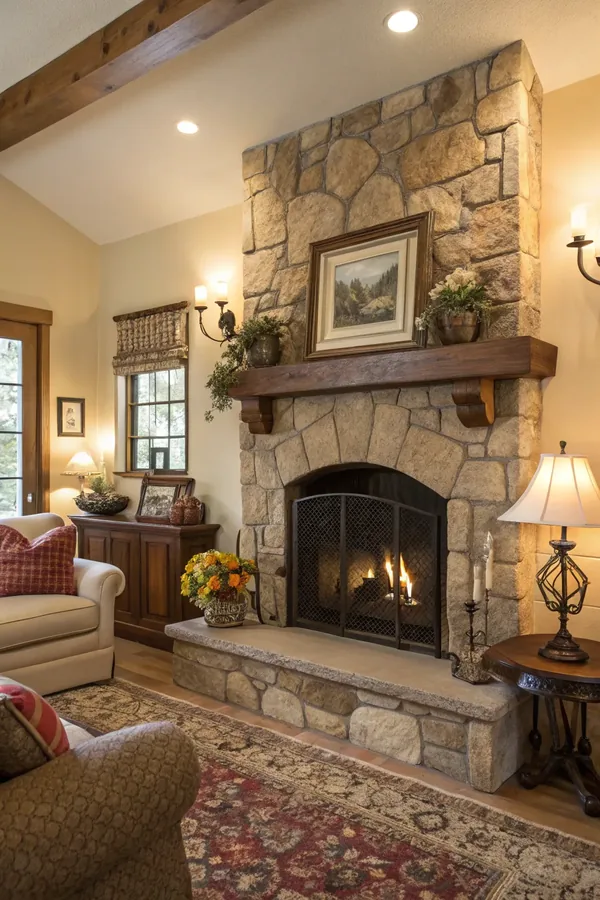
Refresh it with the seasons and your whole room feels new — eucalyptus stems in spring, sun-bleached driftwood in summer, dried grasses in fall. If your fireplace isn’t functional, don’t ignore it: fill the firebox with a cluster of pillar candles, a stack of birch logs, or a row of potted ferns. An empty fireplace draws the eye for all the wrong reasons, but a styled one anchors the entire room.
7. Make a Statement With Oversized Lighting
Lighting is the jewelry of the living room, and this year bigger is better. An oversized chandelier, a sculptural pendant, or a dramatic arc floor lamp draws the eye upward and makes even standard eight-foot ceilings feel grand. It’s one of the fastest ways to make a room feel custom rather than cookie-cutter.
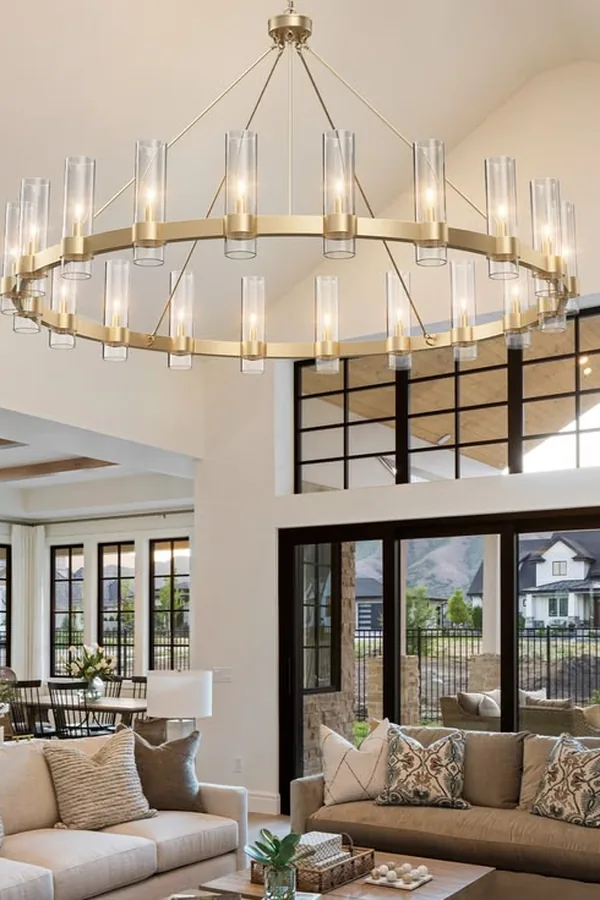
Hang your statement fixture so its bottom sits about 30 to 36 inches above the coffee table, or 7 feet off the floor in an open area — too high and it floats awkwardly, too low and it blocks sightlines. Then layer in smaller sources: a table lamp for reading, a floor lamp in a dark corner. Aim for light at three heights in every room, and always put overheads on a dimmer. Warm bulbs (2700K) keep everything flattering.
8. Style Open Shelves and Bookcases Like a Pro
Beautifully styled shelves make a living room feel intelligent and personal — like the home of someone with stories to tell. The trick is the 60-30-10 approach: about 60 percent books, 30 percent decorative objects, and 10 percent breathing room. Negative space is not wasted space; it’s what keeps shelves from looking cluttered.
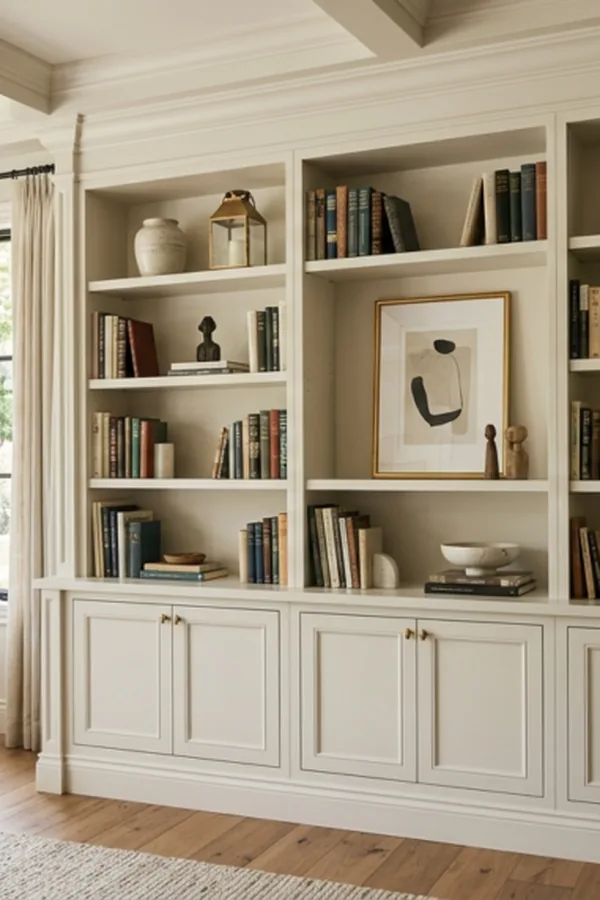
Group books both vertically and horizontally — a horizontal stack makes the perfect pedestal for a small vase or candle. Vary heights across each shelf and repeat materials (brass, wood, ceramic) for cohesion. Step back and squint: if one shelf looks noticeably heavier than the rest, redistribute. And style the tops of bookcases too — a trailing plant or a leaning frame up there finishes the look.
9. Bring the Outdoors In With Greenery
Nothing enlivens a living room faster than plants. A tall fiddle-leaf fig or olive tree in an empty corner adds height and life, while smaller plants on shelves and side tables fill the gaps that make a room feel unfinished. Greenery also softens hard furniture lines and adds a color that goes with literally everything.
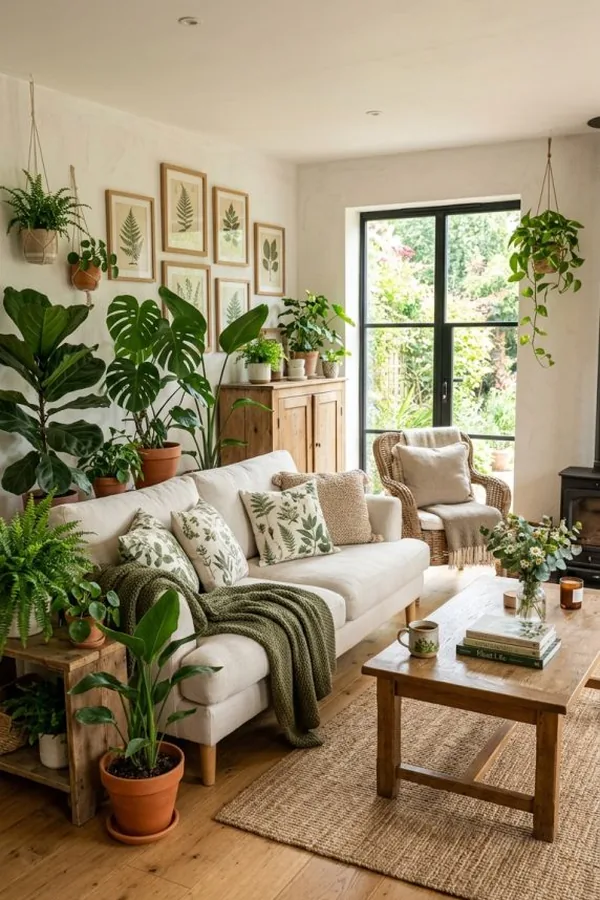
If your thumb is more brown than green, start with forgiving varieties: snake plants, pothos, and ZZ plants tolerate low light and forgetful watering. Group plants in odd numbers and vary their heights for a natural, gathered look. Pretty pots matter as much as the plants — matching or coordinating planters turn a random collection into a deliberate display. And rotate your plants a quarter turn every few weeks so they grow evenly.
10. Pile On Pillows and Throws With Intention
Pillows and throws are the fastest, cheapest living room refresh in existence — but random piles read as messy, not cozy. The formula: start with two larger pillows in a solid or subtle texture at the back, add two medium pillows with a pattern in front, and finish with one small lumbar or uniquely shaped pillow. Odd numbers always look more styled.
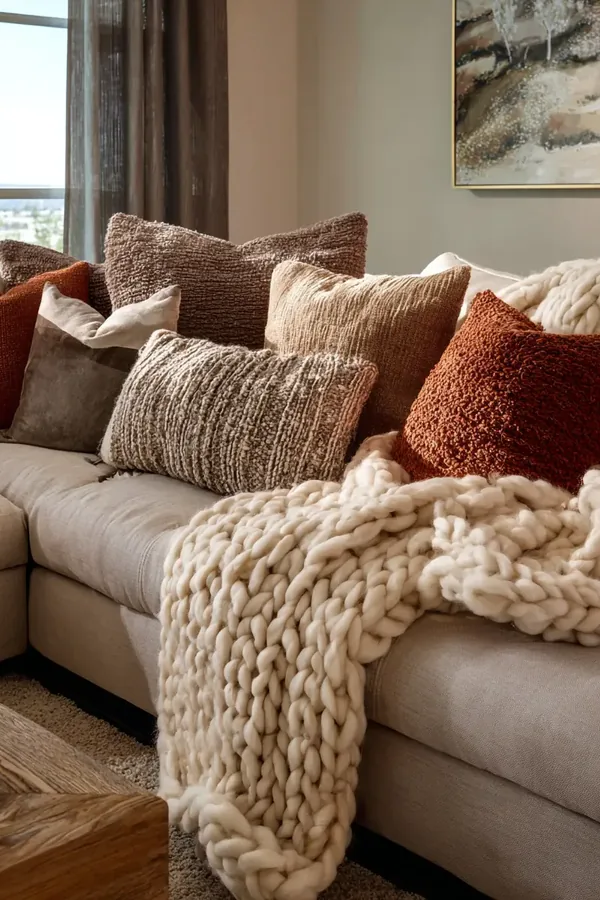
Drape throws with a casual hand, not folded into perfect rectangles — the “artful toss” looks effortless but actually takes a little practice. Mix textures deliberately: chunky knit, washed linen, faux fur, each in a slightly different tone of your palette. Keep a basket nearby for the throws you actually use daily so the sofa never looks like a linen closet exploded. Swap pillow covers seasonally instead of buying new inserts to save money and storage space.
11. Style a Coffee Table That Invites Conversation
Your coffee table is prime real estate — style it like you mean it. The classic trio works every time: something living (a small plant or fresh flowers), something to read (a beautiful book or two), and something with height (a candle or sculptural object). Corral it all on a tray so it looks curated and stays easy to clear for game night.
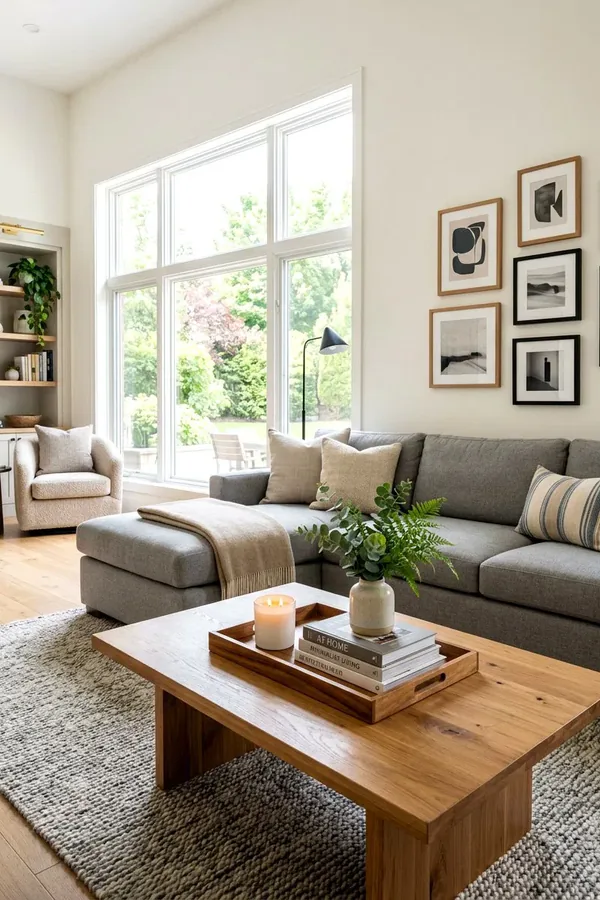
Vary heights and shapes — a tall vase next to a low stack of books next to a round candle creates the visual rhythm designers call “the triangle.” Leave about a third of the surface empty so it feels styled, not crowded. If your table is glass, add a runner or a large book underneath to ground the vignette. For more seasonal table inspiration, see our [fall coffee table decor ideas](https://dreaminspo.com/fall-coffee-table-decor/).
12. Make a Small Living Room Feel Twice as Big
Small living rooms don’t need less style — they need smarter strategy. Start by pulling furniture a few inches off the walls; counterintuitively, it creates the illusion of depth. Choose pieces with visible legs so light flows underneath, and favor a loveseat plus chairs over one bulky sectional that swallows the room.
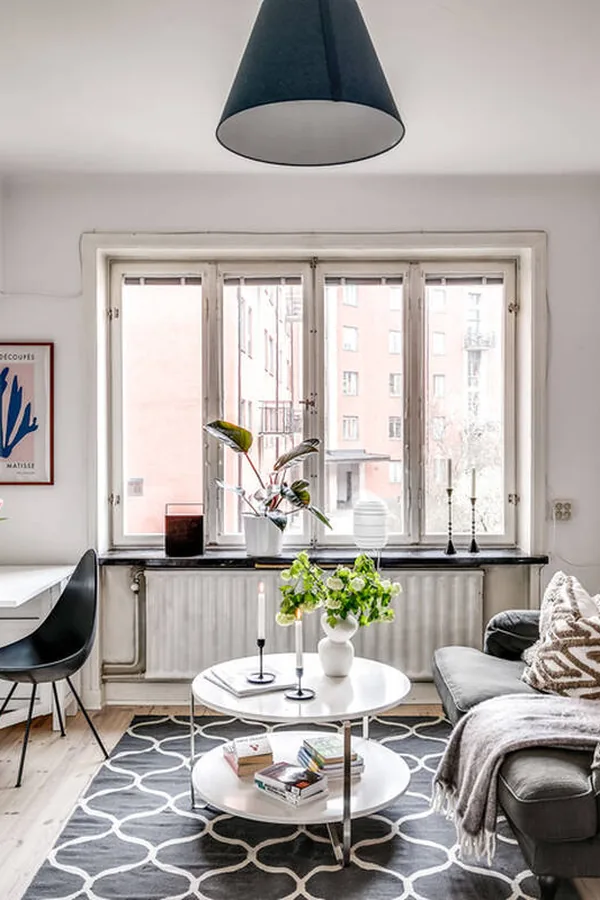
Mount curtains as close to the ceiling as possible and let them fall to the floor — the vertical line tricks the eye into seeing taller walls. Every piece should earn its footprint: storage ottomans, nesting side tables, a console that doubles as a desk. Keep the palette light and cohesive, since too many competing colors chop a small room into visual pieces. small apartment living room ideas
13. Zone an Open-Concept Space Without Walls
Open-concept living is wonderful until your living room, dining area, and kitchen blur into one undefined blob. The fix is zoning — defining each area with rugs, lighting, and furniture placement rather than walls. A rug under the sofa set instantly declares “this is the living room,” no construction required.
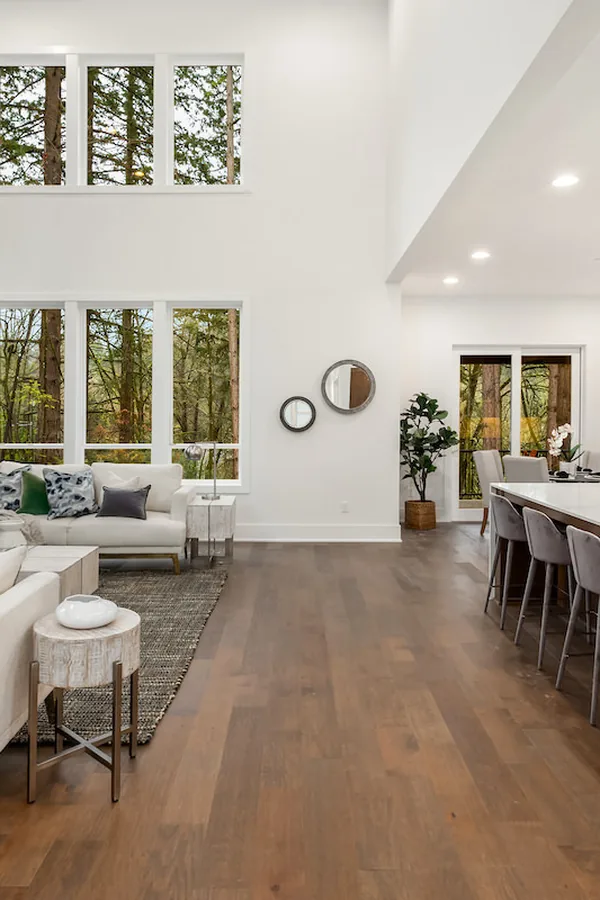
Float your sofa with its back to the dining area to create a natural divider, then place a slim console table behind it for extra surface and visual weight. Give each zone its own lighting moment — a pendant over the dining table, a floor lamp by the reading chair — so each area feels intentional after dark. Keep a consistent color palette flowing through all zones; it’s what makes open space feel harmonious instead of chaotic.
14. Embrace Calm Minimalism (Without the Cold)
Minimalist living rooms get a bad rap for feeling sterile, but warm minimalism is anything but. The key is editing ruthlessly while keeping everything you own soft to the touch and warm in tone. Think pale oak, creamy plaster walls, one beautiful linen sofa — fewer things, but every single one earning its place.
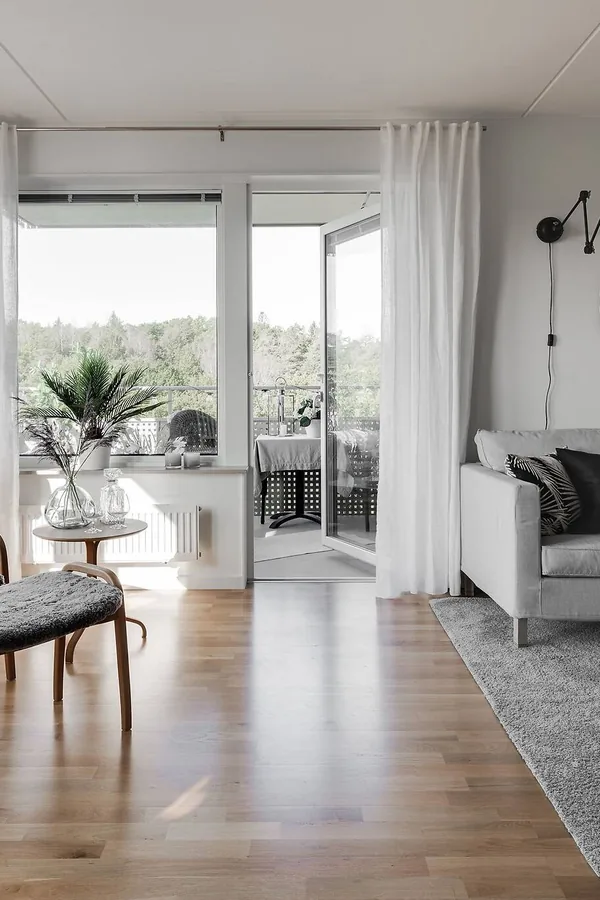
Warmth comes from natural materials: wood grain, wool, stone, clay. A single sculptural branch in a ceramic vase can be your “art.” Hide the clutter that kills calm — remotes in a lidded box, throws folded in a basket — so surfaces stay serene. Minimalism isn’t about owning nothing; it’s about giving everything you own room to breathe. The result feels like a deep exhale every time you walk in.
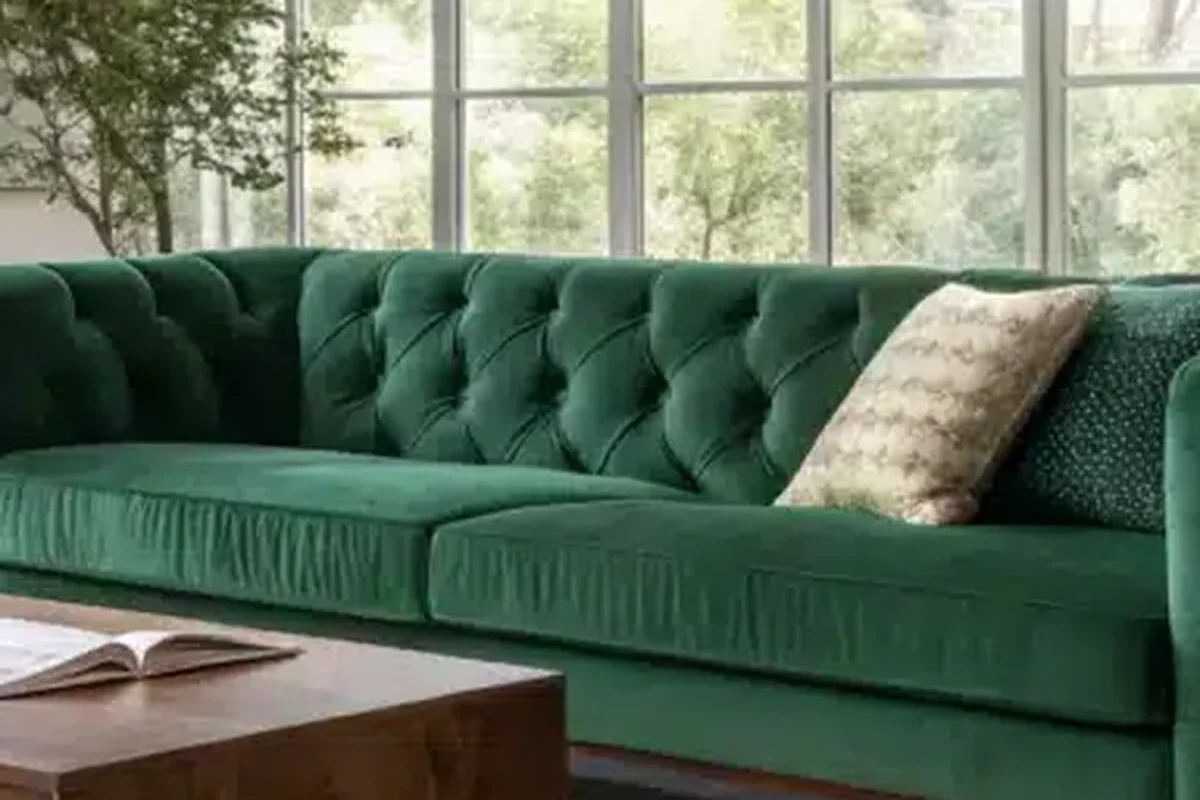
15. Anchor the Room With a Jewel-Tone Sofa
If neutrals aren’t your love language, let your sofa do the talking. A jewel-tone velvet sofa — emerald green, sapphire blue, rich burgundy — becomes instant art furniture. It gives the whole room a focal point and a color story to build around, and velvet’s sheen keeps even bold colors feeling luxurious rather than loud.
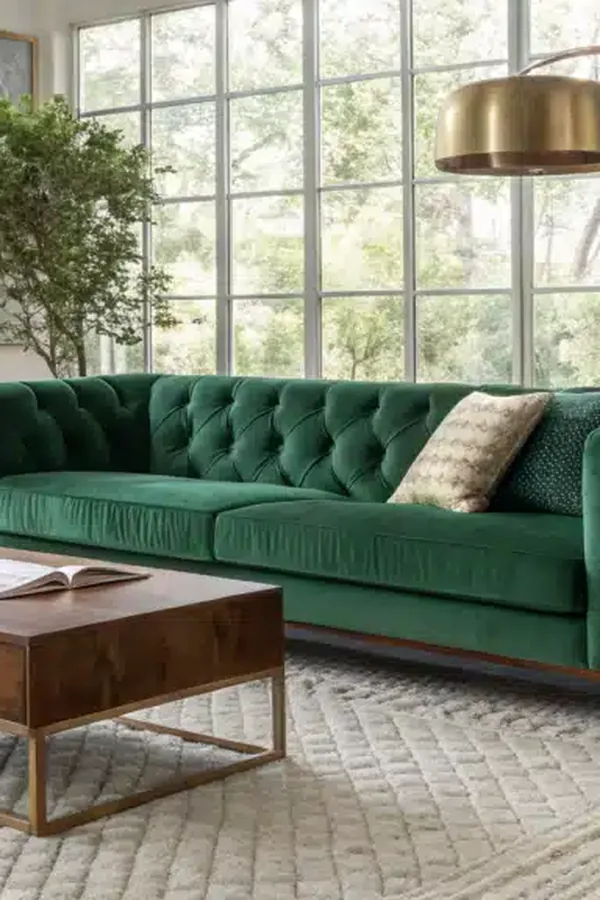
Balance a statement sofa with calmer surroundings: neutral walls, a natural-fiber rug, and wood tones let the color shine without competition. Pull two or three accent colors from the sofa for pillows and art to tie the room together. Velvet is surprisingly family-friendly — it hides wear well and most spills blot right out — so don’t save this idea for a formal sitting room nobody uses.
16. Mix in Vintage Finds for Soul
A room full of brand-new furniture can feel like a catalog — polished but impersonal. Vintage and antique pieces add the patina, craftsmanship, and one-of-a-kind character that make a living room feel soulful. One great vintage find — a worn leather chair, a mid-century sideboard, an oil painting from a flea market — can elevate everything around it.
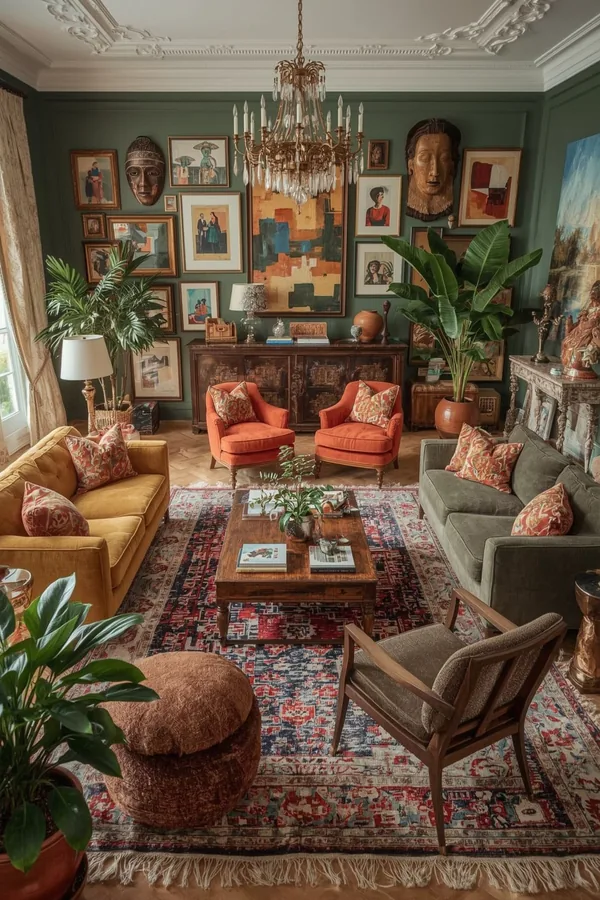
The magic ratio is about 80 percent current to 20 percent vintage; too much antique and the room feels like a museum. Mix eras confidently — a Victorian mirror over a modern console is exactly the kind of tension designers love. Check the bones before you buy: solid wood frames and dovetail drawers are worth reupholstering or refinishing, while wobbly particleboard is not. Every scratch tells a story, and that’s the point.
17. Try Japandi: Warm Minimalism That Works
Japandi — the blend of Japanese wabi-sabi and Scandinavian simplicity — might be the most livable trend of the decade. It’s minimalism with a pulse: clean lines and uncluttered surfaces, but warmed up with natural wood, handmade ceramics, and textures that invite touch. Imperfection isn’t just allowed; it’s celebrated.
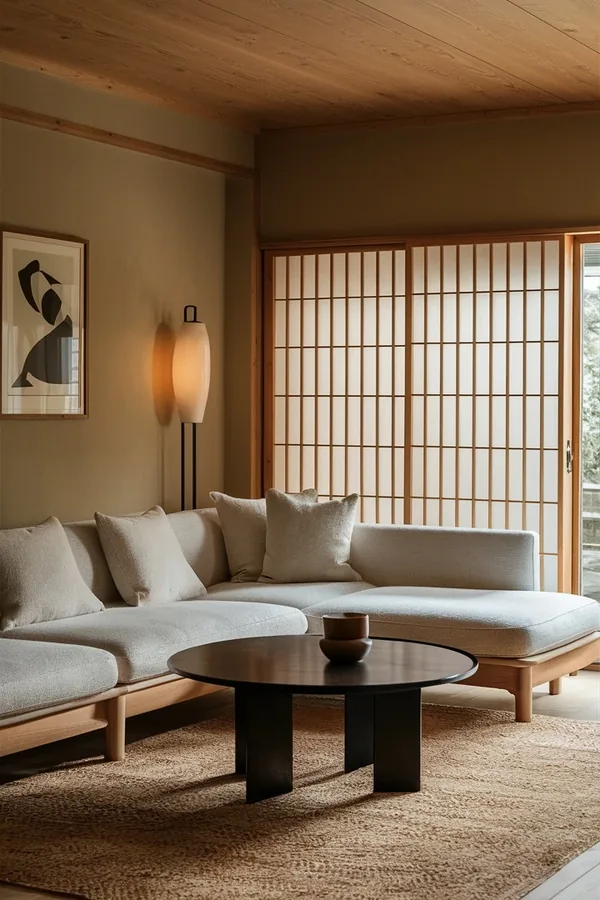
Keep furniture low-profile — a low sofa or platform-style seating instantly channels the aesthetic. Choose a restrained palette of warm whites, soft beiges, and muted earth tones, then add contrast with black accents in lighting or frames. Display fewer, better objects: one handmade vase beats five generic ones. If your living room currently feels busy and overstimulating, Japandi is the reset button.
18. Hang Curtains High and Wide
Curtains are the most underrated living room upgrade, and most people hang them wrong. Mount the rod 4 to 6 inches above the window frame (or right at the ceiling) and extend it 6 to 12 inches beyond each side. When open, the panels should just kiss the frame’s edges — suddenly your windows look twice as large and your ceilings noticeably taller.
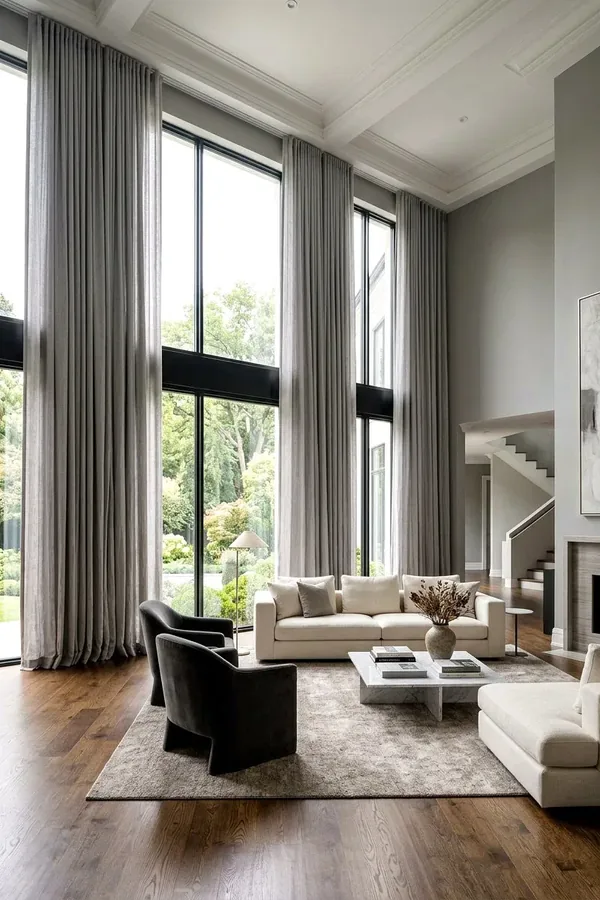
Panels should just graze the floor or puddle slightly — floating “high-water” curtains cheapen the whole room. For living rooms, linen or linen-blend panels in a warm white filter light beautifully while maintaining privacy. Layer sheers behind heavier drapes if you want day-to-night flexibility. And buy the right width: panels should measure 1.5 to 2 times the rod width so they gather in full, luxurious folds instead of stretching flat.
19. Design a TV Wall That Doesn't Scream "TV"
Let’s be honest: the TV is the elephant in most living rooms. Instead of fighting it, design around it. A media wall with built-in shelving, a low console with styled decor on either side, or a gallery wall arranged around the screen all help the black rectangle blend into a composed vignette rather than dominating the room.
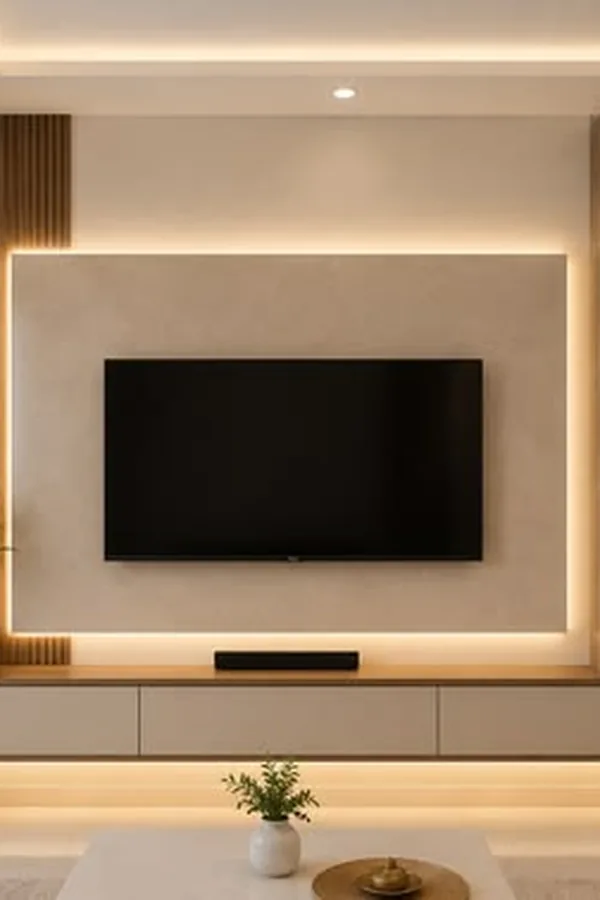
Mount the TV at eye level when seated — the center of the screen should sit about 42 inches off the floor. Frame it visually: flanking bookcases, a paneled or shiplap accent wall behind it, or artwork hung at the same height on adjacent walls all reduce the “floating black box” effect. Hide the cord chaos with a cord cover painted to match the wall, and add a bias light strip behind the TV to reduce eye strain during movie nights.
20. Carve Out a Reading Nook
Every living room has a dead corner — that awkward spot by the window or beside the fireplace that collects nothing but dust. Turn it into a reading nook and it becomes the most coveted seat in the house. All you need is a comfortable chair, good light, and a small surface for your tea.
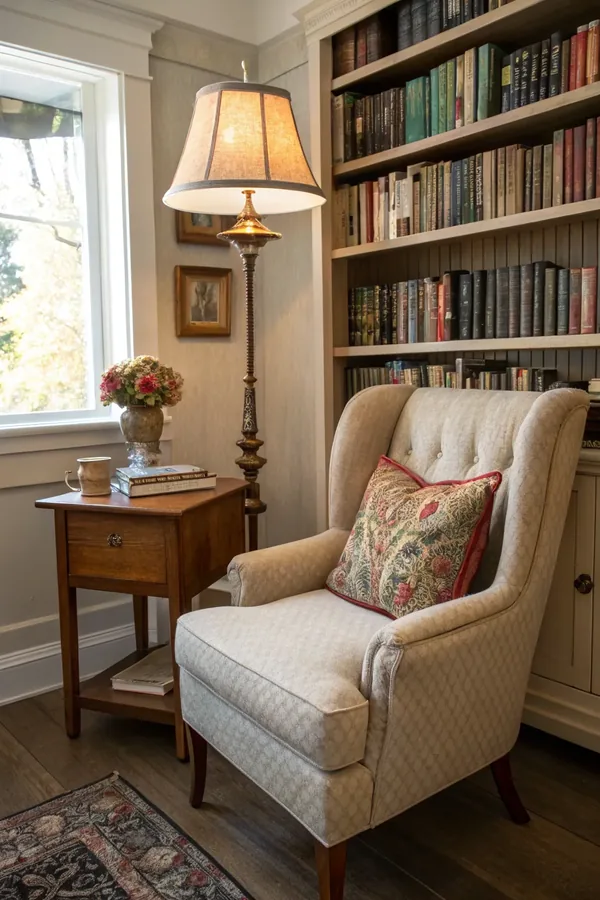
Angle the chair slightly into the room rather than shoving it flat against the wall — it feels more inviting and defines the nook as its own zone. A floor lamp with a warm bulb positioned over your shoulder is non-negotiable for evening reading. Add a small side table, a soft throw, and maybe a footstool, and you’ve built a retreat without sacrificing a single square foot of your main seating area.
21. Warm Up Modern Farmhouse Style
Modern farmhouse has grown up. The stark white shiplap-and-barn-door phase is giving way to something warmer and more layered: creamy walls, honey-toned woods, vintage-inspired textiles, and black accents used sparingly. It keeps the cozy, gathered feeling of farmhouse style without the theme-park literalness.
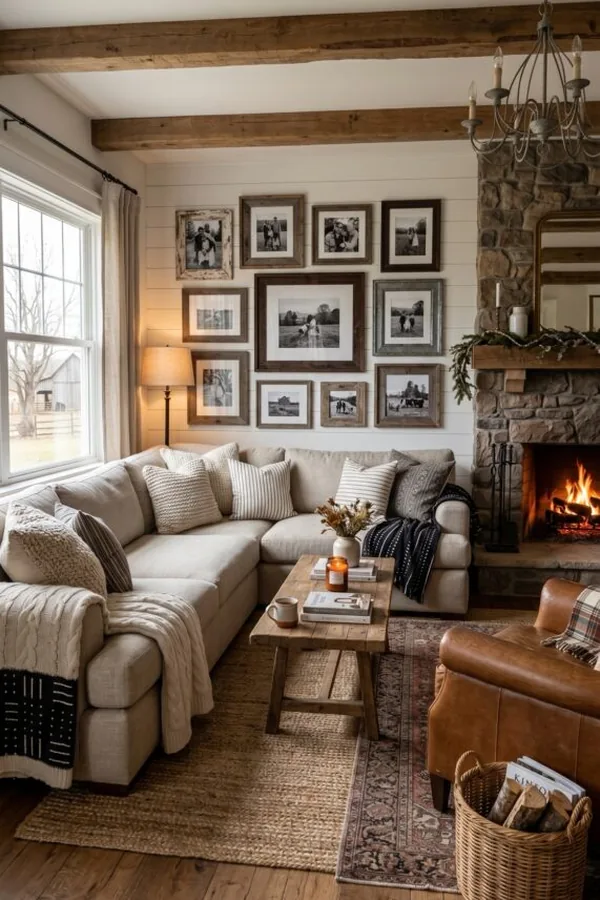
Mix wood tones instead of matching them — a weathered coffee table with a smooth oak console looks collected, not chaotic. Slipcovers are the farmhouse hero: practical, washable, and effortlessly relaxed. Add texture through grain sacks, ticking stripes, and chunky knits rather than through signs with words on them. The modern farmhouse living room should feel like a deep breath of country air, not a gift shop.
22. Lean Into Collected Maximalism
Maximalism is minimalism’s joyful opposite: more color, more pattern, more art, more you. Done well, it’s not clutter — it’s curation at full volume. The secret is a unifying thread, usually color. Pick two or three core hues and let patterns, eras, and textures run wild within that palette.
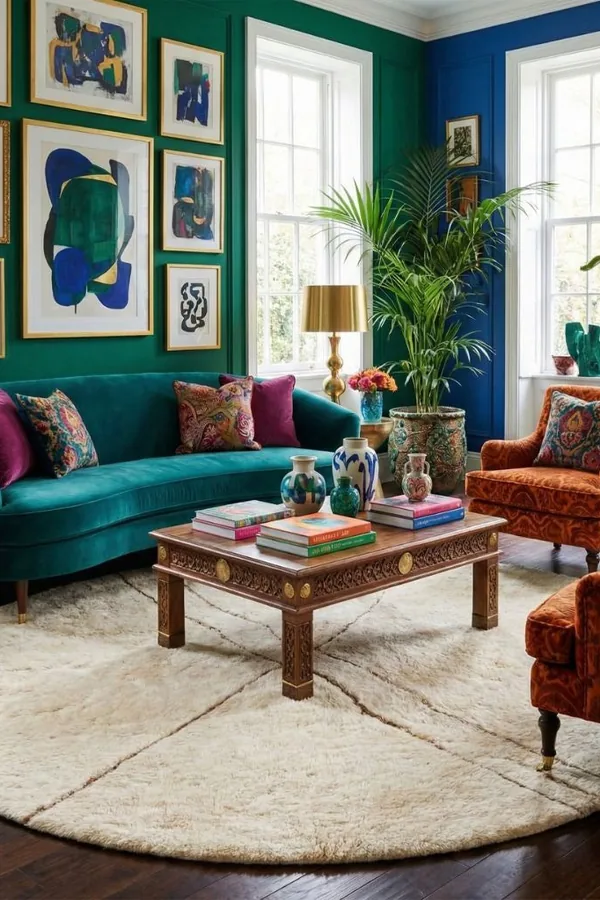
Layer pattern at different scales — a large-scale floral with a small geometric and a stripe can absolutely coexist if the colors relate. Fill walls generously; maximalist rooms rarely have sad empty expanses. Every surface can hold something beautiful, but give each vignette a little breathing room so the eye can rest between moments of abundance. If your heart lifts in colorful, layered spaces, stop apologizing and lean all the way in.
23. Bounce Light Around With Mirrors
Mirrors are the cheapest way to fake natural light and square footage. A large mirror opposite or adjacent to a window doubles your daylight and your view, making the whole room feel brighter and more open. It’s basic physics doing interior design work for you.
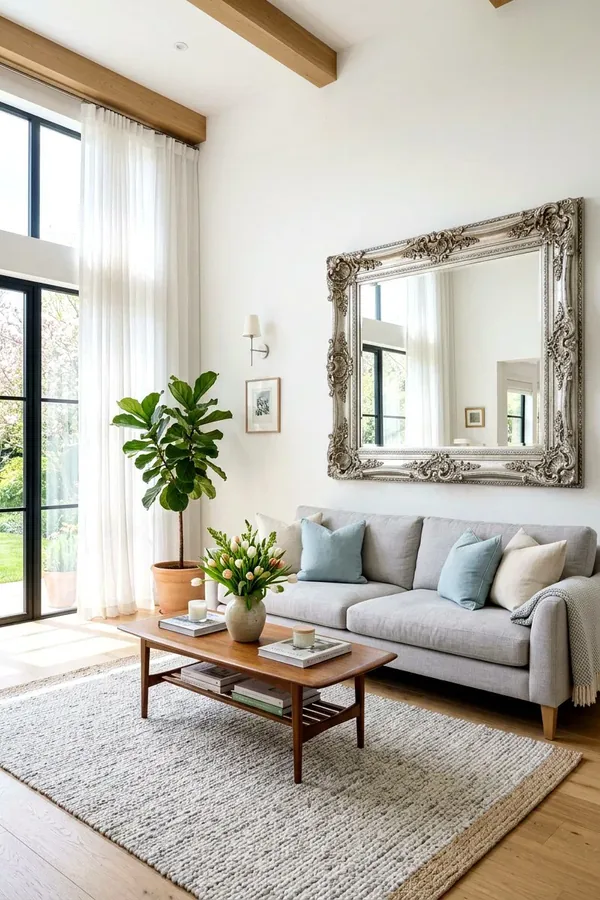
Go big — a floor-leaning mirror at least 5 feet tall makes a real statement, while a tiny mirror just reflects a sad patch of ceiling. Lean it against the wall rather than hanging it for a relaxed, modern feel (and renter-friendly installation). Be strategic about what it reflects: greenery, a pretty window, or your favorite art — never clutter or the TV. An arched mirror softens a room full of rectangles, and a vintage brass frame adds instant warmth.
24. Do a Simple Seasonal Refresh for Fall
You don’t need to redecorate to celebrate the season — a few thoughtful swaps make your living room feel autumn-ready. Trade lightweight summer throws for chunky knits in rust, caramel, and deep olive. Add dried grasses or branches to your vases, swap a bright art print for something moodier, and light a candle that smells like a crisp October afternoon.
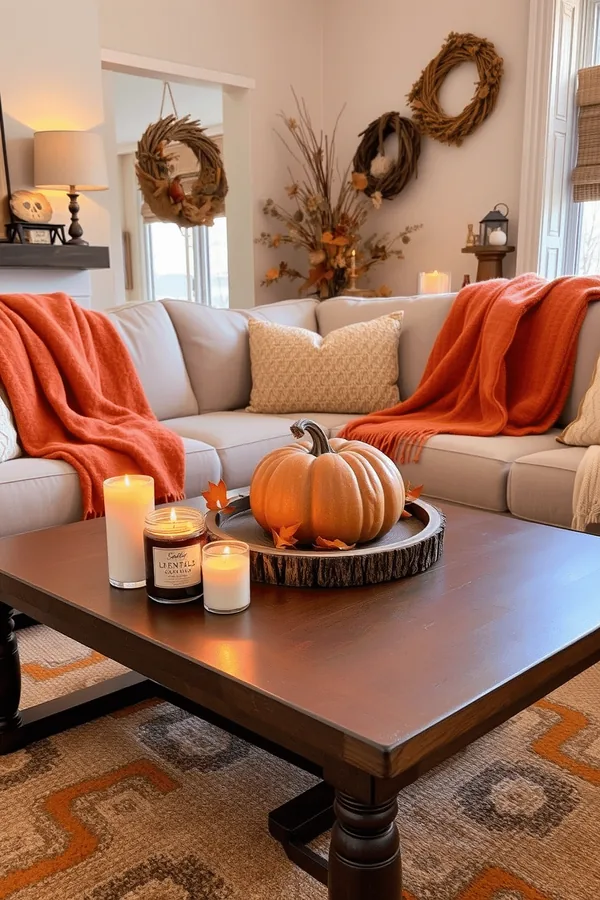
Focus your seasonal energy on high-impact, low-effort zones: the mantel, the coffee table, and the entryway console. A bowl of mini pumpkins, a plaid throw over the sofa arm, and amber glass accents go a long way. Store your seasonal bin with like items grouped together so next year’s refresh takes an afternoon, not a weekend. For the full autumn playbook, check out our [fall coffee table decor](https://dreaminspo.com/fall-coffee-table-decor/) and [Halloween decor trends](https://dreaminspo.com/halloween-decor-idea-the-seasons-biggest-trends/).
25. Try Color-Blocking for a Custom Look
Color-blocking — painting walls in bold geometric sections of color — is the DIY-friendly way to get a custom, designer look for the price of a few paint samples. A painted arch behind the sofa, a two-tone wall split at chair-rail height, or a bold rectangle framing your reading nook adds architecture where there is none.
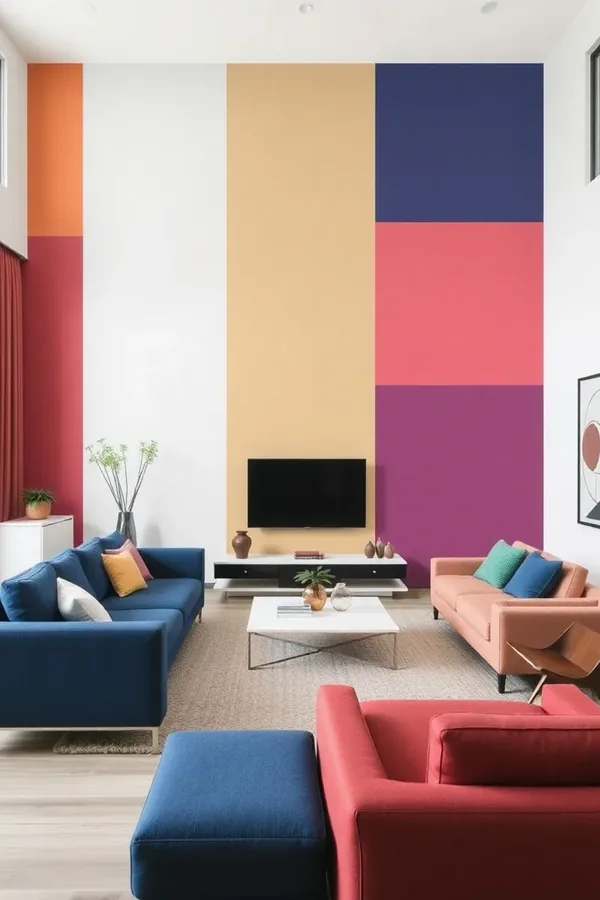
Arches are the friendliest shape for beginners: trace a large semicircle with a pencil tied to a string, then fill it in with a roller. Choose colors with the same undertone so blocks feel harmonious rather than clashing — warm terracotta with creamy white, or sage with soft charcoal. Use painter’s tape and a small angled brush for crisp edges, and remove the tape while the paint is still slightly tacky. It’s renter-reversible with a coat of primer, so the risk is beautifully low.
FAQs About Living Room Decor
### How can I make my living room look expensive on a budget?
Focus on the things the eye reads as “expensive”: good lighting, proper curtain height, and uncluttered surfaces. Swap harsh overheads for warm lamps, hang curtains high and wide, and style surfaces with the rule of three. A fresh coat of paint in a rich, current color costs less than a single new pillow but transforms the whole room. Thrift stores and flea markets are goldmines for solid-wood and brass pieces that look far pricier than they are.
### What is the most popular living room style right now?
Warm minimalism and Japandi continue to dominate, but the bigger story is personalization — layered neutrals, vintage mixes, and collected maximalism are all thriving at once. The through-line is comfort: curved furniture, rich textures, and earthy color palettes that make rooms feel like a hug. Rather than chasing one label, borrow the elements that genuinely make you happy and combine them confidently.
You May Also Like
Keep the inspiration going with these related ideas:
- 21 Cozy Reading Nook Ideas To Try This Year
- 19 Shelf Wallpaper Ideas To Try This Year
- 21 Monochrome Kitchen Decor Ideas To Try This Year
Final Thoughts
Twenty-five ideas, one common thread: the best living rooms aren’t the most expensive or the most on-trend — they’re the most personal. The gallery wall with your grandmother’s photo, the reading nook where you actually read, the velvet green sofa you were nervous to buy but now can’t imagine living without. Those are the details that turn a decorated room into your room.
You don’t have to tackle everything at once. Pick the two or three ideas that sparked the most excitement, start this weekend, and let the rest unfold over time. Great rooms are layered slowly, with love. Now go fluff those pillows, hang those curtains high, and make your living room the place everyone wants to be — starting with you.