21 Cozy Reading Nook Ideas To Try This Year

There’s a special kind of tired that only a good book can fix — and a special kind of chair that turns one chapter into five. If you’ve ever read in bed with a crick in your neck, or on the couch while the TV blares in the background, you already know: readers need their own spot. A reading nook isn’t a luxury. It’s a small, deliberate corner of your home that says this is where the world gets quiet.
The good news: you don’t need a spare room, a big budget, or a renovation. All it really takes is a comfortable seat, decent light, and a corner that’s yours. The 21 ideas below work in apartments, family homes, and everything in between — and most of them come together in a single weekend.
Each one is built around the three things that matter most: seating you can sink into, light that won’t strain your eyes, and a layout that makes you want to stay awhile. Grab a cup of tea, start scrolling, and find the corner that’s about to become your favorite place in the house.
1. Start With the Chair: The Right Seat Makes the Nook
Every great reading nook starts with the same decision — the chair. Cozy reading chairs are the whole foundation: deep enough to curl up in, with a back high enough to support your head and arms at a comfortable resting height. Look for a cushioned armchair, a small recliner, or an oversized accent chair with at least 22 inches of seat depth, because perching on the edge of a stiff chair is the fastest way to abandon a book mid-chapter.
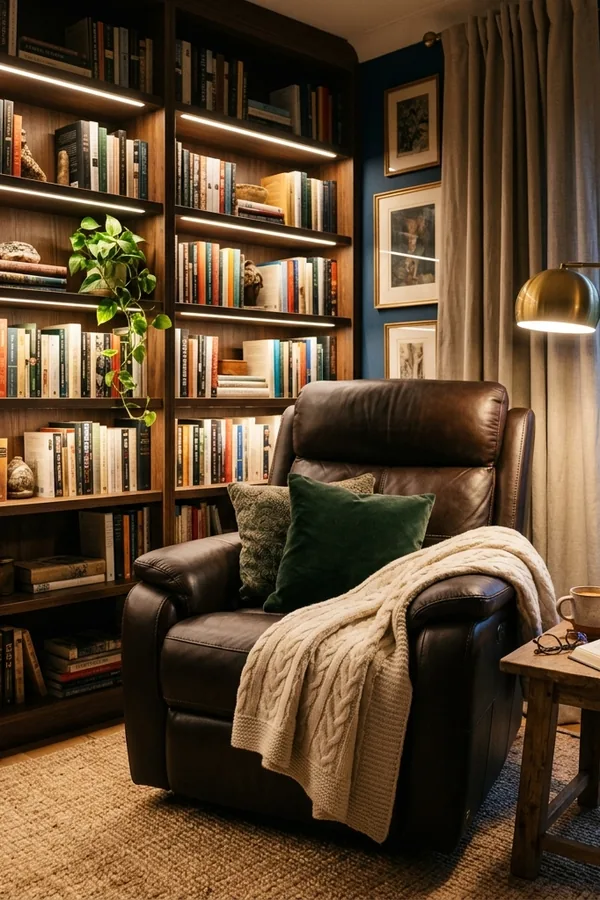
Build the nook around the chair rather than squeezing it into a leftover gap. Give it a side table within arm’s reach for your drink, a floor lamp positioned over your reading shoulder, and a throw blanket draped over one arm so the spot looks inviting even when it’s empty. A small rug underneath anchors the arrangement and keeps your feet off a cold floor — one small detail that decides how long you’ll actually linger.
2. Steal the Sunniest Window for a Bay Reading Seat
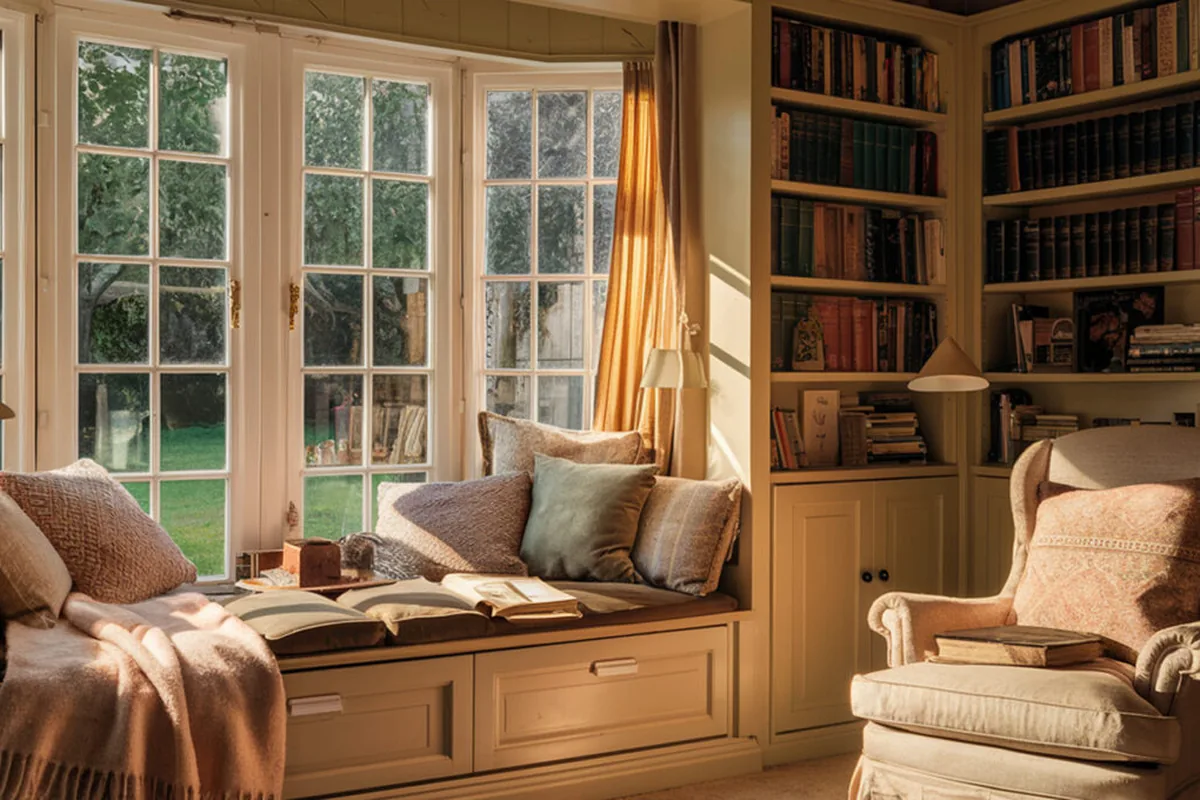
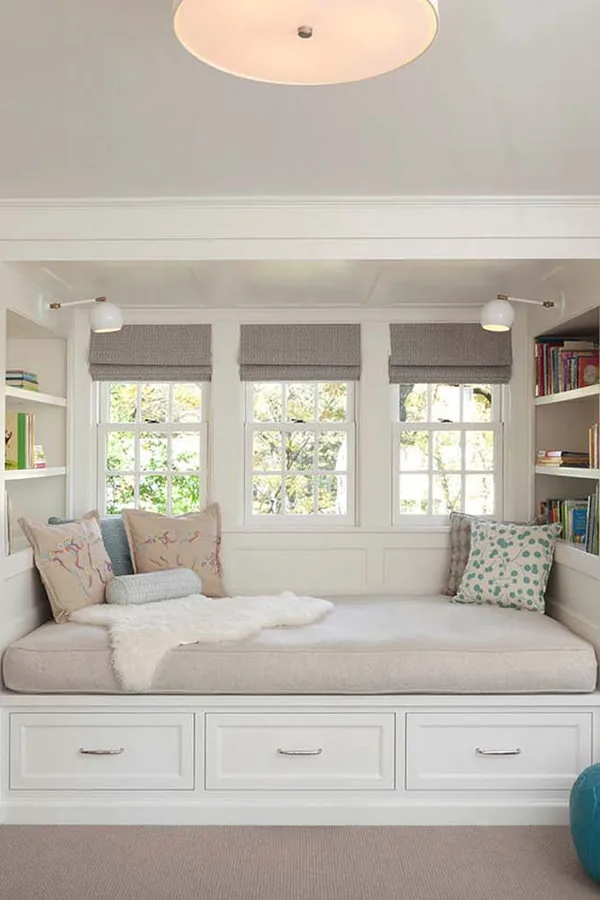
If your home has a bay window or any wide, low windowsill, you’ve already got the bones of a reading nook — you just need the cushioning. A custom-cut foam cushion in a washable fabric turns the sill into a daybed-style seat, and a row of throw pillows along the back gives you something to lean against. Daytime readers love this setup because nothing beats natural light, and watching the weather change while you read is half the pleasure.

Make it genuinely comfortable, not just pretty: the cushion should be at least 4 inches thick, and the pillows firm enough to hold their shape when you lean back. Add a small basket beside the window for your current reads and a lightweight throw for overcast afternoons. One caution — direct sun fades book covers and overheats the seat in summer, so a sheer curtain or UV-filtering window film is worth it if your window faces south or west.
3. Claim the Space Under the Stairs
The awkward triangle under the stairs is dead space in most homes — which makes it the perfect reading hideaway. It’s naturally enclosed, giving it that den-like feeling readers love, and it sits close to the living areas so it never feels isolated. A low bench or a pair of floor cushions fits neatly into the slope, and the wall becomes your bookshelf.
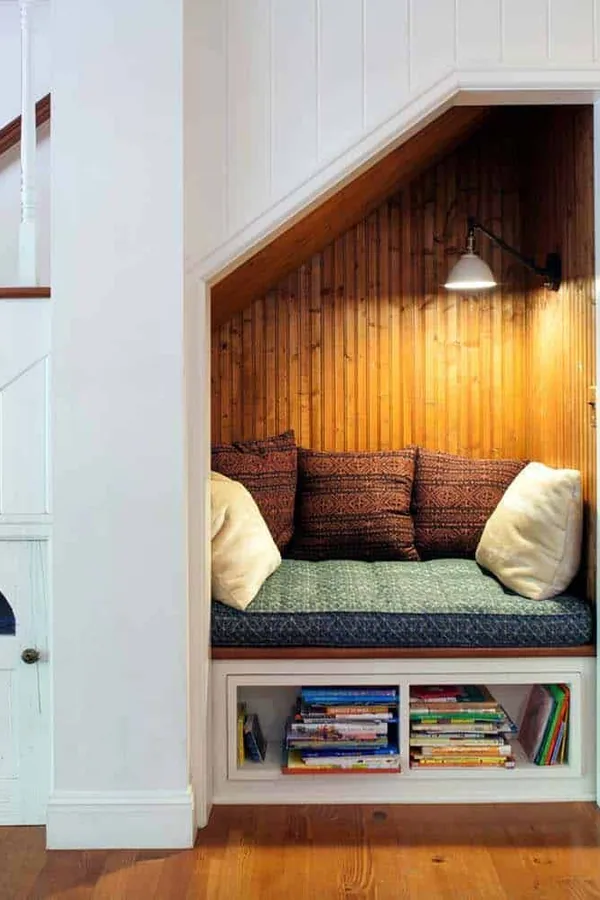
Lighting is the make-or-break detail here, since under-stair space gets almost no natural light. Run a warm LED strip along the underside of the steps or mount a small sconce at reading height, choosing bulbs around 2700K so the glow feels cozy rather than clinical. Paint the interior walls a light, warm color to bounce the light around, add a rug to soften the floor, and the most ignored square footage in your house becomes the spot everyone fights over.
4. Turn the Attic Into a Book-Lover's Hideaway
Finished attics, with their sloped ceilings and tucked-away feeling, were practically designed for reading nooks. The low rooflines that make the space awkward for full-size furniture are perfect for a low lounge chair, a chaise, or a mattress-style floor setup — and the separation from the rest of the house means uninterrupted quiet. If your attic already has flooring and light, you’re most of the way there.
Lean into the coziness of the slopes instead of fighting them: line the knee walls with low bookshelves, hang a pendant or a string of warm fairy lights from the ridge beam, and layer rugs to cut the echo. Check insulation and ventilation before you commit — attics swing from chilly to stifling — and add a small fan or space heater for your climate. Done right, it feels less like a spare room and more like a secret library.
5. Carve a Reading Corner Out of the Bedroom
Your bedroom already has the two things a reading nook needs most — quiet and privacy — so the corner by the window or at the foot of the bed is a natural fit. A compact armchair or cushioned bench works even in modest bedrooms, and reading there instead of scrolling in bed can genuinely improve your sleep, since your brain starts linking the bed with sleep and the chair with stories.
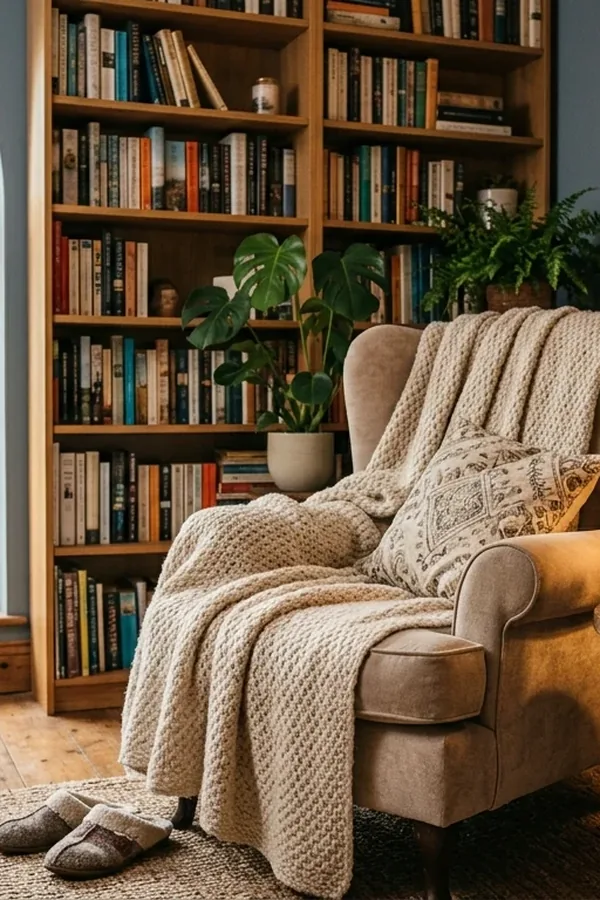
Keep the footprint tight: a small-profile chair, a slim side table or wall-mounted shelf for your book and tea, and a focused reading light so you’re not lighting the whole room. If floor space is truly scarce, a corner wall shelf plus a plush floor cushion creates the same ritual in about two square feet. For more ideas on making small bedrooms work harder, see our small bedroom decor ideas — a well-planned bedroom can hold a reading spot without feeling crowded.
6. Tuck Your Chair Between the Bookshelves
There’s something deeply satisfying about reading surrounded by books, and a chair flanked by bookshelves delivers that library feeling in any room. Position a comfortable armchair between two matching bookcases — in a living room, a hallway, even a wide entryway — and the shelves form a natural alcove that feels intentional and enclosed. It’s one of the simplest nooks to build, because the shelves do the visual work.
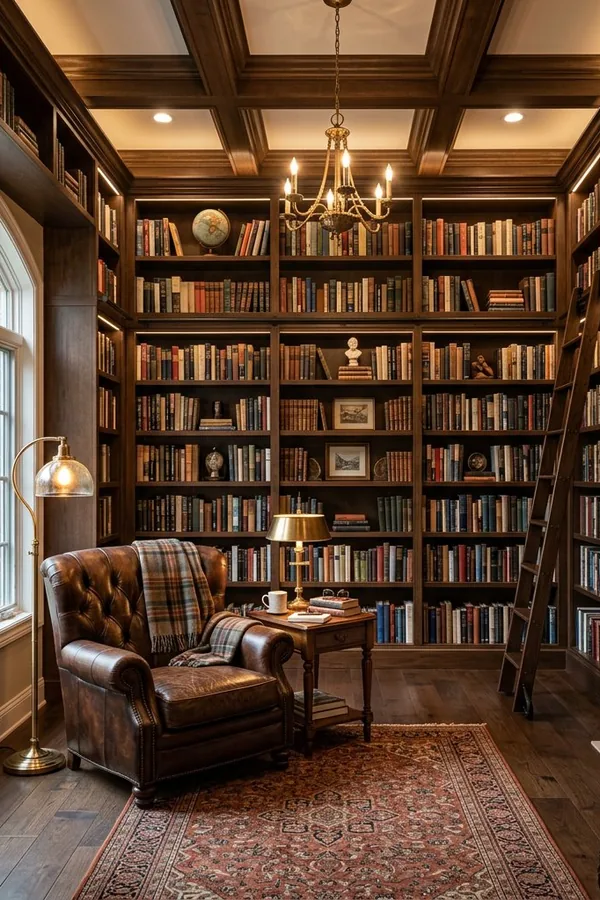
Style the shelves so they frame the chair rather than overwhelm it: leave breathing room on the shelves nearest the chair for a small plant or candle, and keep the books you actually reach for at arm’s height. If freestanding bookcases feel too heavy, floating shelves stacked on both sides of the chair give the same cocooning effect for less money and visual weight. Add a warm picture light or two aimed at the shelves, and the whole corner glows like a bookshop after hours.
7. Let a Sunroom Do the Cozy Work for You
A sunroom, enclosed porch, or any glass-walled space is a reading nook waiting to happen — the light does half the decorating for you. All you need is comfortable seating and softness: a cushioned chair or small loveseat, washable slipcovers or outdoor-rated fabrics that can handle the sun, and plenty of plants to make it feel like a conservatory. Morning readers especially will never want to leave.
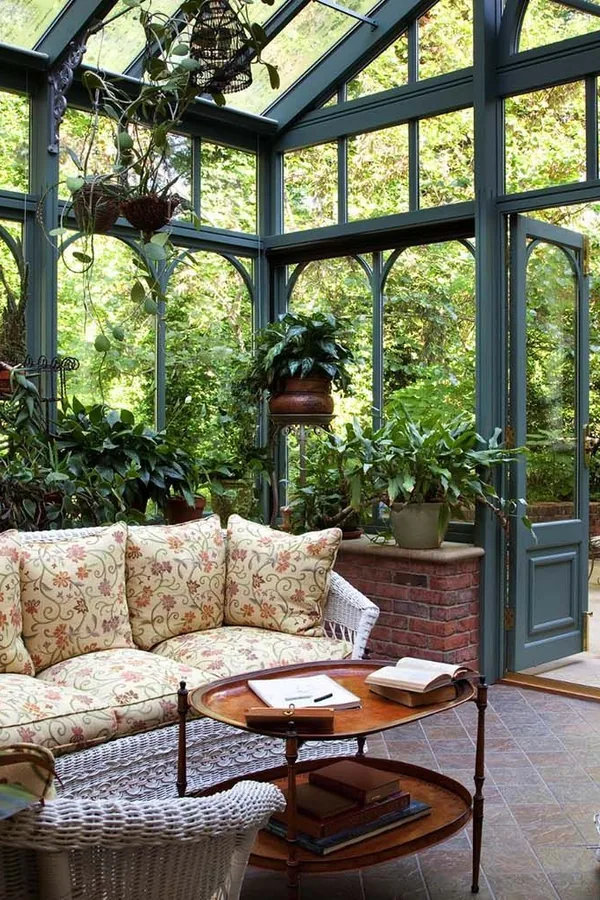
Because sunrooms swing with the temperature, choose materials deliberately: outdoor fabrics resist fading, a ceiling fan or portable fan keeps summer afternoons bearable, and a lightweight throw handles cooler mornings. Arrange seating to face the best view rather than the TV — that’s the whole point of the room. A small side table for coffee and a basket for magazines complete it, and suddenly the sunroom earns its keep every single day.
8. Convert a Closet Into a Tiny Reading Room
An unused closet — a hallway linen closet, a spare bedroom’s reach-in, even the space under a staircase landing — can become the most charming reading nook in the house. Remove the doors (or swap them for a curtain), paint the interior a warm color, and the small footprint becomes a feature: it feels like a private little library built just for you. Kids adore these, but adults love them just as much.
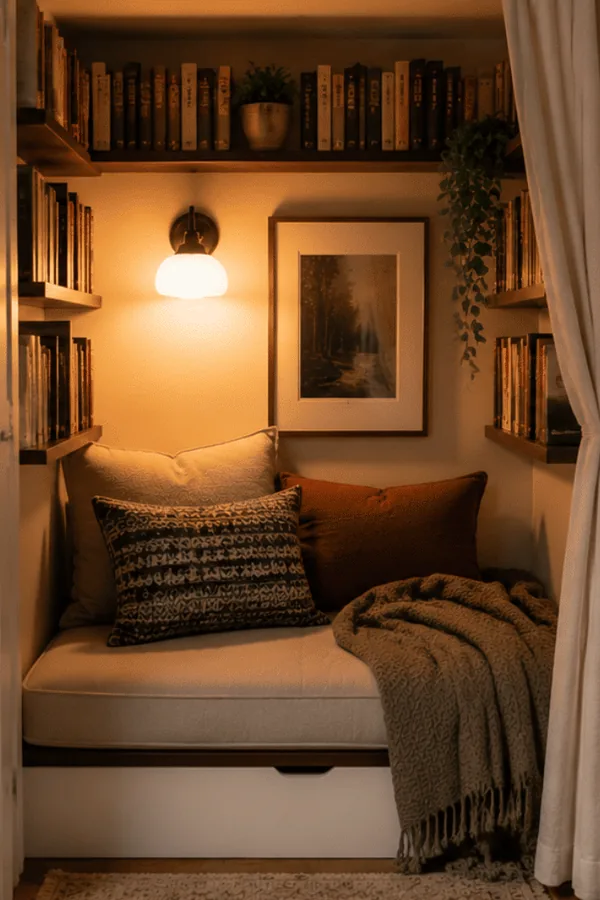
The formula is simple: a bench or thick floor cushion cut to fit the closet’s width, bookshelves or floating shelves on the side walls, and layered lighting since there’s no window. A battery-operated sconce or plug-in picture light works if there’s no outlet nearby, and a small rug plus a pillow or two soften the hard floor. Most closets are about two feet deep — plenty for sitting cross-legged or with knees up — but measure before you buy the cushion.
9. Park Your Chair Beside the Fireplace
Few combinations beat a good book and a crackling fire, so if you have a fireplace, the reading nook practically designs itself. Angle a deep armchair toward the hearth — close enough to feel the warmth, angled enough to catch the light — and you get a nook that’s cozy by definition. This is the setup that makes winter evenings something to look forward to.
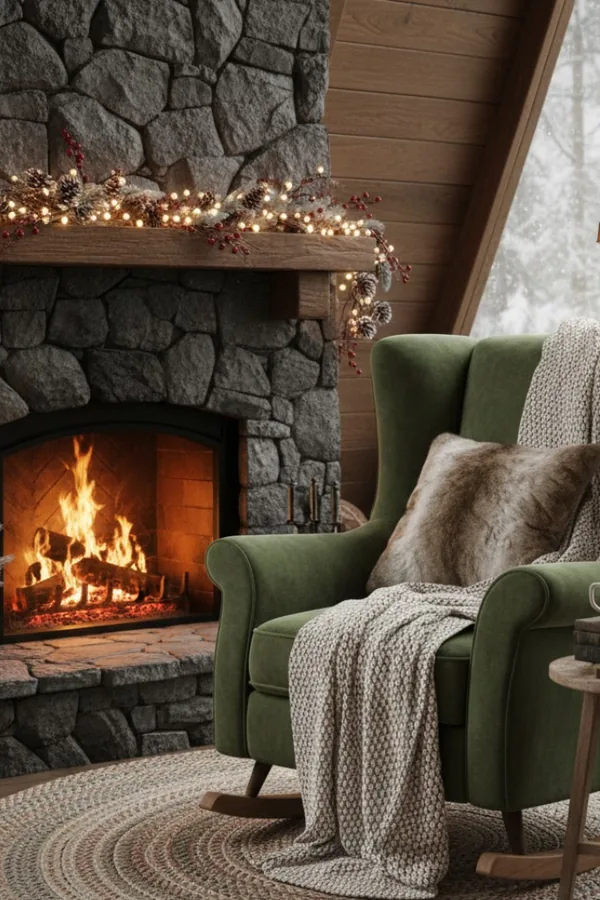
Plan for safety and comfort: keep upholstered seating at least three feet from the firebox, use a fire screen with real wood, and choose darker, textured fabrics that won’t show every bit of ash. Layer in the season — a chunky knit throw, a mug within reach, a small stack of books on the hearth — and style the nearby surfaces for autumn too; our [fall coffee table decor ideas](https://dreaminspo.com/fall-coffee-table-decor/) pair beautifully with a fireside corner. A dimmable floor lamp behind the chair keeps pages readable once the fire burns low.
10. Hang an Egg Chair and Call It a Day
A hanging egg chair is the closest thing to a cheat code in reading-nook design: it brings the coziness, the cocooning shape, and the visual interest in one piece. The curved shell wraps around you like a hug, the gentle sway is weirdly good for focus, and it needs nothing more than a ceiling joist or a sturdy stand. In a living room or bedroom corner, it instantly reads as “the reading spot” with zero styling.
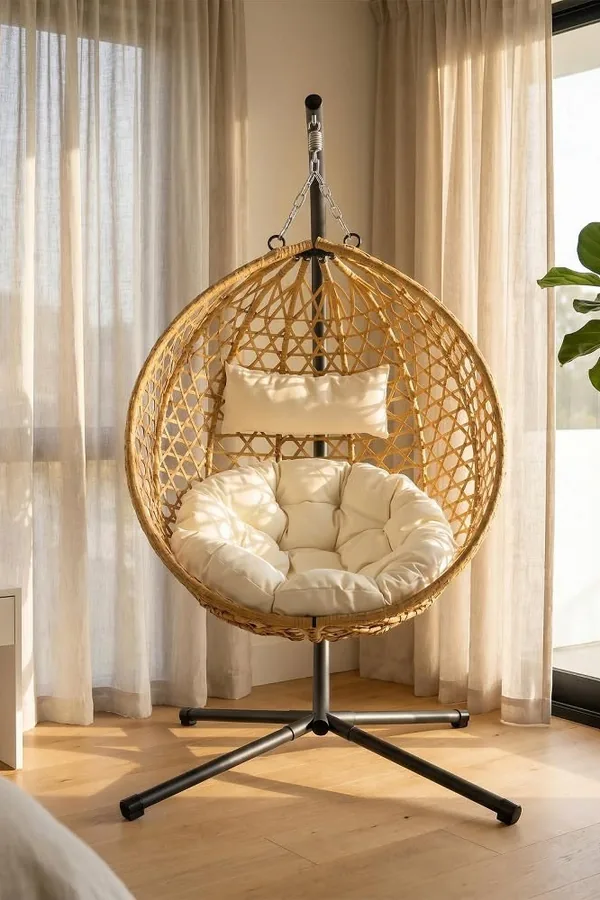
Check your ceiling before you fall in love: the chair plus your weight needs a solid joist or beam, not just drywall — when in doubt, use a freestanding stand, which also makes the chair movable. Add a thick seat cushion and lumbar pillow since stock cushions run thin, and place a small rug underneath to mark the sway zone. The real win is how fast you’ll fall asleep in one with a book in your lap.
11. Build a Nook Made for Two
Reading doesn’t have to be a solo sport. A loveseat, a deep two-person chaise, or two matching armchairs angled toward each other creates a nook for reading side by side — partners, parent and child, or two friends with their own books and a shared pot of tea. It takes more floor space than a single chair, but the togetherness is worth it, especially where the nook becomes a nightly ritual.
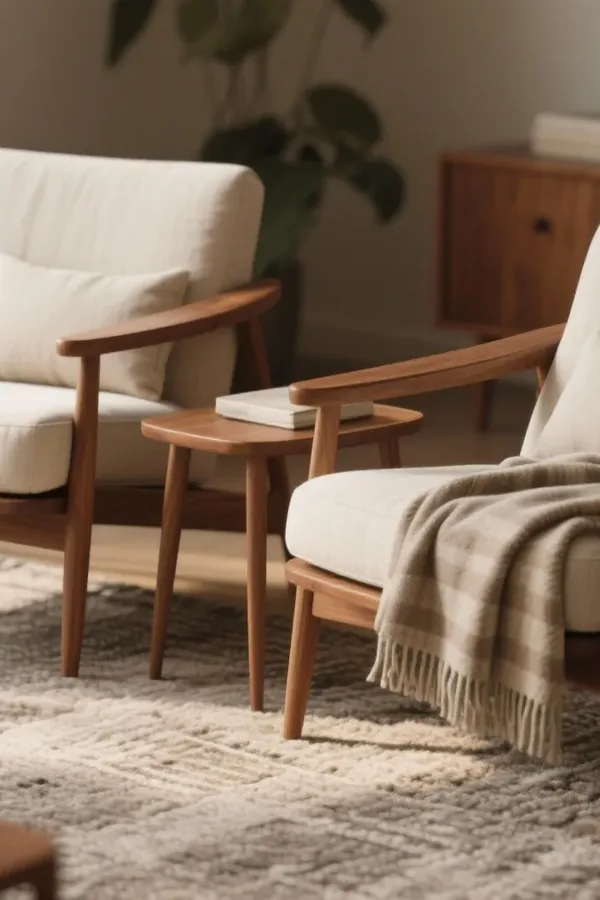
Give each reader their own light — two small table lamps, or one adjustable floor lamp with a wide shade — so nobody squints in the other’s shadow. A shared ottoman or coffee table in the middle holds both mugs, and individual throws let each person dial in their own warmth. If space is tight, a compact loveseat (around 48 to 55 inches wide) fits where two full chairs won’t, and doubles as guest seating.
12. Pitch a Reading Tent for Little Bookworms
Kids read more when reading feels like an adventure, and nothing says adventure like a tent. A simple canvas teepee, a fabric canopy draped over a hoop, or even a semi-permanent blanket fort in a bedroom corner gives little readers a space that feels entirely theirs. Fill it with floor cushions, stuffed animals, and a basket of picture books at their height, and watch independent reading time stretch longer.
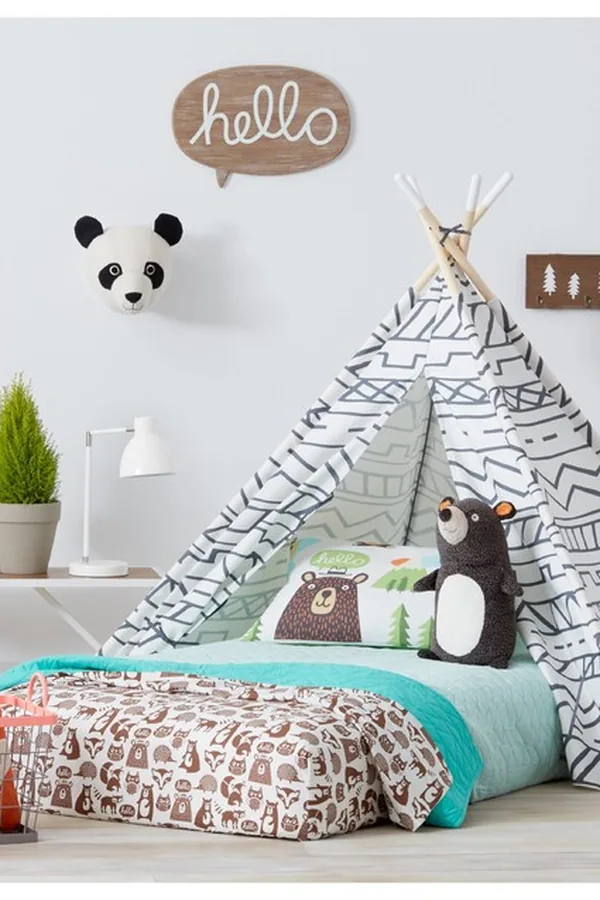
Keep it practical for small humans: battery-operated fairy lights or a clip-on book light instead of anything that plugs in or gets hot, washable fabrics for inevitable spills, and a tent that folds away when the phase passes. Rotate the book basket’s selection so the novelty stays fresh, and tuck in a sketchbook with colored pencils — when the story ends, our guide on [how to draw a face step by step](https://dreaminspo.com/how-to-draw-face-step-by-step/) gives young artists a perfect next activity.
13. Keep It Calm: The Scandinavian Reading Corner
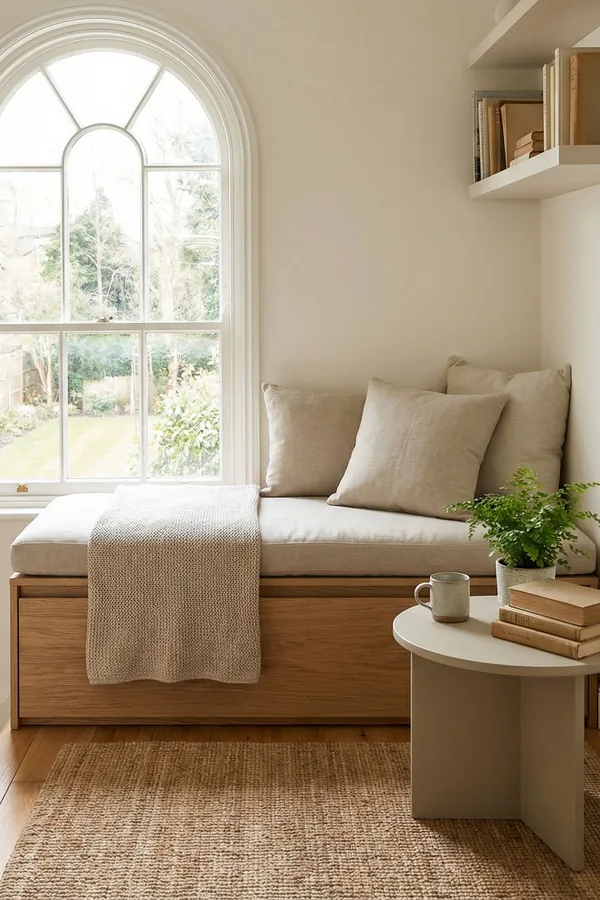
If your taste runs minimal, the Scandinavian reading corner proves a nook doesn’t need much to feel complete. The formula is restraint: one well-made chair in light wood or soft neutral fabric, a simple floor lamp with a linen shade, a small side table, and a single textured throw. Pale walls, natural materials, and uncluttered surfaces let the calm do the talking — the eye rests, and so do you.
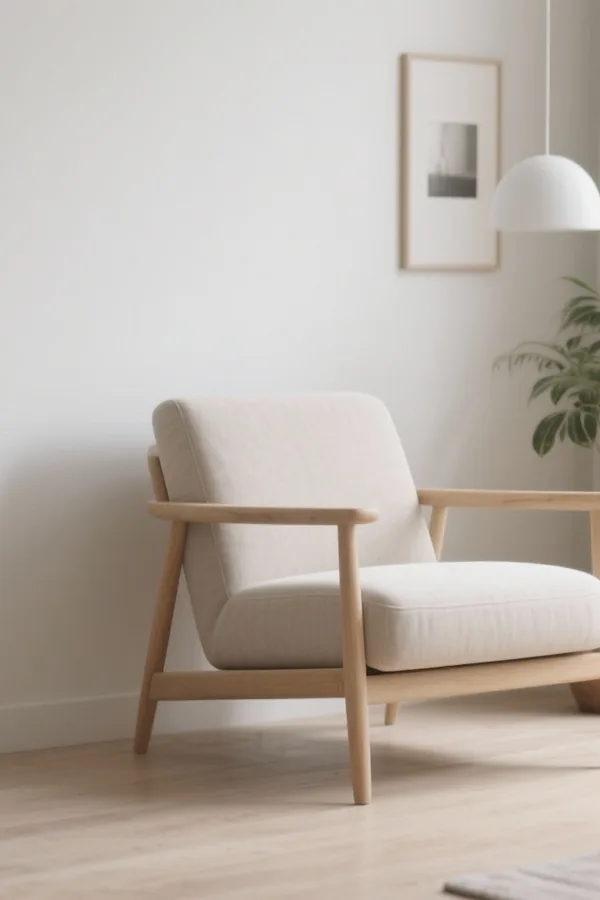
Details matter more when there’s less to hide behind, so choose quality over quantity: a solid wood or wool piece, a warm dimmable lamp, and one living plant for softness. Keep the book stack small and intentional — current reads rather than towering shelves. This style shines in bright, small apartments where every piece must earn its place, and it’s one of the easiest nooks to keep tidy, which means you’ll actually use it.
14. Pile It On: The Bohemian Reading Corner
On the opposite end of the spectrum, the bohemian reading corner is all about abundance: layered rugs, a low daybed or pile of floor cushions, throws in half a dozen textures, and plants hanging at different heights. It should feel collected rather than decorated — the kind of corner that looks like it grew organically around a reader. Color, pattern, and texture are all welcome here, and more is more.
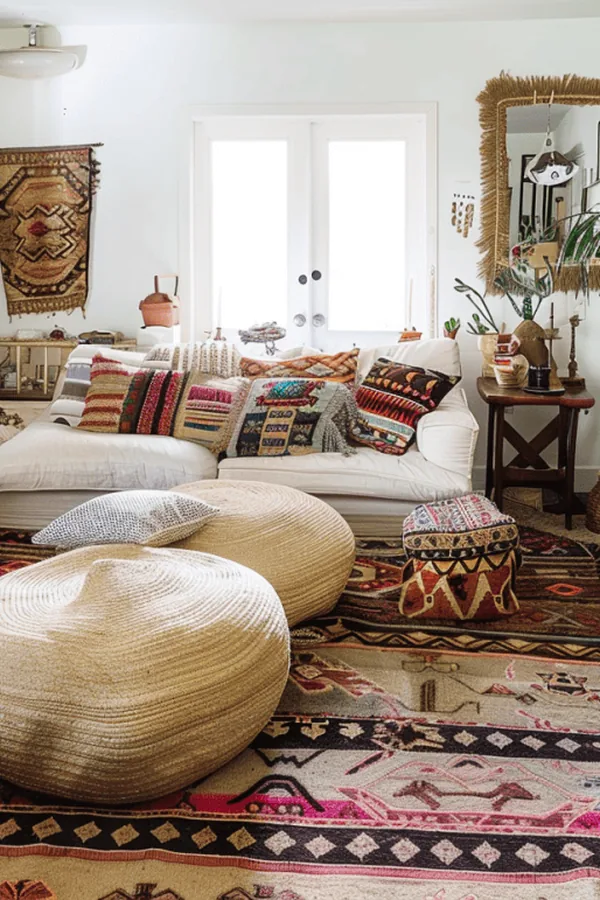
The trick to keeping it cozy instead of chaotic is a loose color story: pick two or three anchor colors — terracotta, cream, and sage, say — and let everything else orbit them. Mix patterns at different scales so they harmonize instead of competing. A Moroccan-style pouf doubles as footrest and extra seating, and a woven basket corrals the throw collection before it takes over the room. This is the nook for readers who dog-ear pages — beautifully, unapologetically lived-in.
15. Don't Ignore the Landing (or the Hallway)
The landing at the top of the stairs and that wide-but-useless stretch of hallway are among the most underused square footage in any home — and they often have the best light. A slim armchair or built-in bench along the wall, a narrow console as a side table, and a wall-mounted reading light turn a pass-through space into a destination. You’ll be amazed how often you stop there “just for one chapter.”
Measure carefully, since hallways must stay walkable: leave at least 36 inches of clear passage and choose seating with a shallow profile. Wall-mounted sconces save the floor space a floor lamp would eat, and a slim floating shelf holds your book without jutting into the walkway. If the hallway is windowless, a large mirror opposite the nook bounces light from nearby rooms and makes the whole corridor feel wider.
16. Move the Nook Outside: The Porch Retreat
Some of the best reading happens outdoors, where the soundtrack is birdsong instead of the dishwasher. A covered porch, a balcony, or a shady patio corner makes a wonderful seasonal reading nook: a deep outdoor armchair with thick cushions, a porch swing, or even a hammock. Morning-coffee chapters and golden-hour reading sessions hit differently outside.

Weatherproofing is the whole game: choose outdoor-rated fabrics and quick-dry foam so a surprise shower doesn’t ruin the setup, and store throws and pillows in a deck box when you’re not using them. A side table with a weighted base won’t tip in the breeze, and citronella candles or a small fan handle bugs on summer evenings. Position the seat for morning sun but out of harsh afternoon glare — porch shade runs cooler than you’d expect, so keep a lightweight blanket handy.
17. Go Moody With a Dark-Academia Den
For readers who love candlelight, leather, and the smell of old paper, the dark-academia reading den is pure atmosphere. Think deep wall colors — forest green, oxblood, charcoal — a leather or velvet armchair, dark wood shelves packed with books, and warm, low lighting from table lamps with amber shades. It feels like a private study in an old university library, and it makes every book feel more important.
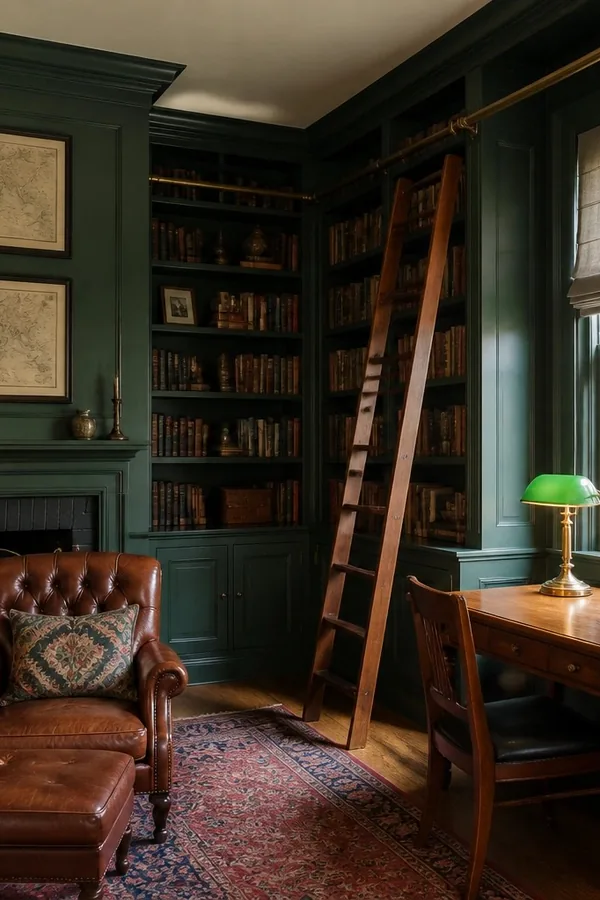
Balance keeps moody from turning murky: one strong dark color on the walls, then warm wood tones and brass or amber accents to keep it glowing rather than gloomy. A green banker’s lamp or shaded table lamp gives proper task light without killing the vibe, and a Persian-style rug grounds the scene. This aesthetic pairs wonderfully with autumn — if you’re leaning into the season, our [halloween decor idea: the season’s biggest trends](https://dreaminspo.com/halloween-decor-idea-the-seasons-biggest-trends/) shows how to layer seasonal drama over a moody base.
18. Go Low: Floor Cushions and a Mountain of Pillows
Not every nook needs a chair. A low-to-the-ground setup — a thick rug layered with floor cushions, a Japanese-style zabuton, or a tufted floor mattress — creates a relaxed, sprawling reading spot beloved by kids, teens, and anyone who reads sprawled on their stomach. It’s the cheapest nook on this list, and one of the most comfortable once you dial in the cushioning.

Support matters more at floor level: use a dense foam base (at least 4 inches) so you never feel the floorboards, and pile on back-support or wedge pillows for upright reading. Keep a low tray or crate nearby as a side table — anything tall looks out of place and tips easily. This setup shines in low-ceiling rooms, dorm-style spaces, or anywhere a full chair would dominate; when you’re done, stack the cushions in a corner and the floor is yours again.
19. Build Storage Into Your Window Seat
A window seat earns its keep twice when it’s also storage. A built-in bench with a hinged top or pull-out drawers swallows blankets, board games, and the overflow books that never fit the shelves — while the top, dressed with a thick cushion and pillows, becomes one of the most coveted seats in the house.
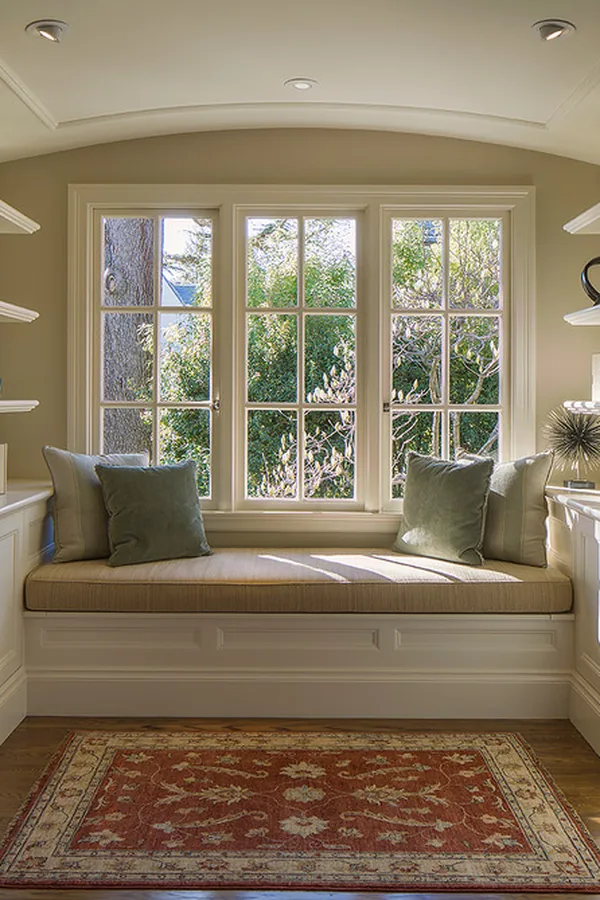
If you’re building from scratch, a simple plywood bench with a piano hinge is a very achievable weekend project, and stock kitchen cabinets make an even easier base — just top them with plywood and a cushion. Ventilate the interior slightly (a few discreet holes in the back panel) so stored blankets don’t get musty, and add soft-close hinges if little fingers will lift the lid. Line the inside with cedar or lavender sachets and the whole seat smells as good as it looks.
20. Give the Rocking Chair a Second Act
The rocking chair has shaken off its nursery-only reputation and earned a place in grown-up reading nooks — the gentle motion genuinely helps some readers focus and unwind. A modern rocker or a classic wooden one with a deep seat and good lumbar support gives you the soothing rhythm without the frumpy look, fitting beautifully into farmhouse, traditional, and even mid-century rooms.

Placement matters: rockers need about a foot of clearance behind them and a rug underneath to protect floors and muffle the motion. Pair it with a small side table — nothing wide that the chair might clip — and position the reading lamp to the side rather than behind, so the motion doesn’t swing you in and out of the light. Add a lumbar pillow and a folded throw over the back, and you’ve got a nook that practically rocks you into “just one more chapter.”
21. Light It Like a Statement Piece
Here’s a designer secret: sometimes the nook isn’t about the chair at all — it’s about the light. A sculptural arc floor lamp, an oversized paper lantern pendant, or a dramatic pharmacy lamp can turn the simplest armchair into a destination. When the lighting is beautiful, the whole corner feels deliberate, and you’ll find yourself drawn to it every evening like a moth to a very tasteful flame.
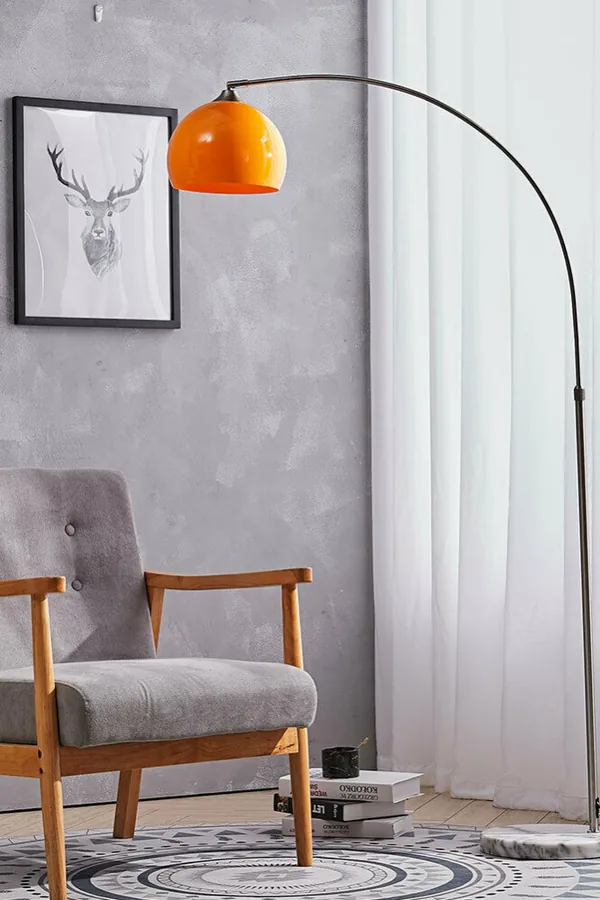
Choose your statement light with reading in mind, not just looks: the bulb should sit slightly above and behind your shoulder, aimed down at the page, and a dimmer switch lets you shift from bright reading mode to soft evening glow. Arc lamps float light over a chair with no side table needed, while a big pendant hung low defines the space architecturally. Finish with a dimmable warm bulb — 2700K is the sweet spot — and you’ve built a nook around the one element every reader actually needs.
FAQ: What Kind of Chair Is Best for a Reading Nook?
The best reading chair is one you can sit in for an hour without fidgeting — which usually means a deep seat (22 inches or more), a back high enough to rest your head against, and supportive armrests where your elbows land naturally. Upholstered armchairs, small recliners, and deep accent chairs all work; what matters more than the style is the sit test. If you sink in and immediately don’t want to get up, that’s the one.
Also consider your space and habits: a swivel chair suits readers who turn toward the window, a recliner suits those who read with feet up, and a firmer upright chair suits anyone whose back complains about soft seating. Whatever you choose, pair it with good light and a side table — even the perfect chair feels incomplete without them.
You May Also Like
Keep the inspiration going with these related ideas:
- 25 Living Room Inspo Ideas To Try This Year
- 19 Shelf Wallpaper Ideas To Try This Year
- How To Make A Fall Simmer Pot: A Step-By-Step Guide For Beginners
Final Thoughts
Twenty-one ideas, one common thread: a reading nook is less about square footage and more about intention. The coziest corners here aren’t the biggest or the most expensive — they’re the ones where someone thought about the light, picked a chair worth sinking into, and made the space say “stay awhile.” Whether that’s a window seat, a closet hideaway, or simply your favorite armchair angled toward the lamp, the formula works at any scale.
So pick the idea that made you pause while scrolling, and start this weekend. Move the chair, hang the light, pile up the pillows — it doesn’t have to be perfect, it just has to be yours. Then make a cup of something warm, open that book you’ve been meaning to start, and enjoy the best seat in the house. Happy reading!