19 Basement Family Room Ideas That Will Transform Your Space

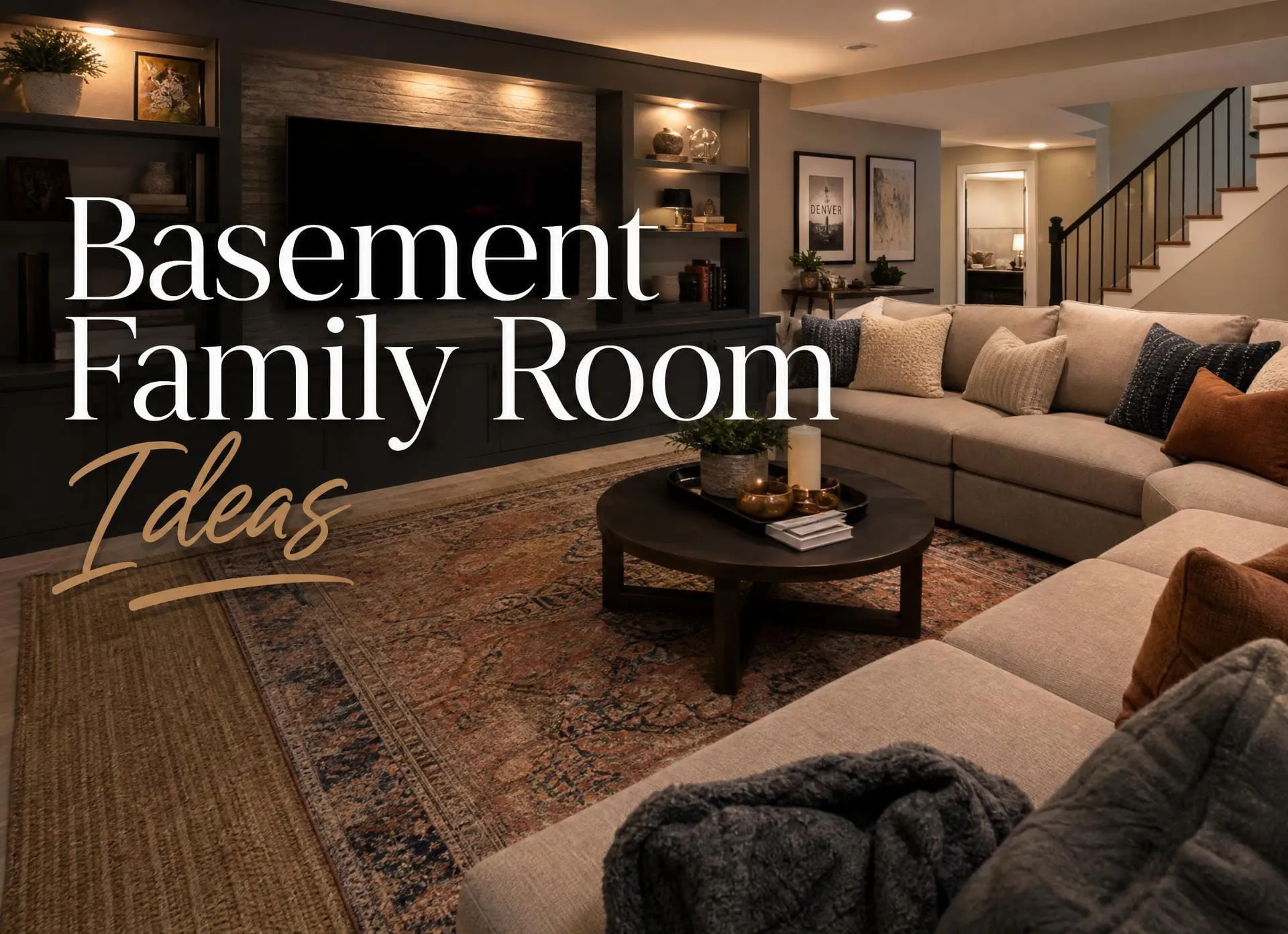
A basement can feel like the most overlooked room in the house, especially when it’s dim, unfinished, or filled with clutter that never quite found a home elsewhere. But with the right layout, lighting, and a few thoughtful touches, that same space can become the coziest room your family actually wants to spend time in.
This list is for anyone working with a low-ceiling basement, a tight renovation budget, or a space that’s currently more storage unit than living room. Whether you’re planning a full finish or just want a few weekend updates, the ideas below are grouped by layout, wall treatment, and lighting so you can jump to whatever your basement needs most.
Layout and Zoning Ideas
1. Open-Concept Zones with Area Rugs
Instead of dividing the basement with walls, use large area rugs to visually separate a lounge area from a play zone or game corner. This keeps the space feeling open while still giving each activity its own defined footprint.
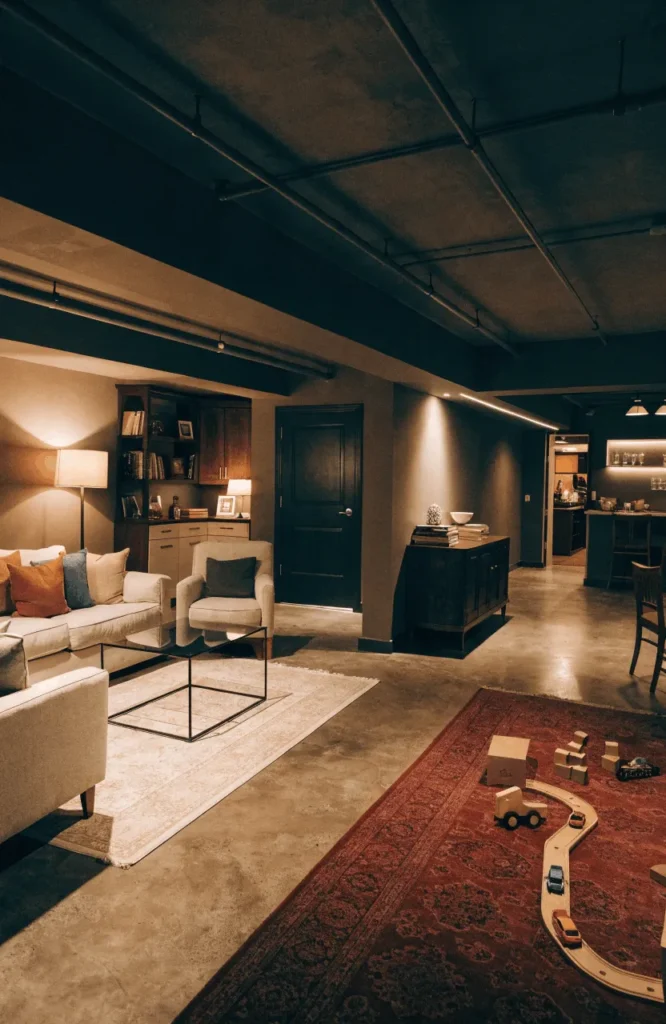
Rugs are also one of the cheapest ways to add warmth to a basement, since they cover cold concrete or laminate flooring without any construction. Layering two rugs of different sizes can add even more visual separation between zones.
2. Built-In Media Wall with Seating Nook
A media wall built around the TV, complete with shelving and a bench seat, turns a blank basement wall into the natural focal point of the room. Even a simple version using stock shelving units can achieve the look on a budget.
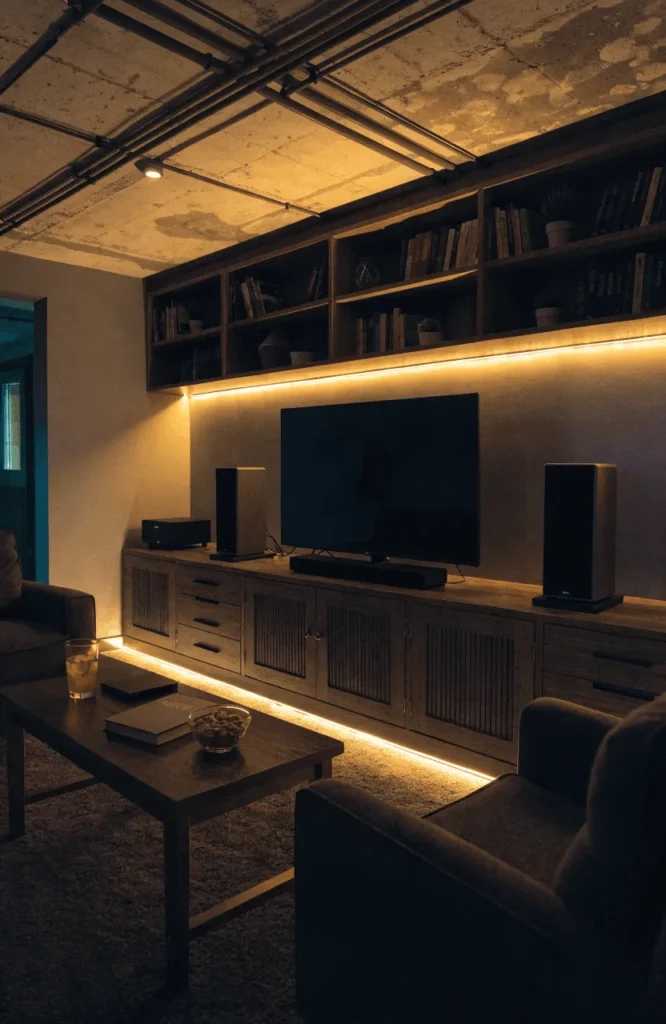
This layout works especially well in basements with awkward wall lengths, since the built-in shelving can be sized to fit exactly. Adding a cushioned bench beneath the shelves also creates extra seating without the cost of another sofa.
3. L-Shaped Sectional for Multi-Use Space
An L-shaped sectional makes the most of an open basement floor plan, providing plenty of seating while naturally dividing the room into a lounge area on one side. It’s a practical choice for families who want one large gathering space rather than several small ones.
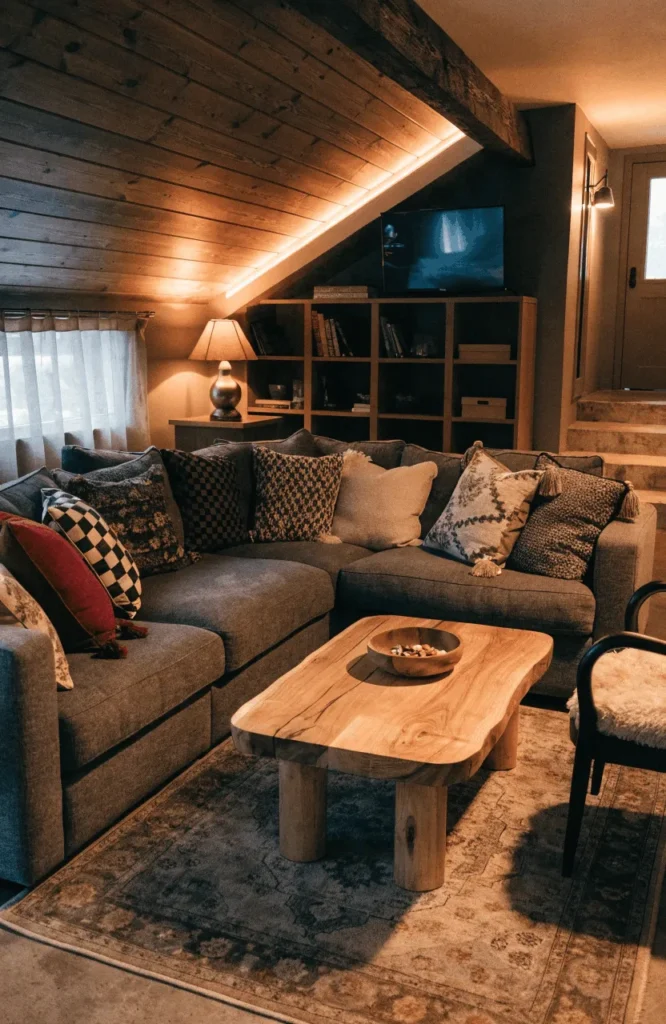
Because sectionals come in modular pieces, the layout can be rearranged easily if the basement’s use changes over time. Choosing a stain-resistant fabric also makes this option more practical for a high-traffic family room.
4. Sliding Barn Door Room Divider
A sliding barn door can separate a home office or guest area from the main family room without the cost or permanence of building a new wall. It also adds a bit of rustic charm to an otherwise plain basement.
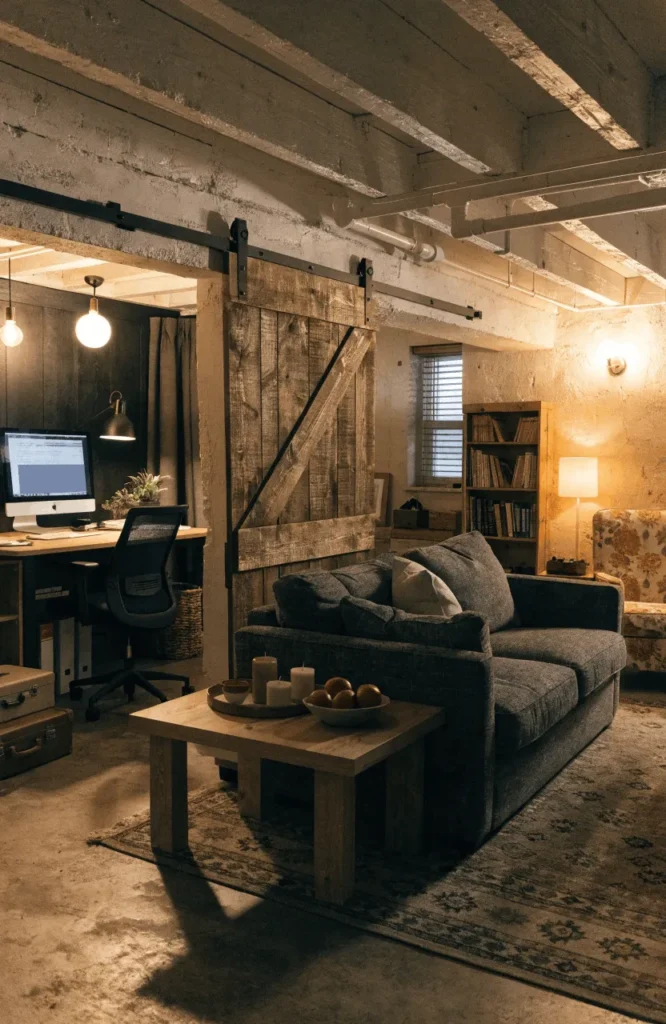
Because the door slides along a track rather than swinging open, it saves floor space that a traditional door would require. This makes it a smart solution for basements where every square foot of clearance matters.
5. Dedicated Kids’ Play Corner
Setting aside one corner of the basement specifically for toys, games, and kids’ activities keeps clutter contained to a single, manageable area. A low bookshelf or storage bins can double as a visual boundary for the space.
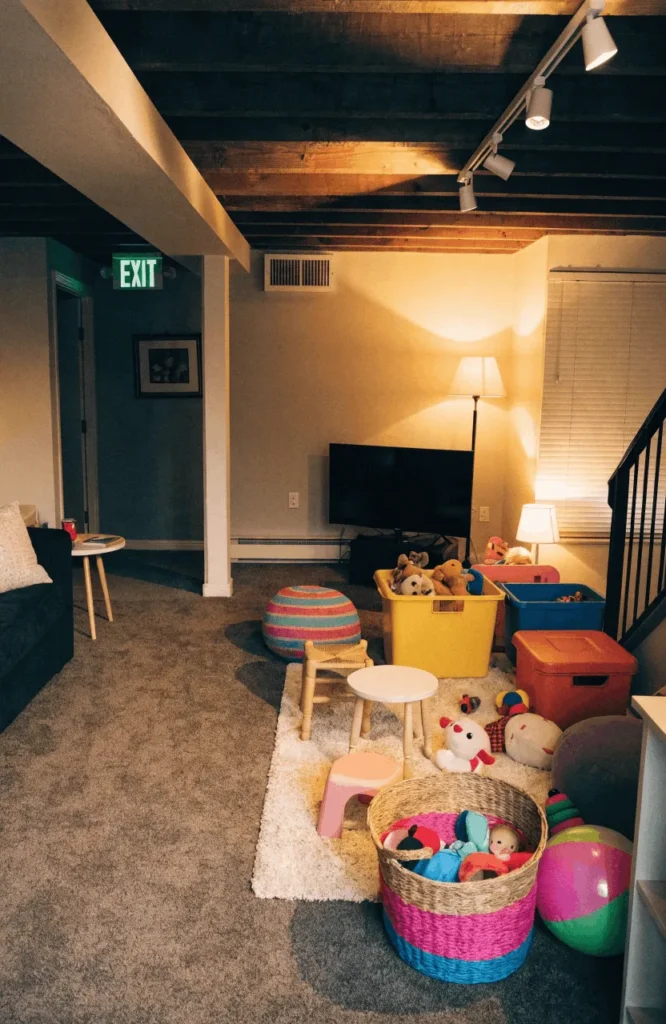
This approach also makes cleanup simpler, since everything has a designated home rather than spreading across the entire room. A soft rug in that corner adds comfort for floor play while protecting little knees from cold flooring.
6. Home Bar or Snack Station Along One Wall
A small home bar or snack station, even just a countertop with a mini fridge, gives the basement a dedicated spot for entertaining without taking up much space. It works especially well along an unused wall near the seating area.
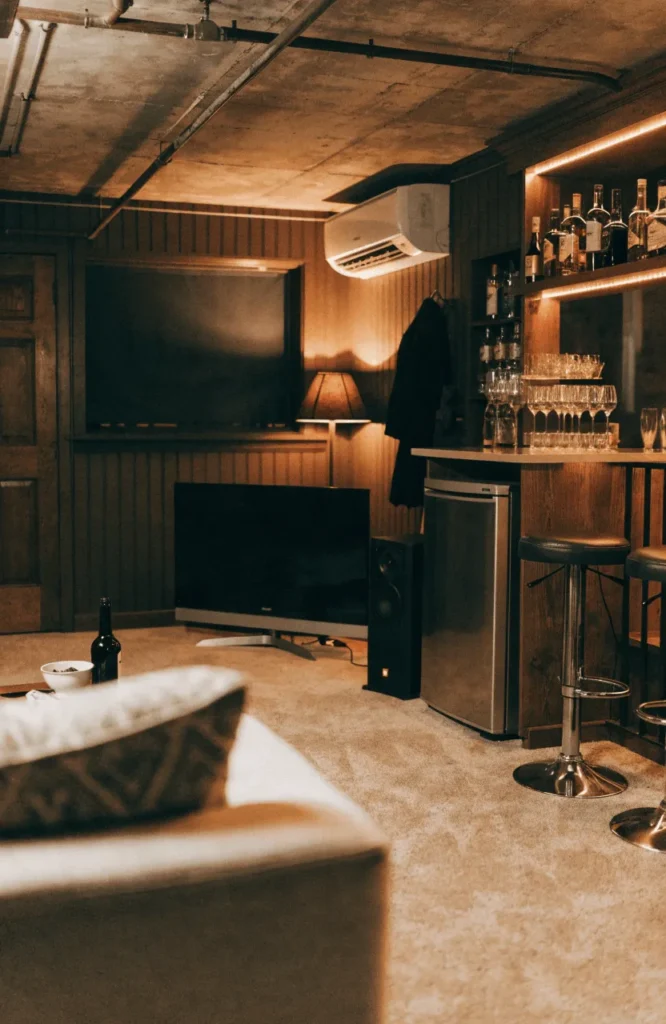
This zone doesn’t need to be elaborate to be functional, and even a simple bar cart can serve the same purpose on a smaller budget. Adding a few stools nearby extends the seating for game nights or gatherings.
7. Flexible Furniture Layout for Movie Nights and Game Days
Choosing furniture that can be easily rearranged, like modular ottomans or lightweight accent chairs, lets the basement adapt for different occasions. A cleared-out layout works for a family game night, while a cozier arrangement suits movie marathons.
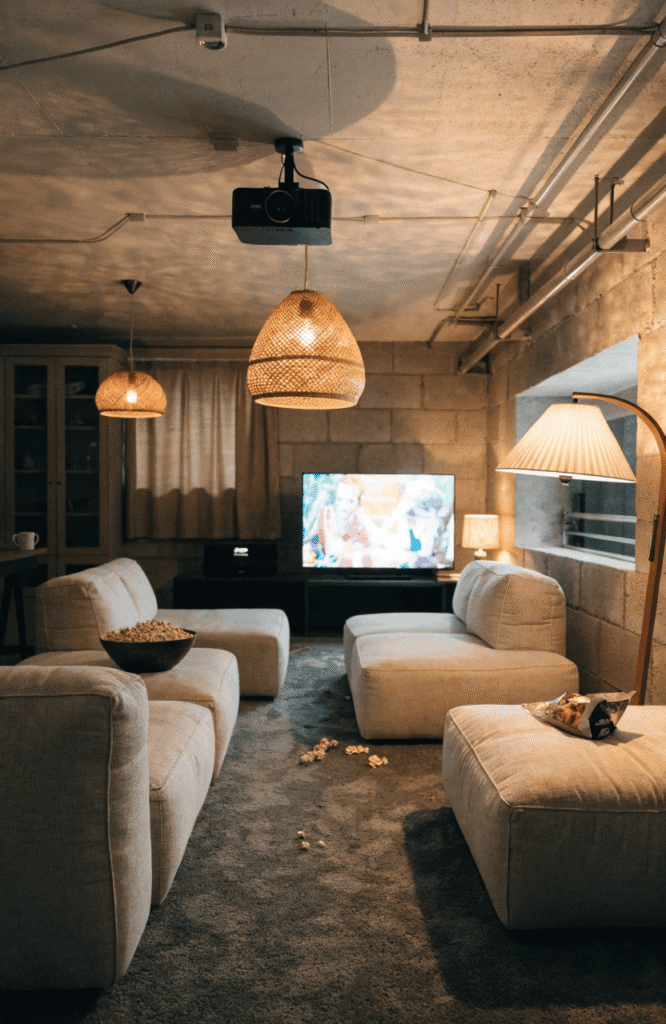
This flexibility is especially valuable in smaller basements where one room needs to serve several purposes throughout the week. Furniture on casters or lightweight frames makes these quick changes far easier to manage.
Ceiling and Wall Treatment Ideas
8. Drop Ceiling Tile Upgrade
Swapping outdated drop ceiling tiles for a cleaner, more modern style is one of the easiest ways to instantly refresh a basement without touching the structure underneath. Many new tile options snap right into existing grid systems.
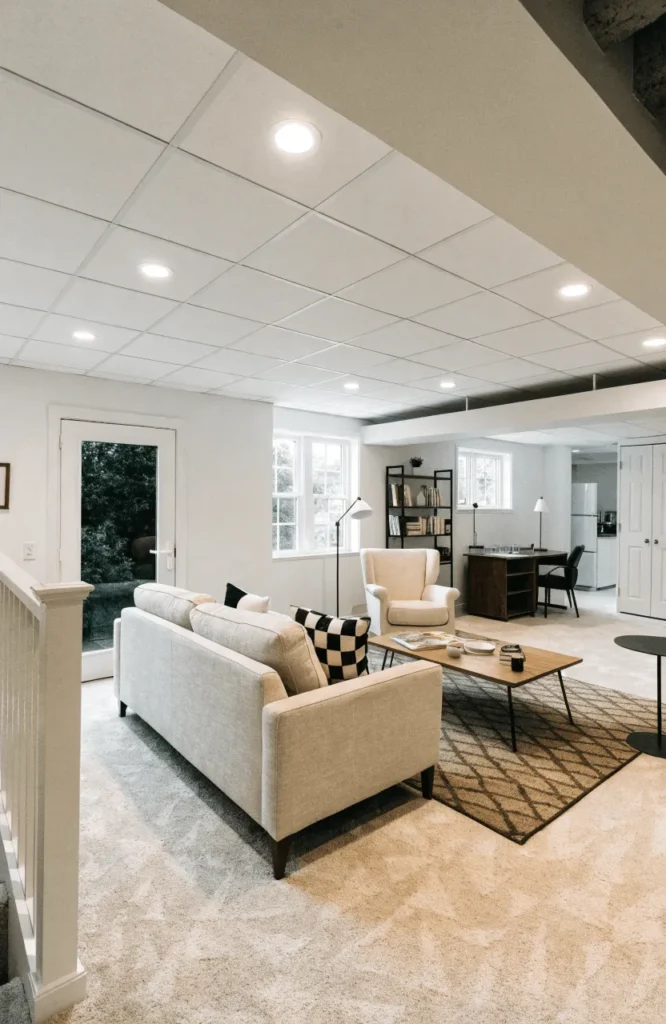
This upgrade is particularly useful in basements where pipes or ductwork need to stay accessible, since drop ceilings keep everything hidden while remaining easy to reach later. Lighter tile colors also help bounce more light around the room.
9. Exposed Ceiling Painted Black
For basements with low ceilings, painting the exposed joists, ductwork, and pipes a matte black can make the space feel taller by drawing less attention to the ceiling itself. It’s a popular trend in modern industrial-style basements.
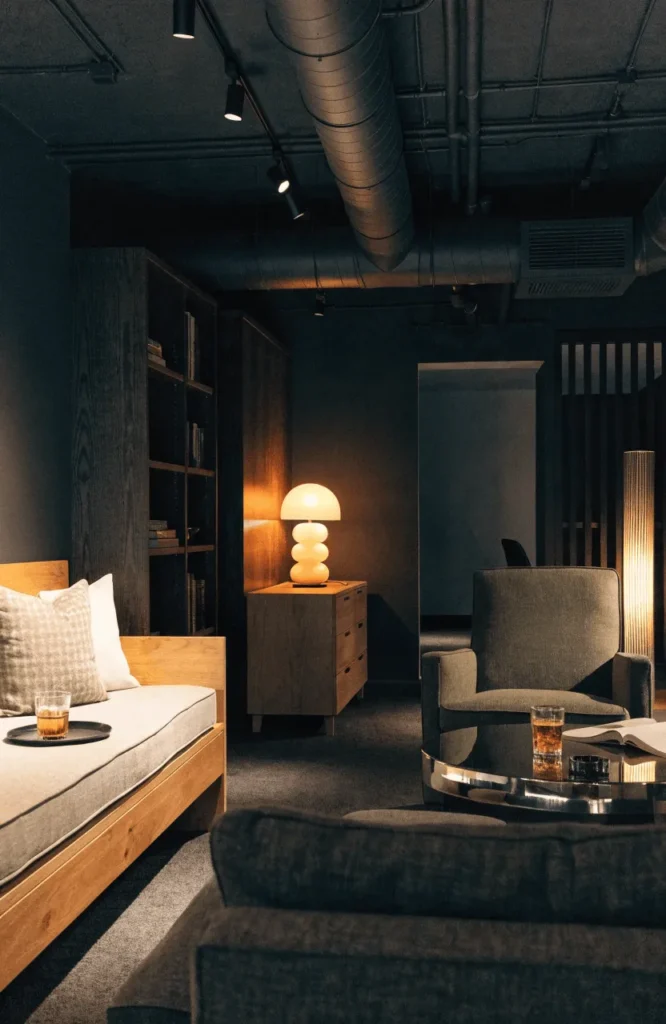
This approach also saves the cost of installing a drop ceiling or drywall altogether, since the paint becomes the finish. A few coats of ceiling-rated paint are usually all that’s needed to complete the look.
10. Shiplap or Panel Accent Wall
A single accent wall covered in peel-and-stick shiplap or panelling adds texture and warmth to an otherwise plain basement. It works especially well behind a media wall or seating area as a backdrop.
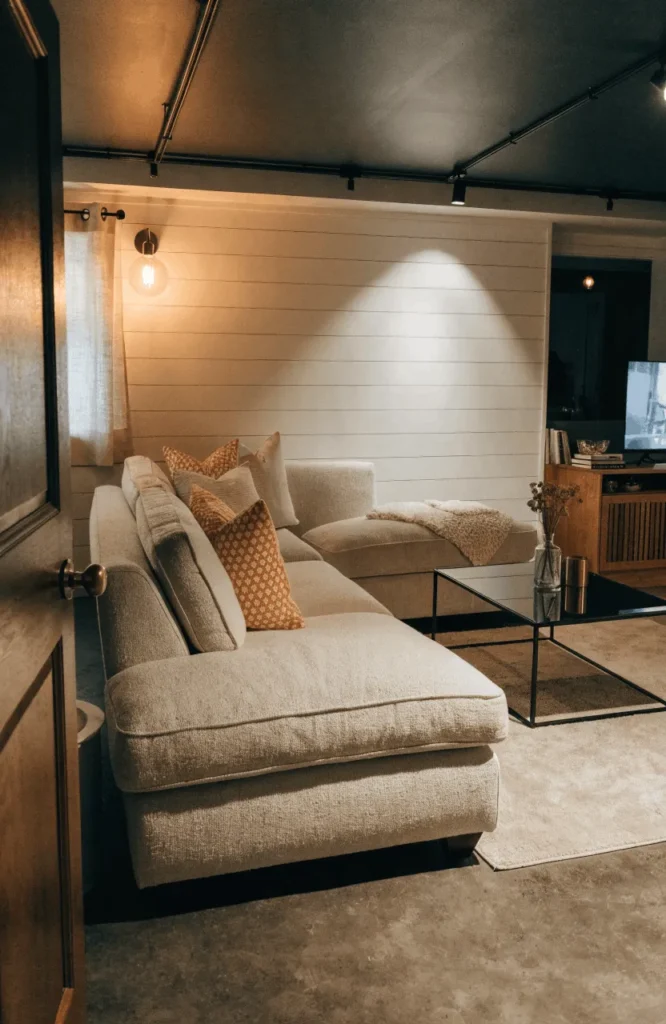
Because basement walls are often concrete or unfinished drywall, panelling also helps disguise imperfections without a full renovation. Choosing a lighter panel color keeps the room from feeling too closed in.
11. Acoustic Panels for a Cozy Feel
Basements tend to have more echo than upper floors due to concrete walls and floors, so adding fabric-wrapped acoustic panels can noticeably soften the sound in the room. They also double as a stylish wall feature.
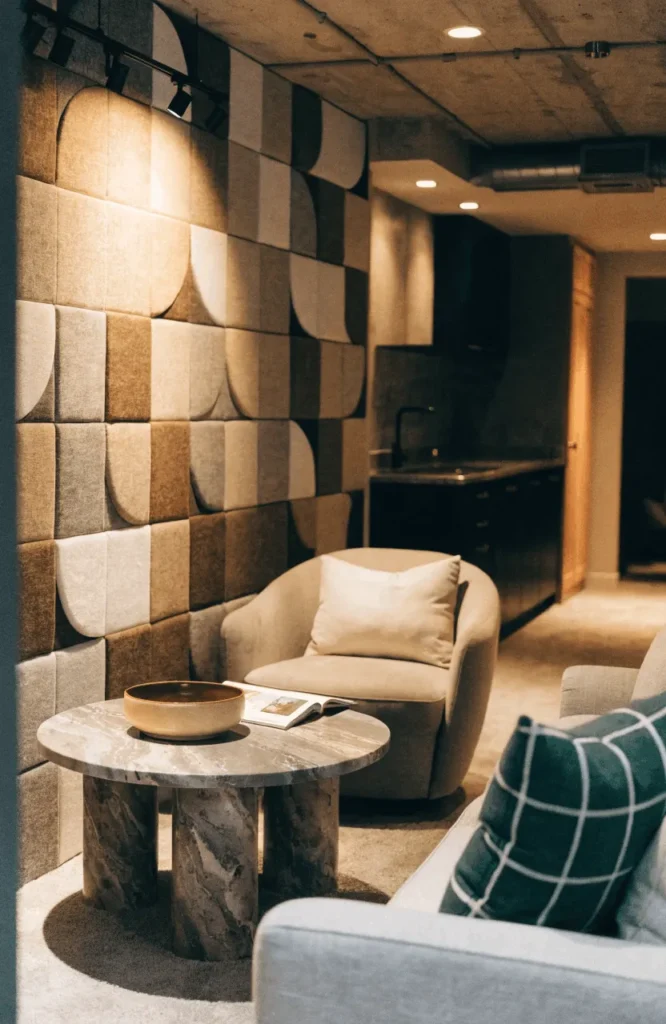
These panels come in a range of colors and can be arranged in a geometric pattern for a more decorative look. Beyond sound control, they add a soft, tactile texture that balances out the harder surfaces common in basements.
12. Board and Batten Half Wall
Covering just the lower half of the basement walls in board and batten adds architectural interest while keeping costs down compared to a full wall treatment. The upper half can stay a simple painted finish.
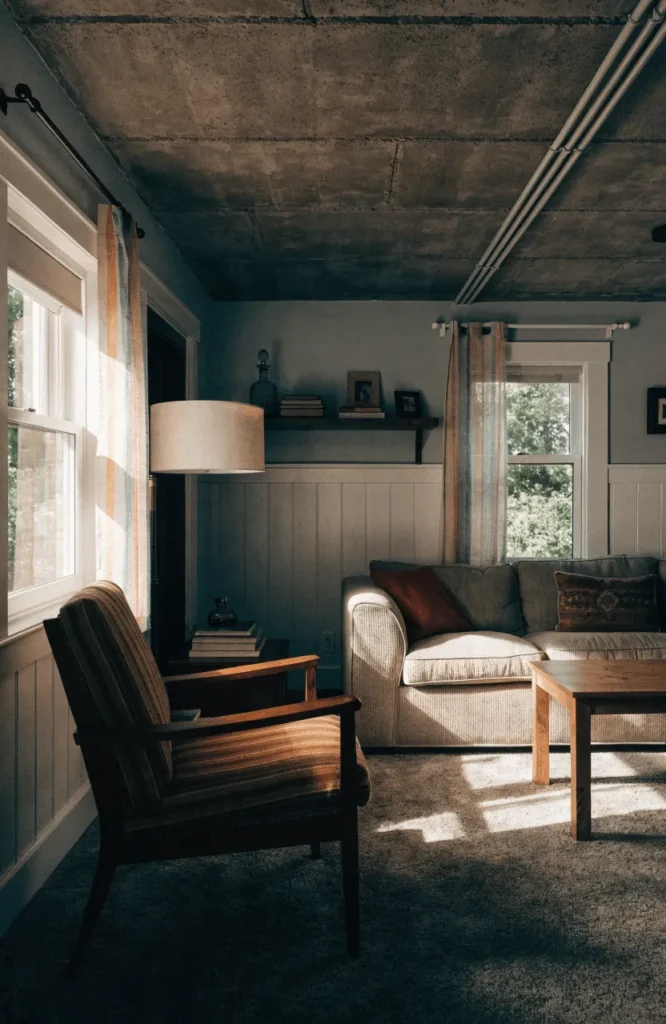
This combination works especially well in basements with lower ceilings, since it doesn’t visually shrink the space the way a full accent wall might. Painting the batten and the upper wall the same color also keeps the room feeling cohesive.
13. Removable Wallpaper Accent Wall
A patterned removable wallpaper on one basement wall adds personality and color without a long-term commitment. It’s an easy weekend project that instantly makes the space feel more finished.
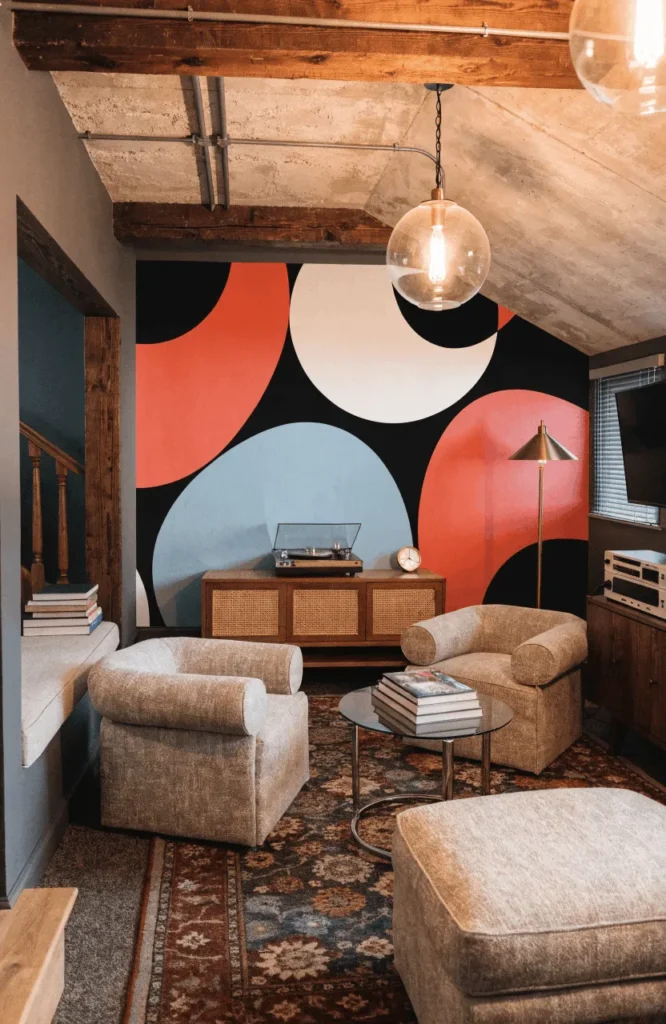
Because basements are often used as flexible, changeable spaces, removable wallpaper is a smart choice if your style might shift over time. It can be swapped out in an afternoon whenever you’re ready for something new.
How Do I Make a Basement Feel Less Dark?
Use light, reflective wall colors, add layered lighting like recessed lights, floor lamps, and LED strips, and keep window wells clear so any natural light can filter in. Mirrors placed opposite light sources also help bounce brightness around the room, making the space feel less closed in overall.
Lighting Solutions for Low Light
14. Recessed Lighting Layout
Installing recessed lights across the ceiling in an even grid provides consistent, shadow-free lighting throughout the basement. This is especially helpful in spaces without much natural light to rely on.
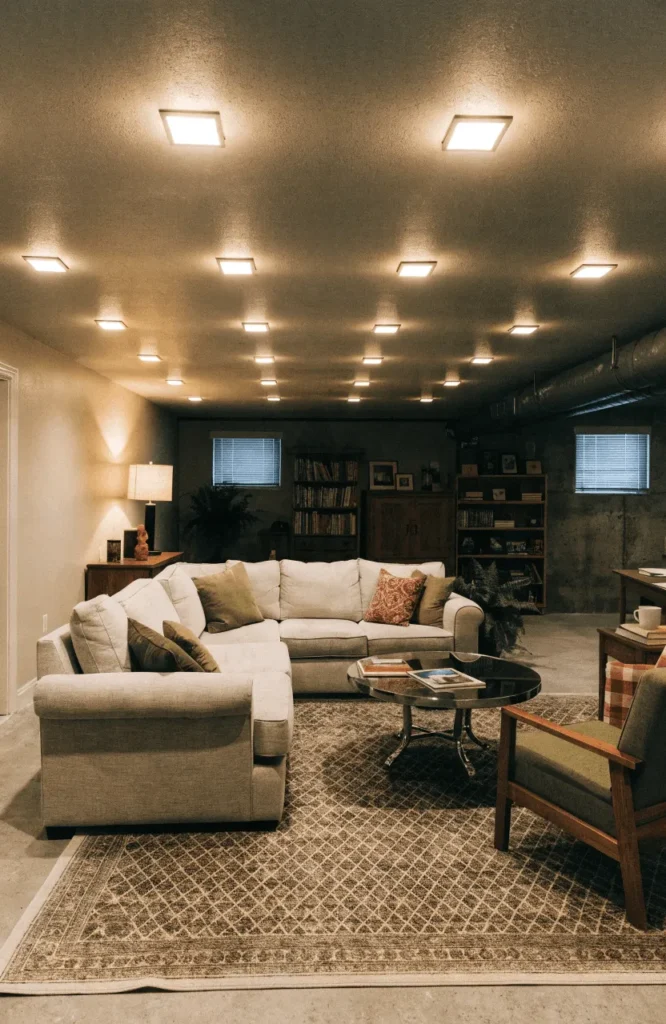
Because recessed lights sit flush with the ceiling, they also work well in basements with lower ceiling heights where hanging fixtures might feel too low. Adding a dimmer switch allows the brightness to adjust for movie nights or gatherings.
15. LED Strip Lighting Under Shelves
Adding LED strip lighting beneath shelves or media consoles creates soft, ambient light that reduces harsh shadows in the room. It’s an inexpensive addition that can be installed in an afternoon.
This type of lighting also adds a subtle glow that makes the space feel more intentional and cozy in the evenings. Many strip lights come with remote control dimming, making it easy to adjust the mood.
16. Floor and Table Lamps for Warm Ambient Light
Overhead lighting alone can feel harsh in a basement, so adding a few floor and table lamps introduces softer, warmer light at eye level. This layered approach makes the room feel more like a lived-in living space.
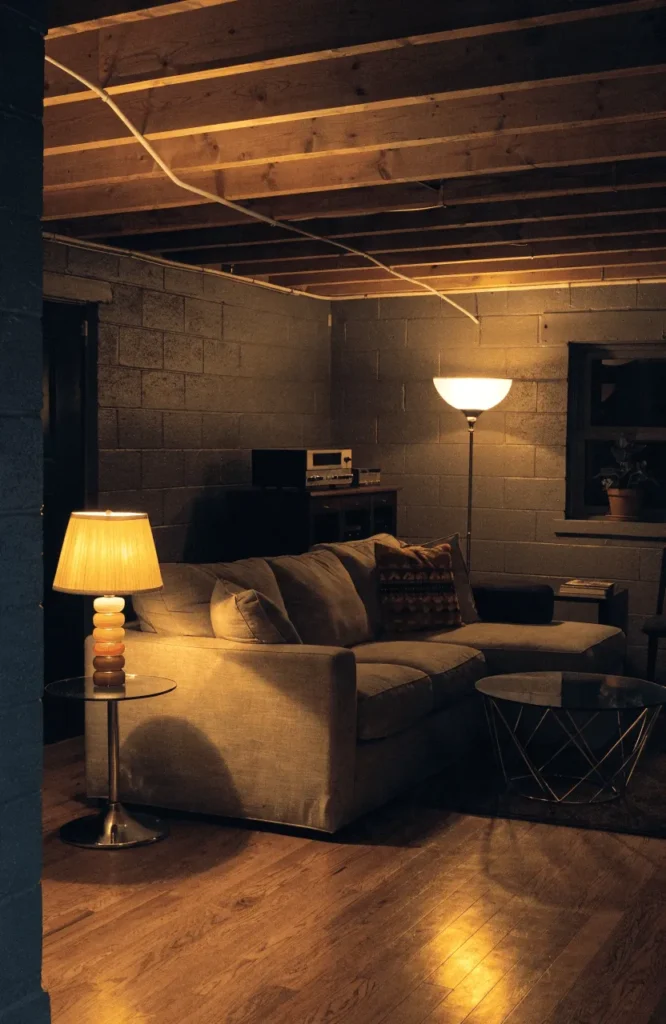
Because lamps are easy to move and rearrange, they also allow you to adjust the lighting as the furniture layout changes. Warm-toned bulbs, rather than cool white ones, help counteract the naturally dim feel of a basement.
17. Light-Reflecting Paint Colors
Choosing a light, warm-toned paint color for the walls and ceiling helps bounce whatever natural or artificial light is available around the room. Soft whites, creams, and light grays tend to work best in basements.
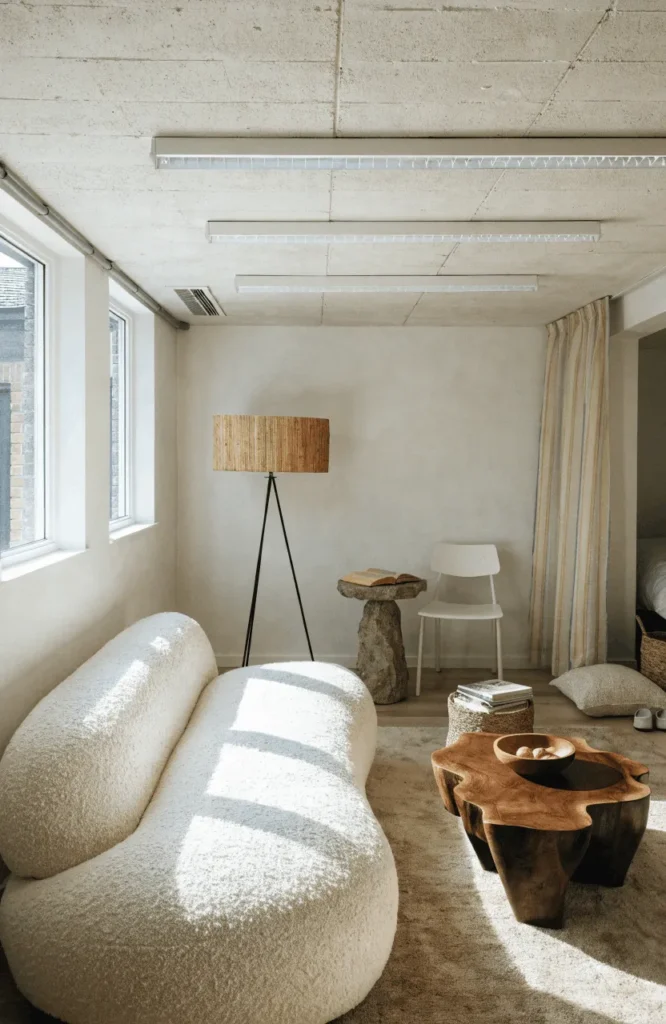
Darker colors, while trendy, can make an already dim basement feel smaller and heavier. Sticking to a light palette on the largest surfaces, while saving bold colors for smaller accents, keeps the room feeling open.
18. Window Well Enhancements for Natural Light
If your basement has window wells, keeping them clear of debris and adding reflective materials like light-colored gravel or a mirrored panel can maximize the natural light that filters in. Even small improvements here make a noticeable difference.
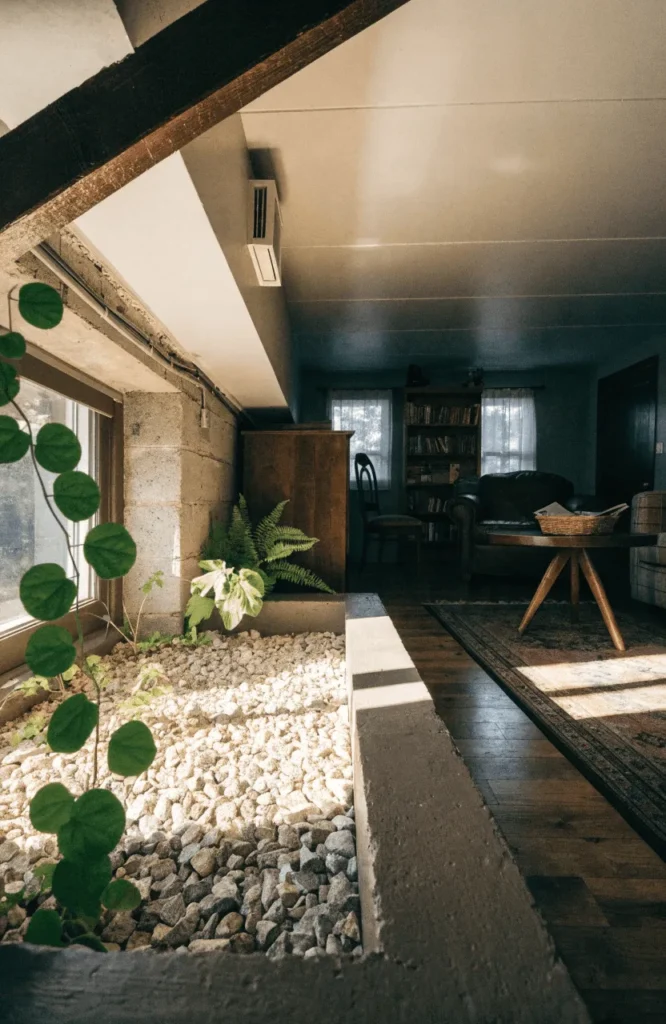
Trimming back any exterior landscaping that blocks the window wells also helps more daylight reach the room. This is one of the few ways to add genuine natural light to a basement without major construction.
19. Statement Pendant Lighting Over a Seating Area
A bold pendant light or a cluster of smaller fixtures hung above a seating nook adds a decorative focal point while also providing useful task lighting. This works well over a game table or reading corner.
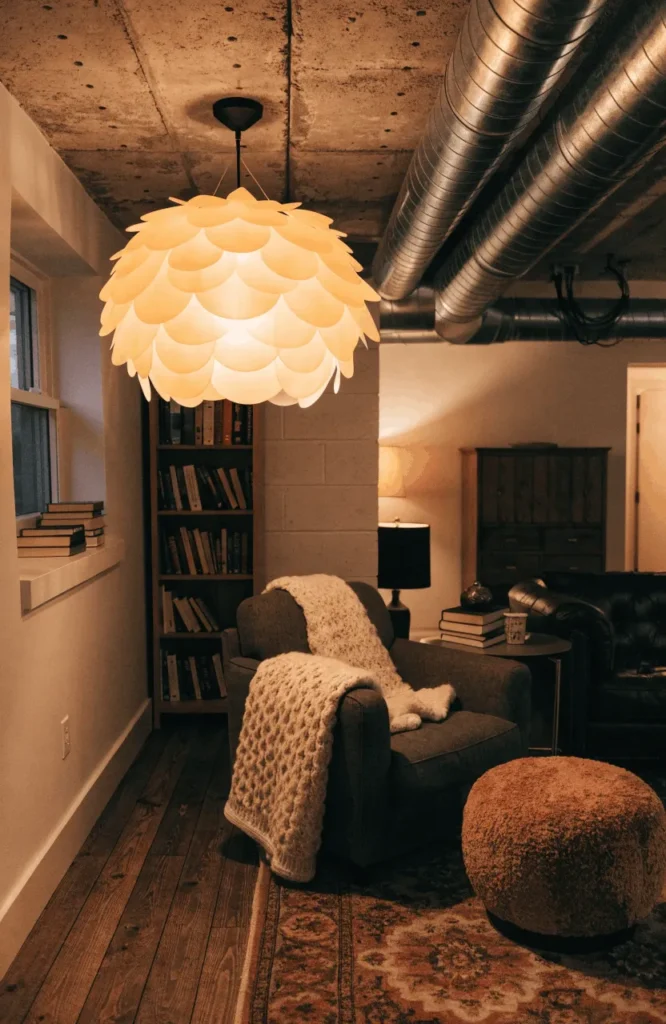
Because basements often lack the architectural detail of upper floors, a statement light fixture helps fill that gap and gives the room a more finished, designed feel. Choosing a warm bulb temperature keeps the light cozy rather than clinical.
What Is the Cheapest Way to Finish a Basement?
The cheapest way to finish a basement is usually to skip drywall in favor of paint, peel-and-stick flooring, and a drop ceiling or painted exposed ceiling. Focusing your budget on lighting and a few key furniture pieces, rather than structural changes, gets you a finished, livable look without a full renovation.
Conclusion
You now have 19 basement family room ideas to choose from, whether you’re planning a full weekend transformation or just a few small updates at a time. Save this pin so you can come back to it when you’re ready to start, and follow along for more budget-friendly home decor inspiration.